
You are currently browsing the tag archive for the ‘CHIPS Act’ tag.
My March 30th post (Taiwan’s Historic Split Screen) was written as President Tsai Ing-wen arrived in New York in transit on her diplomatic visit to Central America. That piece promised a follow-up on the occasion of her return transit to Los Angeles — and meeting with Speaker of the House Kevin McCarthy — en route back to Taiwan. The Tsai-McCarthy meeting took place 6 days ago on April 5th but I delayed following up until today because my interview with Forbes on this topic was in the works.
That Forbes interview was published yesterday and can be found here (including 12 minute audio version). I am also reproducing that interview below to capture it in the Assessing China blog. It begins with several scene-setting paragraphs by Forbes Editor at Large Russell Flannery. The interview itself begins below the photograph of Micron headquarters in Shanghai.
(Begin article)
Micron Probe May Hurt China’s Efforts To Attract Foreign Investment
Beijing today wound down its latest large-scale military exercises in the waters around Taiwan but overall tension between the U.S. and China remains high. China’s moves followed a high-profile meeting last week between U.S. House Speaker Kevin McCarthy and Taiwan President Tsai Ing-wen in Los Angeles criticized by mainland leaders who claim sovereignty over self-governing Taiwan.
On the commercial front, the semiconductor industry remains an elevated point of stress. Beijing earlier this month announced a cybersecurity review of U.S. chipmaker Micron aimed, it said, at protecting the country’s information infrastructure and national security. The probe comes at a time when China has been seeking to boost foreign investment to accelerate its economic recovery from “zero-Covid” policies that slowed growth.
What’s next for U.S.-China ties and also for the CHIPS Act, the U.S. law enacted last year aimed at reversing the declining American share of global semiconductor production?
To learn more, I spoke on Saturday in the Philadelphia area with Terry Cooke, a senior fellow at the Foreign Policy Research Institute, a think tank focused on U.S. national security and foreign policy. Cooke, a former career U.S. senior foreign commercial service officer with postings in Shanghai, Taipei, Tokyo and Berlin, currently leads ReGen250, a non-profit that focuses on U.S.-China green energy collaboration as well as environmental regeneration initiatives in the tri-state Greater Philadelphia region.
Cooke believes China’s move against Micron will have “a chilling effect for potential foreign investors — definitely on the U.S. business community” at a time when China is trying to win new foreign investments following the end of “zero-Covid” policies at the end of last year that had harmed economic growth. Beijing high-profile efforts to pressure Taiwan militarily may also be counterproductive if Taipei successful builds itself up as “an important force” in a larger, more influential network of democracies. Edited excerpts follow.
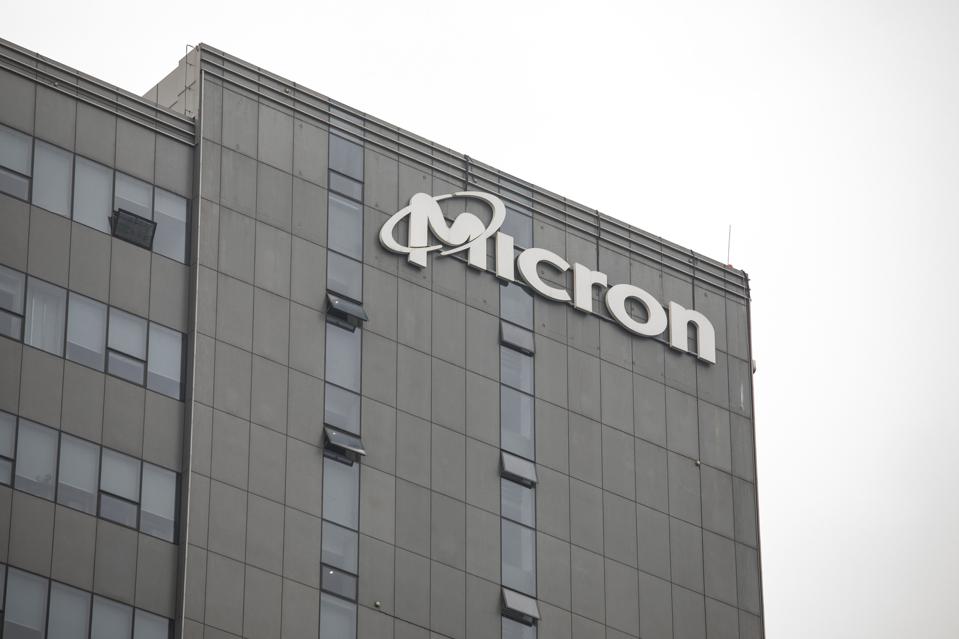
© 2023 BLOOMBERG FINANCE LP
Flannery: What do you make of the military exercises around Taiwan this month?
Cooke: There are two ways of looking it. One is that going into the Tsai-McCarthy meeting, the decision had already been made (in Beijing) that this is the new normal, that whenever there is an uncomfortably high-level contact between the U.S. government and the Taiwanese government, we (the Chinese government) are just going to keep demonstrating our ability to militarily squeeze Taiwan through maneuvers of this sort.
There is, however, another way of thinking about it: the way the McCarthy-Tsai meeting was conducted may, in fact, have been the determinant of the maneuvers. Beijing may have been in a wait-and-see mode. They of course issued their standard and predictable verbal denunciations in advance of Tsai’s transit stops.
I think they were waiting to see how low-key the meeting in L.A. with McCarthy would prove to be. The entry through New York was very low-key. The State Department utterances for most of the trip also kept things low-key. And there was ample precedent for this given Tsai’s previous six transit visits to the U.S. so the State Department position was that there was no reason for Beijing to make an issue out of it.
But the optics of McCarthy meeting – with all the diplomatic trappings of a government-to-government meeting save for flags set up on the table – made it look very much like an official meeting. And I don’t think that went over well in Beijing. That could have triggered the decision to trot out the military.

Flannery: So what’s next?
Cooke: Just as the U.S. is maybe on its back foot with the new realities in the Middle East, I think China may be on its back foot in terms of the game of diplomatic recognition when it comes to Taiwan. Yes, Taiwan just lost Honduras on the eve of Tsai’s U.S. trip. Now, Taiwan is down from 14 to 13 countries that it has diplomatic recognition with.
But I think there’s really a more important game in town now than adding up the number of formal diplomatic allies. This new game in town probably started around February 2021 with the Biden administration moving into the White House. To many people’s and particularly Beijing’s surprise, Biden kept Trump’s tough China policy. He also introduced into his speeches and policies a clear and consistent autocracy-vs-democracy contrast.
Within the context of this U.S.-led “reframing” of the global picture, Taiwan now has the opportunity to reposition itself within the team democracy global network of supporters in a way that it’s not strictly about formal recognition and UN membership. It’s about being recognized, and in some ways, held up as an important force in this network of democracies.
Flannery: How will Taiwan’s presidential elections next year affect these three-way ties?
Cooke: From the U.S. governmental standpoint, the outcome – whether it is a victory for Tsai’s Democratic Progressive Party or the opposition KMT party – will change hardly at all. This is because the U.S. government’s official position – whether it involves the outcome of an election in Taiwan or changes to the cross-strait status quo initiated by China – is that what the 24 million people of Taiwan choose for themselves is what the U.S. government will support. I don’t think our basic diplomatic posture and our support for Taiwan would change unless there was some evidence — which I would not expect at all — of some malfeasance happening with the election.
Flannery: What do you make of China’s probe into Micron?
Cooke: We can dissect it into several elements. One is a desire for reciprocity and being seen on an equal plane. And so with Biden’s CHIPS Act, and the singling out of TikTok and a lot of different Chinese companies in U.S. security investigations, it’s to be expected that there is going to be some reciprocal action that China is going to want to take to be seen as a peer power demanding reciprocity.
That diplomatic posturing is understandable but it does have a chilling effect for potential foreign investors — definitely on the U.S. business community. Close allies in Europe and elsewhere notice it, and it doesn’t help China’s post-pandemic effort to show a welcoming face to foreign investment.
I think there is also a third element of it that is interesting: perhaps as another data-point showing a lack of coordination in Chinese policy and messaging that we see from time to time. And we’re living in a world where nobody is a paragon and the U.S. has its own challenges with coordinating its message. But in China, as we saw recently with ‘wolf-diplomacy’ and the balloon incident, people lower in the governmental hierarchy vie to please their superiors, and end up getting out in front of the intended policy and in front of what would be an optimal coordinated policy for China. And I’m wondering personally whether Micron might be an instance of that.
Flannery: Speaking about both semiconductors and Taiwan, does the U.S. rely on Taiwan too much for chips?
Cooke: It’s actually in almost everyone’s interest at this point to have a greater degree of global diversification. It’s outright dangerous to have close to 90% of production of the world’s most advanced semiconductors taking place only 90 miles away from the Chinese mainland.
Flannery: Does the CHIPS Act go far enough in striking a new balance?
Cooke: Before the CHIPS Act, Taiwan Semiconductor Manufacturing Company (TSMC) was already taking steps (to diversify from Taiwan). There are currently moves afoot in Germany for automotive chip production — not the most advanced chips in the world — but also with Japan for consumer electronics and with Arizona for an advanced generation of chips. (See related post here.) For the foreseeable future, production of ultra-advanced chips will stay in Taiwan. But I think a lot of production capacity for quite advanced chips is being pushed out of Taiwan to these other global nodes.
The CHIPS Act is to my mind pretty fascinating. As a response to China’s Made-In-China-2025 ambitions and its military upgrading, it’s a bulls-eye in my view. But, as a policy undertaking in the U.S. domestic context, it is something of a potential third rail in the sense that, as a country, we’ve never been comfortable or particularly skilled at industrial policy. And it is clearly industrial policy.
Interestingly, I think there is enough bipartisan support right now that the industrial policy-political debate on Capitol Hill is not the traditional debate of “no industrial policy” versus, let’s say, the Clinton era’s “auto industrial policy for Japan.” Nobody at this point seems to be openly challenging the need for an industrial policy response to China’s advanced technology challenge.
So the debate currently is one about “clean” industrial policy versus industrial policy with social agenda items folded into it, like childcare support for workers. (Either way) it is important as a signal to the market about U.S. government resolve.
Flannery: Is it enough? And if it’s not enough, what’s the next step?
Cooke: If, in version one, the sum had been significantly higher than $52 billion, it would have been almost setting itself up for failure, because there are so many things that can go wrong in operationalizing and implementing something like this.
By analogy in the military sphere, we have put in a very robust sanctions regime against Russia following the invasion of Ukraine. But it was kind of uncharted territory. There’s been a lot of analysis about what’s been working and what hasn’t been working. We’re groping our way forward and want to keep some powder dry.
The CHIPS Act is similar in the commercial sphere — kind of uncharted territory. One of the things it has going for is that Commerce Secretary Gina Raimondo is an astute leader of the process. In the current political environment, any sign of dropping the ball would be pounced on. What is actually more important than the amount of money is the fact that it has happened in an initial iteration. There can be subsequent iterations, but it’s important to operationalize the first iteration as well as possible and to learn from that process to inform a potential second iteration.
Flannery: There is controversy about social goals being attached to it.
Cooke: The Act was passed by Congress last year, and it went into a kind of holding period where no one knew what the process was going to be for a company to apply. When the guidelines were only recently announced, it became clear that there was quite a lot of conditionality put on the ability of a company to apply. One set of conditions has to do with an applicant limiting its China business for a 10-year period. Another quite different set has to do with an awarded company providing childcare for its employees.
I think the criticism about these conditions is a fairly predictable output from the Washington DC political meat grinder. Because these are tax-payer dollars, the back-and-forth is highly political. Placing limitations on future China business for awardees makes sense to the average American voter. However, those limitations raise serious concerns for the CEO of a sizable company that doesn’t want to decouple from the China market but does want to access CHIPS Act support. On the separate issue of childcare, this requirement is meant as an incentive to help overcome the problem of a shortage of chip production workers in the U.S but it obviously becomes a red meat talking point for politicians who position themselves as anti-woke in U.S. culture wars skirmishing.
This goes back to what we were talking about before with Micron. China is currently unable to respond in a meaningfully reciprocal way when the U.S. does things like put Chinese billionaires onto an entities list. They just don’t have a global finance tool that is anywhere near as sharp and strong as is found in the U.S. Treasury toolkit. For the U.S., putting companies on an entities list works— it catches the attention of targeted individuals and there is an important and broad public messaging dimension to it as well. Of course, to make sanctions really bite, there’s a lot of operationalization that needs to happen but doesn’t always happen.
What I personally believe is: China’s main effort now is to try to knock the dollar off its post-World War II throne. Others have tried and failed and it will be a hard thing for China to pull off. But I believe that’s this the main thrust of their effort and the primary aim of a long-term, patient strategy.
See related posts:
U.S. Businesses Look To De-Risk, Not Decouple, Their China Ties
U.S.-China Collaboration Could Cut Development Time, Cost For New Cancer Treatments
TSMC Will Triple Arizona Investment To $40 Billion, Among Largest Foreign Outlays
Taiwan’s Biggest Silicon Wafer Maker Eyes U.S. Solar Industry Investment
@rflannerychina
Send me a secure tip.
(End article)
I join Russell in inviting you to leave your thoughts or questions in the Comment section below. (Because of netizen ire in China, I have not always kept the Comments section open in Assessing China but it is open for this post. I would love to hear from you).

The three-hour face-to-face meeting in Bali between President Biden and President Xi — their first non-virtual meeting in over three years — concluded just over an hour ago.
Much can be said (and is already in digital print) looking at this meeting from various angles:
- History of Biden’s personal relationship with Xi
- Composition of the small delegations accompanying the heads of state and what those choices say
- The wide range of issues discussed including Taiwan, Russia, nuclear arms (and their possible use in Ukraine), North Korea, human rights, resumption of national level cooperation on issues of climate change, health security, global food security, and defense-related communications (to forestall accidents and misunderstandings), etc.
- Differences in the official post-meeting read-outs from the two sides and what those differences signify
- Atmospherics of the meeting — effect of recent boosts to each leader’s domestic standing; implications of the third-party location on periphery of G20, etc
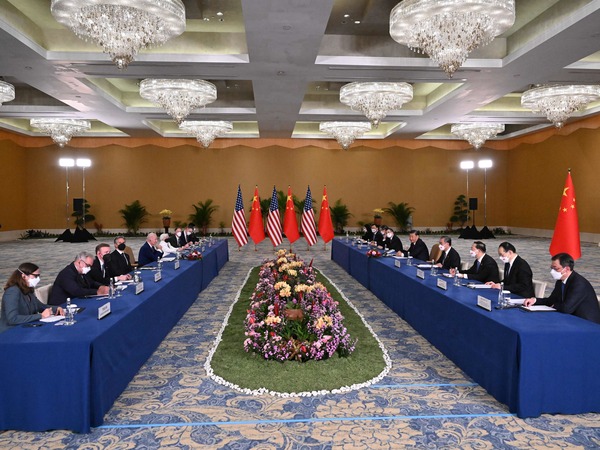
But I will go to what I believe to be the heart of the matter. The bottom line, both immediately and over the medium term:
CONTEXT: Gauged charitably, U.S.-China relations are at their lowest point since at least 1991 (post-Tiananmen and pre-Deng’s Tour of the South). Gauged more hard-headedly, they are in their worst shape since before Nixon’s visit to China in 1972 to begin dialogue and explore a relationship amid the Cold War freeze. The vertiginous decline we’ve been experiencing in recent years started very gradually as far back as 2008 when the (Western) Financial Crisis put shortcomings of the Washington Consensus on display in Beijing at the very moment when China was basking in its success in hosting the 2008 Summer Olympics. The hardening of attitudes became personified on the Chinese side with the emergence of Xi Jinping as paramount leader in 2012. Over the following years, the on-going decline in political relations — as contrasted with ever-strengthening commercial ties — became exacerbated for the Obama Administration as China militarized islands in the South and Southeast China Seas, brazenly breaking a commitment Xi had personally given Obama. It was then personified on the U.S. side starting in 2015 with Donald Trump’s racially-tinged campaign and, following his election, by his go-it-alone crusade to punish China with sanctions and Oval Office invective. The rhetoric was answered in 2017 by Xi Jinping upon his re-election as Chinese Communist Party (CCP) head in the form of an uber-triumphalist speech he delivered from the 19th Party Congress stage. The flash-points multiplied during the pandemic with China working hard to obscure the origins of the Covid-19 outbreak and subsequently using its heavy-handed Zero-Covid policy as the linchpin for Xi’s claim that China offered the world a superior system to liberal Western democracy (a claim which non-Western Taiwan makes a mockery of every day and which Hong Kong once also challenged prior to its being brought to heel brutally by Beijing in 2020). The deterioration continued in 2021 as the Biden Administration disappointed Beijing by not reverting to the softer, Obama-era approach to China that the Chinese leadership in Zhongnanhai had expected. Instead, the Biden Administration worked assiduously and with considerable success, to build a broad, values-based partnership with traditional allies and other aligned countries to answer China with a solid front. The Peoples Liberation Army’s practice-run blockade of Taiwan following House Speaker Pelosi’s visit to Taiwan in August further accelerated the downward spiral. And, while not yet fully appreciated by the American public, passage of the Biden Administration’s CHIPS Act into law in August is perceived in China, rightly, as a policy dagger pointed at the heart of its aspirations for seizing dominance in 21st c. technologies for defense, aerospace and space, surveillance and security, and industrial automation and productivity. (It is with the set of issues in these last two sentences — the interlinked issue of Taiwan and the CHIPS Act — that the Assessing China blog is now focused).
THE BOTTOM LINE: The bottom line of today’s meeting is Taiwan. While both sides settled in their separate post-meeting read-outs on emphasizing the lowest common denominator assertion that they’re now working together to stabilize an unstable relationship, their agendas going into the meeting were clearly different. For the Biden Administration, stabilization was the goal. It was enough just to establish a floor to stop further relationship decline and to limit the negative impact further decline would have on the range of issues under discussion (see above). For Xi, the goal was something more — to leverage agreement to stabilize the relationship toward the end of prying out some glimmer of affirmation from the U.S. side to validate his stance on Taiwan. With his eye on 2027 (21st Party Congress) and 2035 (a key CCP goal for China’s development) and with a domestic lock-hold for the next five years in the form of his new Standing Committee of loyalists, Xi is turning his attention — and ambition — to the international sphere. That means Taiwan as the culmination of his China Dream (and, I would wager, the fulfillment of the backroom deal he likely crafted with the CCP in 2012 to let him off the two-term-limit leash). In Xi’s thinking, if the U.S. could commit to the Shanghai Communique in earlier years, he should push as a next step for formal U.S. acceptance of his claim on Taiwan. As Xi put it, Taiwan is “the very core of our core interests.”
The bottom line of their meeting in Bali today may then be that Xi, just like Putin with Ukraine, misreads U.S. politics and society and the resolve of most of the international community concerning Taiwan. The evidence for this view would be the public read-outs: Biden achieved his chief objective while Xi did not.
But another view is possible. As Xi has demonstrated over the last twelve years, he is willing to take large risks to achieve the China Dream but he is methodical about how he goes about taking those risks. Militarization of the South China Sea and the ruthless imposition of the Basic Security Law in Hong Kong are just two examples. Militarily, China has been modernizing and arming up with laser-focus on deterring the U.S. in the Strait of Taiwan for far longer than the Pentagon has been taking steps to respond. As a result, the window of opportunity for Xi to move militarily is expected to be at its widest around 2027 or 2028. Following that, the belated U.S. military revamp in the region will be coming on stream and narrowing that window with each passing year. (It’s worth noting that 2027 coincides with the next Party Congress and therefore coincides well with the ‘chapter structure’ of the narrative Xi has been building about his stature as not only a peer of Mao Zedong in the Communist era but as a Chinese leader of destiny for the ages.)
So does the “failure” of Xi’s bottom-line agenda regarding Taiwan at today’s meeting indicate that he misreads Biden and the U.S. political system? Or might he instead be playing a longer game to a wider audience? If Xi’s sights are indeed firmly fixed on the 2027/8 moment (not only militarily but also politically and in the eyes of history) and if he is focused on exploiting that window of maximum military opportunity, his failure today to make any headway toward some type of formal understanding with the U.S. regarding Taiwan may be exactly the point.
The choreography may be designed to show Xi making a concerted effort to get the U.S. to more fully acknowledge his claim on Taiwan. Xi probably recognizes this won’t happen. The U.S. will not cut a deal with an autocrat to throw 23 million people in a thriving democracy under the bus. But Xi can use that show of effort over the next few years to advantage. He will have made a show for the world to see of having tried hard to exhaust “peaceful measures” prior to being “forced” to make a military move on Taiwan. He will have checked that box. And it won’t be a coincidence if the moment of being “forced” happens at the same moment of the PLA’s maximum military advantage.


 ______Assessing China / The TEA Collaborative______