
You are currently browsing the tag archive for the ‘clean energy’ tag.
Philadelphia, the City of Brotherly Love, is looking for a makeover – a green one. The goal of Philadelphia is to reduce the city’s vulnerability to rising energy costs. As such, its research, development, and investment into the area of cleantech have made it one of the top cities in the United States when it comes to renewable energy and energy efficiency. The current mayor Michael Nutter, in his 2008 inaugural address, pledged to make this city the number one green city in America, and created the Mayor’s Office of Sustainability in that sense.
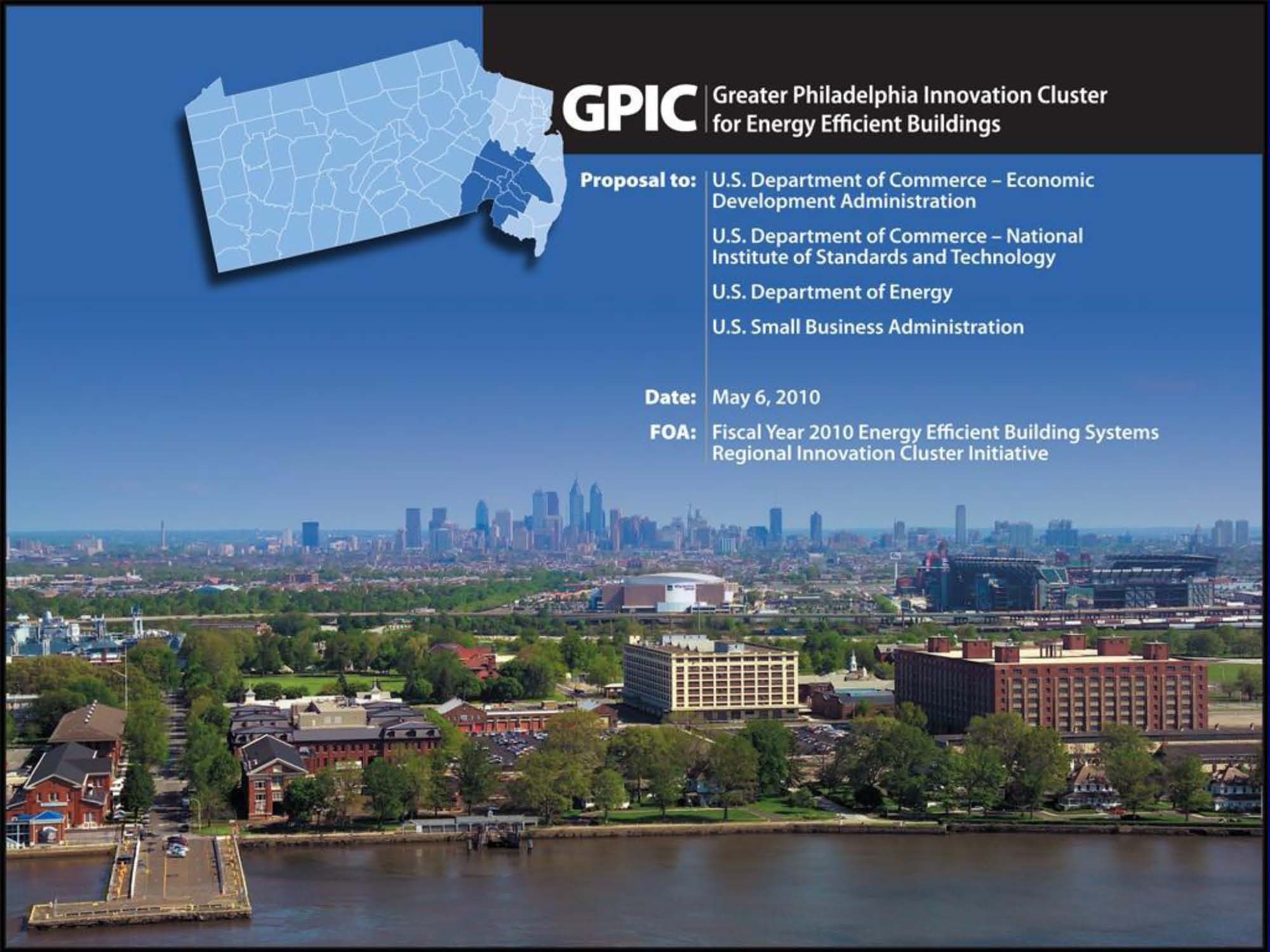
1) The Navy Yard. The Navy Yard plays a key part in the commitment to turn Philadelphia into the “Greenest City in America.” All buildings in the Navy Yard must register with the United States Green Building Council’s Leadership in Environmental and Energy Design (LEED) program. This once eyesore is now being converted into a central location for new green energy jobs and clean energy innovation. Not only that, but in a time of recession, the completion of the Navy Yard will provide new, permanent employment opportunities. For example, a large European home energy efficiency company, Mark Group, is going to be making the Navy Yard one of its homes, and plans to hire over 300 new workers.
2) Philadelphia Eagles Stadium to be Powered with Renewable Energy. Lincoln Financial Field, home of the Philadelphia Eagles, is soon to be the first major sports stadium in the world that will be 100 percent run on on-site renewable energy, including a combination of on-site wind, solar, and dual-fuel generated electricity. Renewable energy conservation company SolarBlue is responsible for installing 80 20-foot-spiral-shaped wind turbines on the top rim of the stadium, as well as 2,500 solar panels along the façade. A 7.6 megawatt on-site dual-fuel cogeneration plant will also be there. More than $30 million will be invested into this project over the next year, which should be complete by September of 2011. It is estimated that these changes will save the Eagles approximately $60 million in energy costs. According to Jeffrey Lurie, team owner and chief executive officer, “This commitment builds upon our comprehensive environmental sustainability program, which includes energy and water conservation, waste reduction, recycling, composting, toxic chemical avoidance and reforestation. It underscores our strong belief that environmentally sensitive policies are consistent with sound business practices.”
3) Increase in Solar Energy Technology. A new solar energy plant is going up by the Navy Yard. It is a project between $8 and $12 million and would provide enough power to 200 homes annually. It was developed from German company Epuron, which has their United States headquarters in Philadelphia. Because of the increase in solar technology, Philadelphia was named a “Solar American City” and was provided with a $200,000 award to assist in the study of how to triple solar energy capacity in plants by 2011.
4) Philadelphia Gas Works Renewable Energy Initiatives. Philadelphia Gas Works, as part of the Mayor’s Office of Sustainability, has the objective to elevate the total use of renewable energy up to 20 percent of the total energy expenditures of the city. It focuses on the use of solar power mainly. Some of the initiatives include tutorials on the basics of solar power, an industry guidebook on solar power unit installation, inspector training, and three city-wide solar installations at the Navy Yard, Southeast Wastewater Pollution Control Plant, and the Baxter Water Treatment Facility.
5) Green Energy Capital Partner’s Solar Energy Plant. Green Energy Capital Partners, in 2008, created the plans to build the second largest solar energy plant near Green Acres Industrial Park. This project costs around $60million and provides 100 megawatts of energy with 40,000 solar panels. The government has been providing all the financial as well as material support for the project, as it gets several million dollars in incentives to create the facility.
6) Weatherizing Row Houses and Creating Jobs. Philadelphia is improving energy efficiency and lowering unemployment rates at the same time with numerous green projects. One project is educating individuals on weatherization of their homes. The program, run by the Energy Coordinating Agency, wants to provide weatherization for approximately 400,000 low-income row houses. The agency, along with Philadelphia Gas Works is footing the bills which could save individuals 30 to 40 percent on heating bills. Numerous individuals are being trained on weatherization techniques, such as insulation installation, caulking, and sealing.
7) Host of the World Green Energy Symposium. Every year, Philadelphia houses the World Green Energy Symposium. It is a three day event that “demonstrates the power of New Energy by providing a platform for connections, education, information exchange, contracting, and business networking opportunities in the industry.” It is a time where organizations, businesses, government agencies, academia, students, and others from around the globe can connect and focus on clean, green, and renewable energy technologies.
8 ) Philadelphia Recycling Rewards. To promote recycling, the Philadelphia Recycling Rewards Program enables individuals to earn points based on how much an individual recycles. These points can be redeemed for gift cards and certificates, discounts, and so much more. The program is powered by RecycleBank, an organization that works to motivate individuals to engage in various green behaviors by providing point incentives that can be used on groceries, merchandise, and discounts. All individuals need to do is stick a sticker on their recycle bin and it gets scanned, giving individuals rewards!
9) Philadelphia Solar Energy Association. The mission of the Philadelphia Solar Energy Association is simple – “to promote the rapid adoption of solar energy technologies in the Delaware Valley through distinguished guest lecturers, hands on demonstrations, participation in regional and national conferences, and other methods and activities.” They also provide information on the solar incentive programs throughout the state of Pennsylvania.
10) The Provision of Energy Rebates and Tax Credits. To assist businesses and homeowners with energy efficiency, Philadelphia has created a number of energy rebates and tax credits. For example there is the Keystone HELP Energy Efficiency Loan Program, which supports installation of high efficiency air conditioning, heating, insulation, doors, windows, and whole-house improvements by providing a maximum of $35,000 to homeowners whose yearly household income does not exceed $150,000. The Pennsylvania Sunshine Solar Rebate Program offers $2.25.W rebates for solar panels based on the system capacity, and a maximum of $20,000 for space heating or solar thermal water systems. Other rebates include the Residential Energy Efficiency Rebate Program, Residential Renewable Energy Tax Credit, and the USDA High Energy Cost Grant Program.
Shawn Lesser is the president and founder of Atlanta-based Sustainable World Capital, which is focused on fund-raising for private equity cleantech/sustainable funds, as well as private cleantech companies and M&A. He is also a co- founder of the GCCA Global Cleantech Cluster Association, and can be reached at shawn.lesser@sworldcap.com
China does business a little differently than the U.S. but we track results in the same way: the value of deals and the number of jobs created.
Hu Jintao’s State Visit from January 18-21 may have been a dog-and-pony show on a big stage but it did register some big results at the box-office.
Having worked in the trenches of the U.S.-Japan trade war in the early 1990s, I know full well that the numbers trotted out in press statements for Presidential events need to be taken with a grain of salt. Notwithstanding, the underlying facts they describe have a reality. Yes, there was some degree of smoke and mirrors involved in the numbers announced with the original U.S.-Japan Auto Trade Agreement in 1992. Nonetheless, those numbers pointed to real changes which seem commonplace today — there’s no longer a trade war with Japan, U.S. consumers have better cars, Toyota sponsors the Super Bowl, and Japan’s economy proved far less able to overtake the U.S. than many had supposed.
All of this suggests that we shouldn’t sneeze at US $50 billion in trade deals announced during the Hu Jintao State Visit. Also, that grain of salt may perhaps be better applied to the growing perception that China owns the future.
AEP, AES, Aloca, Duke, Ener1, GE and UPC racked up more than $12.5 billion in trade, investment and project deals over the past four days. This bodes well for the future of U.S.-China clean energy cooperation. The guts of these seven deals show that the U.S. provides innovation and China provides a huge market. That basically represents a fair deal for both sides.
Click here or directly on the slide thumbnail below to access the slide-master with links to full details of each of these seven deals:

Over the months ahead, I’ll be posting to the U.S.-China Clean Energy blog more reporting on U.S. cleantech firms that secured deals during the Hu Jintao State Visit (January 18-21):
This series will include coverage of:
- the Wanxiang-Ener1 deal to supply high-quality U.S. batteries to electric buses in China
- Goldwind USA’s planned expansion of U.S. production and employment
- a deal siting a PV manufacturing plant near a U.S. Energy Innovation Cluster (EIC) and U.S.-China Clean Energy Research Center (CERC)
- the clean energy aspect of huge new deals by GE and Boeing.
Please check back for these. In the meanwhile, here’s my personal view of the Arrival Ceremony for Hu Jintao:
John Smith (Chairman of Global Philadelphia Association) and I had the honor to be asked by Mayor Nutter to attend this ceremony.
Courtesy of my iPhone, here is a mix of the music, video, and stills from that ceremony arranged in the sequence that they occurred. Two things to watch for:
- Just after Hu and Obama are first seen on the podium, look for the clouds of gunpowder near the foot of the Washington Monument during the 21 gun salute and
- In the next shots, look to the right at the base of the podium and you can glimpse Secretary Gates and Admiral Mullin in the area where the rest of the Cabinet was stationed out of my camera view.
I include some excerpts here from an interview which Energy Secretary Steven Chu just gave with Platts Energy Week television (http://www.plattsenergyweektv.com/) an independent all-energy news and talk show with ownership links to McGraw Hill.
The U.S. engine for clean energy innovation and economic growth is a four-cylinder engine but only three cylinders are firing now. Technology innovation, investment and state-level policy are all producing horsepower but federal level policy to create a long-term framework in support of technology innovation, long-term investment, and state support is seized up.

These extracts from Sec. Chu represent to my mind the best way forward and perhaps, in a time of polarized partisanship, the only way forward:
The White House, its Democratic allies and Republicans need to “look for the things that the vast majority of Americans will say, ‘This is good for me, this is good for America, this is good for my state,’ and move forward on those issues,” Chu told program host Bill Loveless. The interview, available at this link, airs in Houston tonight and was aired Sunday in Washington, D.C.
The House passed a comprehensive energy and climate-change bill last year that would have put a price on carbon emissions, but the measure died in the Senate. Nevertheless, Chu said there were other options for moving the U.S. towards a clean-energy future.
“Absent a price on carbon, what are the things you can do? Well, you can create a demand for this thing, whether it be wind or solar or any form of renewable energy [and] say, ‘This is where we are heading,'” Chu said. “These are many of the things that we as a country should wrestle with and think about.”
In the interview with Platts, Chu struck a conciliatory note, saying it wasn’t up to him to pick the policy — such as a price on carbon or low-carbon energy-use mandates — that would support renewable energy “or clean energy” projects.
“This is a discussion that has to be held with Congress, with the American people,” Chu said. “What the country really wants, and what business really wants, are those long-term signals to say, ‘This is where the country is heading.’ “
He also said there would be other opportunities for common ground with Republicans in Congress, such as retrofitting buildings and homes to cut down on energy bills.
“We are working on ways to do this so it doesn’t require massive public-sector investment, but it is private-sector investment because it is going to be saving money,” Chu said. “I think that is a common ground.”
The full article on this interview is available at http://bit.ly/eVBdWp
Dominique Doms of the International Trade Examiner shared the following observations on the recent clumsy steps in the pas-de-deux between the U.S. and China on climate change and clean energy policy coordination. These missteps are beginning to follow a regular rhythym. Last November, the COP15 in Denmark stumbled into acrimony when the Chinese negotiating team responded to Obama’s open hand with a pointed finger and the meeting broke up without a global framework deal to support cap-and-trade. The approach to this November’s COP16 meeting in Mexico is already looking wobbly in light of two issues:
- The filing on September 9, 2010 of a trade action by the United Steelworkers against China for unfair subsidization of its renewable energy exports. (Bearing in mind the ringside seat perspective I had on the U.S.-Japan auto trade dispute in the early 1990s, I see this move by U.S. labor on the global chessboard as natural and expected but hardly commendable. At best, it will serve as a palliative and not a remedy).
- The clumsy steps China took to embargo strategic minerals essential for the manufacture of many clean energy products without official explanation.
Whatever happens in Mexico, the dance will have to go on. As Bloomberg New Energy Finance has pointed out, the U.S. and China are effectively “joined at the hip” as a de-facto G2 burdened with the responsibility of maintaining global environmental and economic sustainability.
The ultimate remedy will be for U.S. policymakers to look into the mirror and understand that the real issue is not an either/or issue of cooperation v. competition with China, though both are inescapable facts of the matter. The ultimate challenge is for us to realistically assess what we have and have not done to move our country into the future. We can compare ourselves with China but that comparison must be based on a realistic assessment of how our national systems are different and on different pathways we will need to follow to move our country forward. Just like with Sputnik, our goal should not be to hold China’s clean energy development back, it should be to marshall our resources to move our country’s clean energy development forward. In the final analysis, the U.S. and China will need to be partners in this global effort but that global partnership — in order to be effective — must be based on maximum effort by each of the partners as well as on a respectful and realistic understanding of the strengths and weaknesses of each partners system. tc
Beginning of Dominique Doms comment:
“Clean and renewable energy production has become a new dispute between the US and China and centers around Chinese subsidies that unfairly give an advantage to local companies and price US producers out of the market. Stephen Chu, US Energy Secretary, told the international press that the US government welcomes Chinese green companies but that there has to be a level playing field for US companies as well.
At the center of the dispute are large subsidies to Chinese manufacturers of solar panels and wind turbines that allow them to gain an unfair and competitive advantage over US companies that are not entitled to the same government stimulus. The US is requesting from China, through the World Trade Organization, that US companies that manufacture green energy components have access to the same stimulus funds as their Chinese owned counterparts. It is expected that China will ultimately reach an agreement with the US as both countries believe that government subsidies are a key factor in the development and manufacturing of green and renewable energy sources.
The goal of both countries is to further reduce carbon emissions to halt global warming by lowering global pollution. China holds an advantage over the US as the largest manufacturer of solar panels. The edge in the global market with a very high demand for renewable energy sources is the direct result of China’s near monopoly of the rare earth minerals market.
China controls 93% of the RE market both in raw materials as well as its alloys that are used in solar panel reflection mirrors. The US has reopened some of its RE mines again after having been absent in the market for 20 years. That alone may not be sufficient to close the competitive gap with China but subsidies to American producers may result in a better pricing balance.
Discussions between Mr. Chu and his Chinese counterparts have been ongoing since the opening of the US-China Clean Energy Research Center last week.
The center is the largest research center of its kind where scientists from both countries will jointly develop green and renewable technologies. A permanent agreement may be reached prior to the COP-16 meeting to be held in Mexico from November 29 through December 10.”
(end of Dominique Doms comment)


 ______Assessing China / The TEA Collaborative______