
You are currently browsing the category archive for the ‘International Business’ category.
My March 30th post (Taiwan’s Historic Split Screen) was written as President Tsai Ing-wen arrived in New York in transit on her diplomatic visit to Central America. That piece promised a follow-up on the occasion of her return transit to Los Angeles — and meeting with Speaker of the House Kevin McCarthy — en route back to Taiwan. The Tsai-McCarthy meeting took place 6 days ago on April 5th but I delayed following up until today because my interview with Forbes on this topic was in the works.
That Forbes interview was published yesterday and can be found here (including 12 minute audio version). I am also reproducing that interview below to capture it in the Assessing China blog. It begins with several scene-setting paragraphs by Forbes Editor at Large Russell Flannery. The interview itself begins below the photograph of Micron headquarters in Shanghai.
(Begin article)
Micron Probe May Hurt China’s Efforts To Attract Foreign Investment
Beijing today wound down its latest large-scale military exercises in the waters around Taiwan but overall tension between the U.S. and China remains high. China’s moves followed a high-profile meeting last week between U.S. House Speaker Kevin McCarthy and Taiwan President Tsai Ing-wen in Los Angeles criticized by mainland leaders who claim sovereignty over self-governing Taiwan.
On the commercial front, the semiconductor industry remains an elevated point of stress. Beijing earlier this month announced a cybersecurity review of U.S. chipmaker Micron aimed, it said, at protecting the country’s information infrastructure and national security. The probe comes at a time when China has been seeking to boost foreign investment to accelerate its economic recovery from “zero-Covid” policies that slowed growth.
What’s next for U.S.-China ties and also for the CHIPS Act, the U.S. law enacted last year aimed at reversing the declining American share of global semiconductor production?
To learn more, I spoke on Saturday in the Philadelphia area with Terry Cooke, a senior fellow at the Foreign Policy Research Institute, a think tank focused on U.S. national security and foreign policy. Cooke, a former career U.S. senior foreign commercial service officer with postings in Shanghai, Taipei, Tokyo and Berlin, currently leads ReGen250, a non-profit that focuses on U.S.-China green energy collaboration as well as environmental regeneration initiatives in the tri-state Greater Philadelphia region.
Cooke believes China’s move against Micron will have “a chilling effect for potential foreign investors — definitely on the U.S. business community” at a time when China is trying to win new foreign investments following the end of “zero-Covid” policies at the end of last year that had harmed economic growth. Beijing high-profile efforts to pressure Taiwan militarily may also be counterproductive if Taipei successful builds itself up as “an important force” in a larger, more influential network of democracies. Edited excerpts follow.
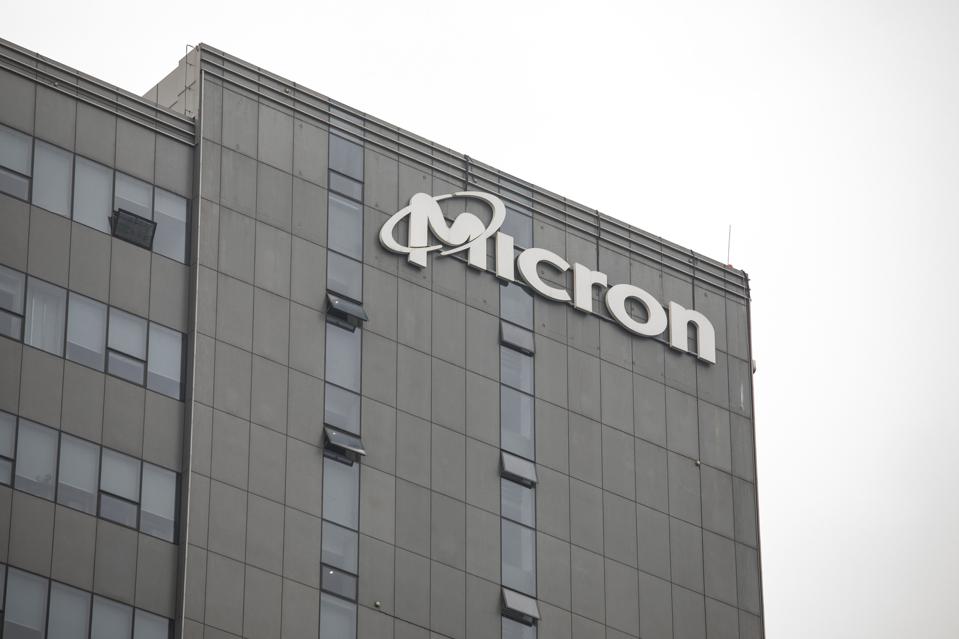
© 2023 BLOOMBERG FINANCE LP
Flannery: What do you make of the military exercises around Taiwan this month?
Cooke: There are two ways of looking it. One is that going into the Tsai-McCarthy meeting, the decision had already been made (in Beijing) that this is the new normal, that whenever there is an uncomfortably high-level contact between the U.S. government and the Taiwanese government, we (the Chinese government) are just going to keep demonstrating our ability to militarily squeeze Taiwan through maneuvers of this sort.
There is, however, another way of thinking about it: the way the McCarthy-Tsai meeting was conducted may, in fact, have been the determinant of the maneuvers. Beijing may have been in a wait-and-see mode. They of course issued their standard and predictable verbal denunciations in advance of Tsai’s transit stops.
I think they were waiting to see how low-key the meeting in L.A. with McCarthy would prove to be. The entry through New York was very low-key. The State Department utterances for most of the trip also kept things low-key. And there was ample precedent for this given Tsai’s previous six transit visits to the U.S. so the State Department position was that there was no reason for Beijing to make an issue out of it.
But the optics of McCarthy meeting – with all the diplomatic trappings of a government-to-government meeting save for flags set up on the table – made it look very much like an official meeting. And I don’t think that went over well in Beijing. That could have triggered the decision to trot out the military.

Flannery: So what’s next?
Cooke: Just as the U.S. is maybe on its back foot with the new realities in the Middle East, I think China may be on its back foot in terms of the game of diplomatic recognition when it comes to Taiwan. Yes, Taiwan just lost Honduras on the eve of Tsai’s U.S. trip. Now, Taiwan is down from 14 to 13 countries that it has diplomatic recognition with.
But I think there’s really a more important game in town now than adding up the number of formal diplomatic allies. This new game in town probably started around February 2021 with the Biden administration moving into the White House. To many people’s and particularly Beijing’s surprise, Biden kept Trump’s tough China policy. He also introduced into his speeches and policies a clear and consistent autocracy-vs-democracy contrast.
Within the context of this U.S.-led “reframing” of the global picture, Taiwan now has the opportunity to reposition itself within the team democracy global network of supporters in a way that it’s not strictly about formal recognition and UN membership. It’s about being recognized, and in some ways, held up as an important force in this network of democracies.
Flannery: How will Taiwan’s presidential elections next year affect these three-way ties?
Cooke: From the U.S. governmental standpoint, the outcome – whether it is a victory for Tsai’s Democratic Progressive Party or the opposition KMT party – will change hardly at all. This is because the U.S. government’s official position – whether it involves the outcome of an election in Taiwan or changes to the cross-strait status quo initiated by China – is that what the 24 million people of Taiwan choose for themselves is what the U.S. government will support. I don’t think our basic diplomatic posture and our support for Taiwan would change unless there was some evidence — which I would not expect at all — of some malfeasance happening with the election.
Flannery: What do you make of China’s probe into Micron?
Cooke: We can dissect it into several elements. One is a desire for reciprocity and being seen on an equal plane. And so with Biden’s CHIPS Act, and the singling out of TikTok and a lot of different Chinese companies in U.S. security investigations, it’s to be expected that there is going to be some reciprocal action that China is going to want to take to be seen as a peer power demanding reciprocity.
That diplomatic posturing is understandable but it does have a chilling effect for potential foreign investors — definitely on the U.S. business community. Close allies in Europe and elsewhere notice it, and it doesn’t help China’s post-pandemic effort to show a welcoming face to foreign investment.
I think there is also a third element of it that is interesting: perhaps as another data-point showing a lack of coordination in Chinese policy and messaging that we see from time to time. And we’re living in a world where nobody is a paragon and the U.S. has its own challenges with coordinating its message. But in China, as we saw recently with ‘wolf-diplomacy’ and the balloon incident, people lower in the governmental hierarchy vie to please their superiors, and end up getting out in front of the intended policy and in front of what would be an optimal coordinated policy for China. And I’m wondering personally whether Micron might be an instance of that.
Flannery: Speaking about both semiconductors and Taiwan, does the U.S. rely on Taiwan too much for chips?
Cooke: It’s actually in almost everyone’s interest at this point to have a greater degree of global diversification. It’s outright dangerous to have close to 90% of production of the world’s most advanced semiconductors taking place only 90 miles away from the Chinese mainland.
Flannery: Does the CHIPS Act go far enough in striking a new balance?
Cooke: Before the CHIPS Act, Taiwan Semiconductor Manufacturing Company (TSMC) was already taking steps (to diversify from Taiwan). There are currently moves afoot in Germany for automotive chip production — not the most advanced chips in the world — but also with Japan for consumer electronics and with Arizona for an advanced generation of chips. (See related post here.) For the foreseeable future, production of ultra-advanced chips will stay in Taiwan. But I think a lot of production capacity for quite advanced chips is being pushed out of Taiwan to these other global nodes.
The CHIPS Act is to my mind pretty fascinating. As a response to China’s Made-In-China-2025 ambitions and its military upgrading, it’s a bulls-eye in my view. But, as a policy undertaking in the U.S. domestic context, it is something of a potential third rail in the sense that, as a country, we’ve never been comfortable or particularly skilled at industrial policy. And it is clearly industrial policy.
Interestingly, I think there is enough bipartisan support right now that the industrial policy-political debate on Capitol Hill is not the traditional debate of “no industrial policy” versus, let’s say, the Clinton era’s “auto industrial policy for Japan.” Nobody at this point seems to be openly challenging the need for an industrial policy response to China’s advanced technology challenge.
So the debate currently is one about “clean” industrial policy versus industrial policy with social agenda items folded into it, like childcare support for workers. (Either way) it is important as a signal to the market about U.S. government resolve.
Flannery: Is it enough? And if it’s not enough, what’s the next step?
Cooke: If, in version one, the sum had been significantly higher than $52 billion, it would have been almost setting itself up for failure, because there are so many things that can go wrong in operationalizing and implementing something like this.
By analogy in the military sphere, we have put in a very robust sanctions regime against Russia following the invasion of Ukraine. But it was kind of uncharted territory. There’s been a lot of analysis about what’s been working and what hasn’t been working. We’re groping our way forward and want to keep some powder dry.
The CHIPS Act is similar in the commercial sphere — kind of uncharted territory. One of the things it has going for is that Commerce Secretary Gina Raimondo is an astute leader of the process. In the current political environment, any sign of dropping the ball would be pounced on. What is actually more important than the amount of money is the fact that it has happened in an initial iteration. There can be subsequent iterations, but it’s important to operationalize the first iteration as well as possible and to learn from that process to inform a potential second iteration.
Flannery: There is controversy about social goals being attached to it.
Cooke: The Act was passed by Congress last year, and it went into a kind of holding period where no one knew what the process was going to be for a company to apply. When the guidelines were only recently announced, it became clear that there was quite a lot of conditionality put on the ability of a company to apply. One set of conditions has to do with an applicant limiting its China business for a 10-year period. Another quite different set has to do with an awarded company providing childcare for its employees.
I think the criticism about these conditions is a fairly predictable output from the Washington DC political meat grinder. Because these are tax-payer dollars, the back-and-forth is highly political. Placing limitations on future China business for awardees makes sense to the average American voter. However, those limitations raise serious concerns for the CEO of a sizable company that doesn’t want to decouple from the China market but does want to access CHIPS Act support. On the separate issue of childcare, this requirement is meant as an incentive to help overcome the problem of a shortage of chip production workers in the U.S but it obviously becomes a red meat talking point for politicians who position themselves as anti-woke in U.S. culture wars skirmishing.
This goes back to what we were talking about before with Micron. China is currently unable to respond in a meaningfully reciprocal way when the U.S. does things like put Chinese billionaires onto an entities list. They just don’t have a global finance tool that is anywhere near as sharp and strong as is found in the U.S. Treasury toolkit. For the U.S., putting companies on an entities list works— it catches the attention of targeted individuals and there is an important and broad public messaging dimension to it as well. Of course, to make sanctions really bite, there’s a lot of operationalization that needs to happen but doesn’t always happen.
What I personally believe is: China’s main effort now is to try to knock the dollar off its post-World War II throne. Others have tried and failed and it will be a hard thing for China to pull off. But I believe that’s this the main thrust of their effort and the primary aim of a long-term, patient strategy.
See related posts:
U.S. Businesses Look To De-Risk, Not Decouple, Their China Ties
U.S.-China Collaboration Could Cut Development Time, Cost For New Cancer Treatments
TSMC Will Triple Arizona Investment To $40 Billion, Among Largest Foreign Outlays
Taiwan’s Biggest Silicon Wafer Maker Eyes U.S. Solar Industry Investment
@rflannerychina
Send me a secure tip.
(End article)
I join Russell in inviting you to leave your thoughts or questions in the Comment section below. (Because of netizen ire in China, I have not always kept the Comments section open in Assessing China but it is open for this post. I would love to hear from you).
by Doug Barry, Senior Director of Communications, U.S.-China Business Council
(view original article in USCBC’s Fifty States, Fifty Stories series)
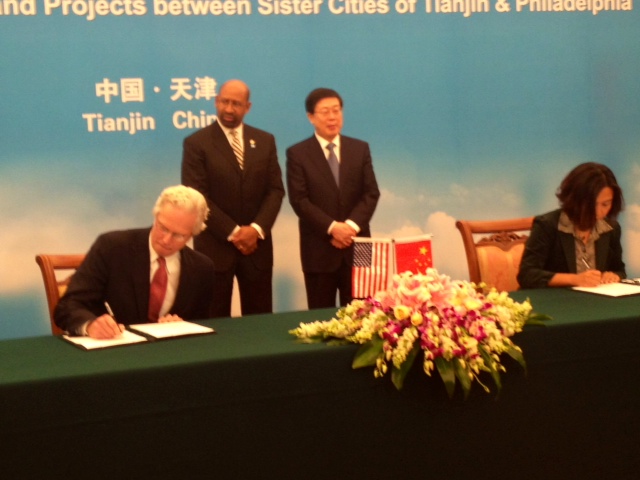
Policy entrepreneurs are plentiful in America. You can find them everywhere, devoting ideas and energy to getting things done. Terry Cooke founded the non-profit China Partnership of Greater Philadelphia with a focus on getting the United States and China to cooperate on climate change. Getting what he wants done has become more challenging as the two countries ping pong between cooperation, competition, and conflict.
How did he get here and how is he managing multiple challenges simultaneously? He’s been interested in global affairs for a long time, starting in 1988 when he joined the US Commerce Department as a foreign commercial service officer in Shanghai. His two-year posting there bracketed the Tiananmen Square convulsion. Years flew by with postings in Tokyo, Berlin, and Taiwan. In 2002 he took leave from the foreign service and started a consulting business focusing on Taiwan and high tech.
In 2006, Cooke joined the World Economic Forum (WEF) as Director of Asian CEO Partnership with a focus more on Japan than China. He left in 2008. “It was too much travel,” he recalled. “I worked in New York, had my family in Philadelphia, commuted to Geneva, and had responsibility for multiple events in Asia.”
One of the best parts of the WEF job was sitting in on multiple sectoral meetings with CEOs. His main takeaway was that many of these corporate leaders were talking about the challenges of climate change, not as PR or greenwashing, but about the need to transform their companies into low-carbon leaders. “I decided that was the hook that I wanted to hang the second half of my career on when I came back to Philadelphia.”
Cooke recalled his time in Berlin and the impression made by comparing what was then called West Germany with the East, which at the time was terribly polluted. When the Berlin Wall fell, the country united and the cleanup of the Eastern part of the country began. The lesson was that great progress to improve the environment is possible if the political will exists and if clear policy creates predictability for businesses and investors.
The good old days
In 2010, Cooke joined the Wilson Center, a Washington, DC think tank, as senior fellow for US-China climate cooperation. His research there led to publication of his book Sustaining US-China Cooperation in Clean Energy. Coincident with this research, Secretary of Energy Steven Chu introduced a “national labs program for the 21st century” for clean energy technologies as an outgrowth of the 10-year framework for US-China cooperation on energy and the environment pioneered by Treasury Secretary Hank Paulson in the waning years of the George W. Bush administration.
President Barack Obama and Secretary Chu worked to expand Paulson’s program, adding three US-China clean energy research centers in different industrial areas: electric vehicles initially at the University of Michigan, clean coal at the University of West Virginia, and energy efficient buildings through a Penn State-led program at the Philadelphia Navy Yard.
“Disappointing as these decisions were, there was still potential in the climate change mitigation space, even as other areas like micro-electronics drifted further off-limits.”
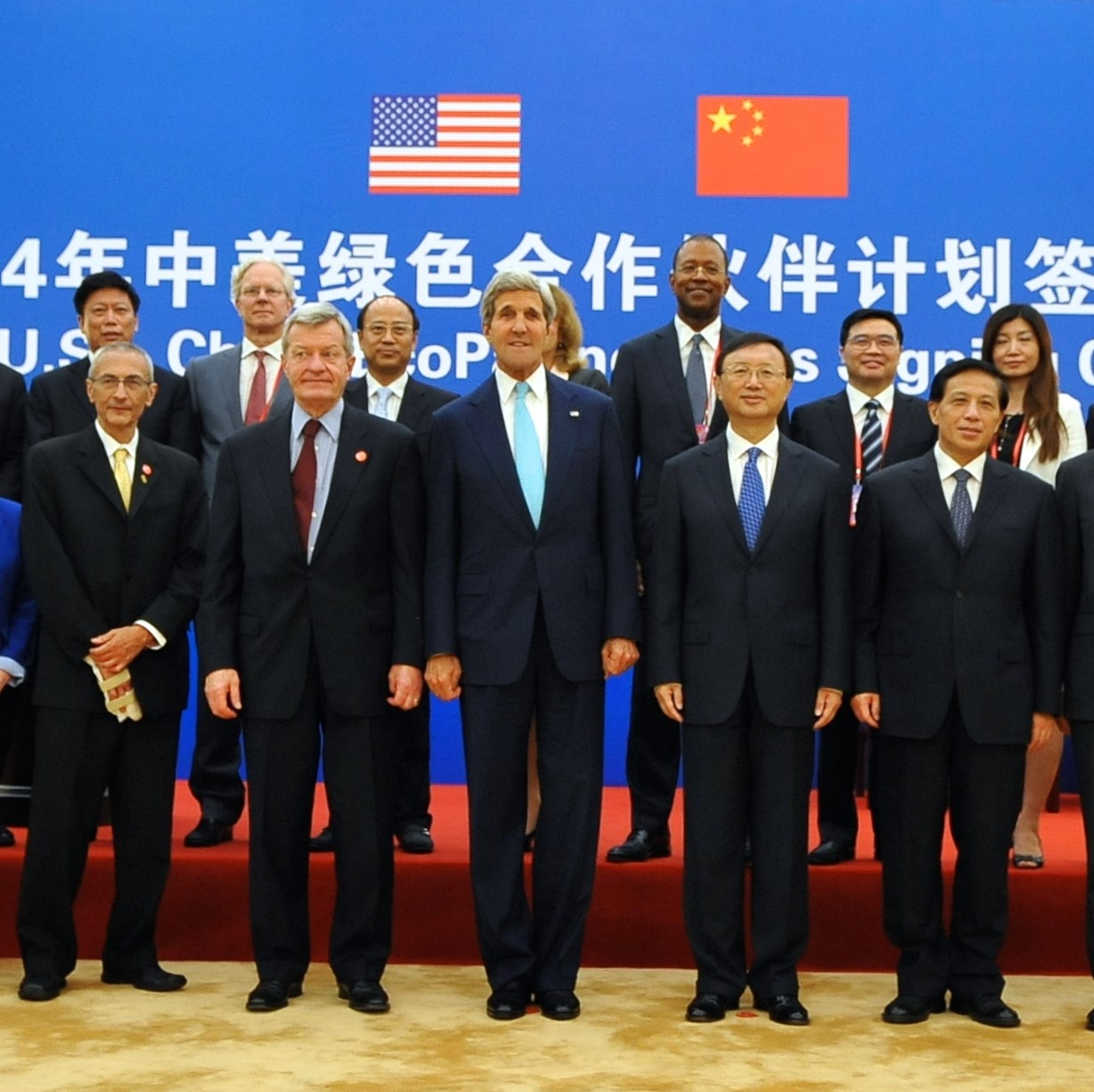
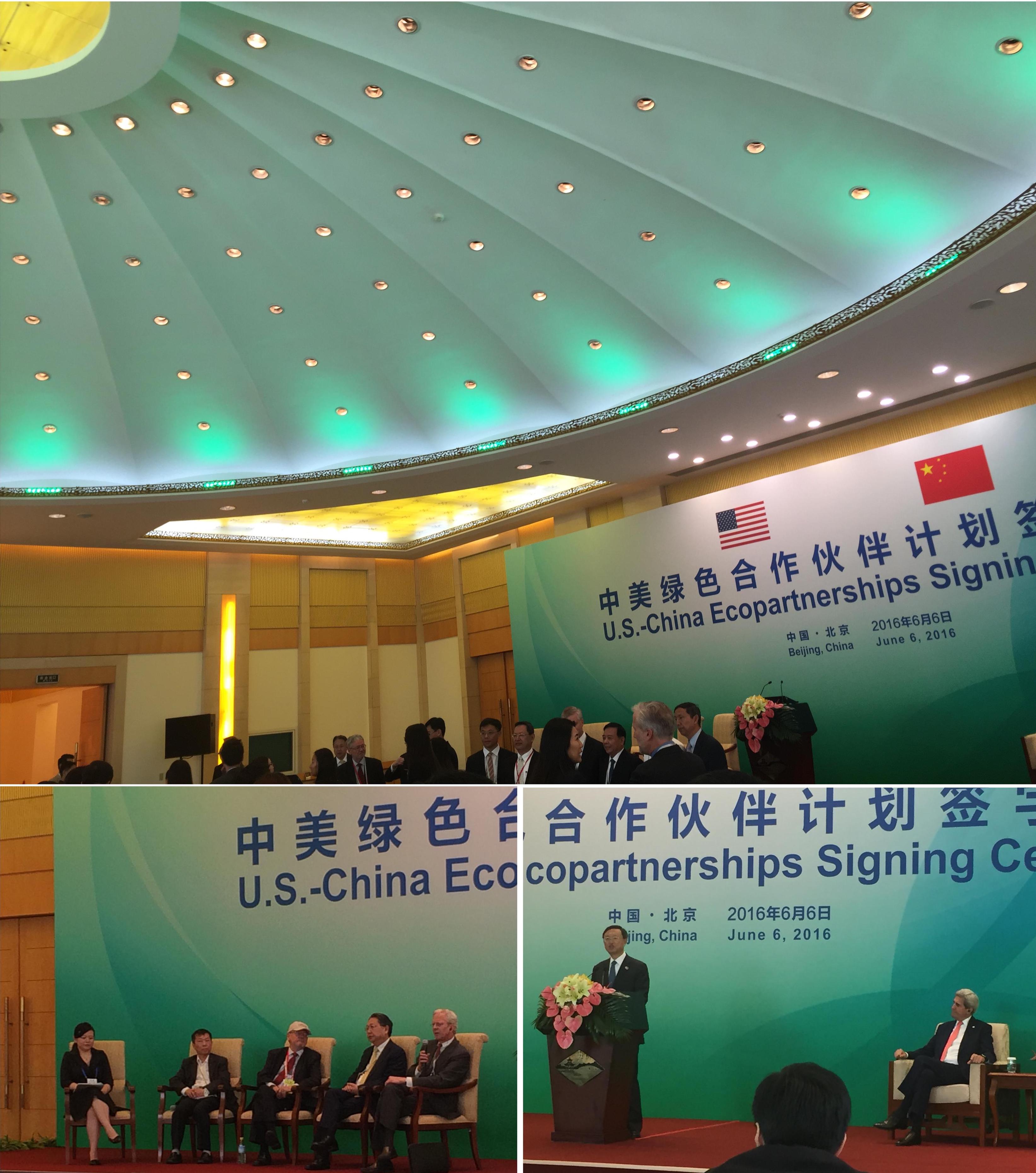
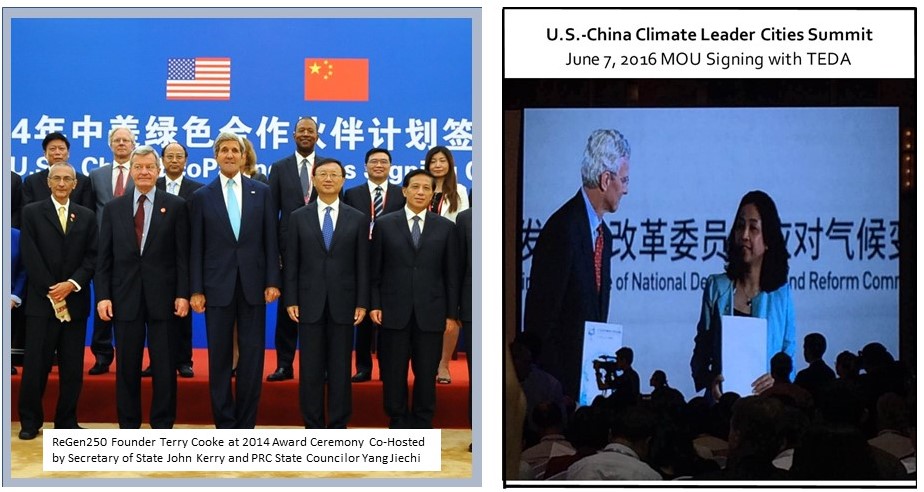
To support and expand the energy-efficient buildings program, Cooke founded in 2011 the China Partnership of Greater Philadelphia whose mission was raising awareness and facilitating collaboration to create and bring to market low-carbon solutions for the built environment. For the first years, things went great with lots of local and Chinese partners, mayoral visits, and stakeholders to plan low-carbon futures for urban centers in the United States and China. In 2014, China Partnership of Greater Philadelphia and its partner organization in China, the TEDA EcoCenter, were competitively selected for and awarded a prestigious U.S.-China EcoPartnership Award, administered jointly by the U.S. and PRC Governments.
“We had some fits and starts, including an unfortunate near-death experience involving IP piracy.” Isn’t this ironic given the long-standing concerns the US government and private sector have about “collaborations” that lead to forced technology transfers and outright pilfering? “It would be if that’s what happened. Instead, the main culprit was an American in an American company.” The company did not want to make a public fuss because of reputational concerns. “We had to shift focus and change our business model to make sure that would never happen again, but it was a one-off, not something endemic with the work we were doing.”
Pulling the plug on energy cooperation
If not as immediately dire, there were other experiences that could have been crippling to his non-profit. Two of them involved former president Donald Trump, who pulled the United States out of the Paris Climate Accords and in 2020 terminated the US-China EcoPartnership program just seven days before leaving office. “Disappointing as these decisions were, there was still potential in the climate change mitigation space, even as other areas like micro-electronics drifted further off-limits.”
The shifting binaries involved with competition and cooperation were making the scope for business cooperation more limited and the non-profit’s work more problematic. Competition is now spilling into the space previously marked by cooperation. The shriveling of discourse between government leaders has only made things more difficult.
“What used to be very effective work through industrial cooperation in lowering emissions is now off the table, though some academic and some intergovernmental climate cooperation continues.”
Early in the Biden administration, excitement was generated by the appointment of John Kerry as climate envoy. Kerry and his PRC counterpart, Xie Zhenhua, had worked closely and cooperatively under Biden’s vice presidency during the Obama administration but Biden administration policy would not be a simple reset to that period. While cooperation continues in areas such as scientific exchange and standards setting, industrial cooperation toward low-carbon goals now enjoys little federal-level support. This even as the planet continues to warm and nations like China and India continue to struggle reducing their addiction to coal.
Kerry recently pointed out in a Foreign Affairs article that there’s still time to avoid disaster but that in the coming years many trillions of dollars will be needed to fund and field clean energy technology. The money, he said, must largely come from the private sector which stands to gain from what could amount to a new industrial revolution.
Cooke worries that the emphasis on zero-sum competition with China over recent years will make broad cooperation in climate change extremely difficult. “The competition drive is spilling into areas that used to be defined by cooperation,” he said. One example is the network of 11 national-level eco parks organized through the Greater Philadelphia-Tianjin EcoPartnership. Germany invested in one such park in 2020, focused on green maritime technology, to the tune of more than $3 billion. The PHL-TJ EcoPartnership had defined a focus on energy-efficient, securely smart and healthy buildings at sustainable-city scale for this network of 11 eco-parks. The emphasis was on large-scale opportunities supported by very large companies and leavened by the innovation of smaller, entrepreneurial companies. “Given the problems in the bilateral relationship, that large scale opportunity has receded for the foreseeable future at least.”
Enter the contradiction
Cooke is highly attuned to the potential for contradiction between commercial competition and climate cooperation, worrying that when Kerry steps down, the space for commercially led environmental solutions to be applied at scale and speed in the two largest global economies will shrink even more.
“What used to be very effective work through industrial cooperation in lowering emissions is now off the table, though some academic and some intergovernmental climate cooperation continues.” He concedes that the continuation of even these relationships is not assured given the political environment in both countries.
“My organization was about creating a platform for a US-Sino Eco-Park in China bringing advanced energy efficiency services and technologies to the park. That is viewed negatively now in Washington. What’s disappointing is that other countries friendly to us are now established in China in commercial areas that we’re better at but won’t be able to contribute to because official reluctance for cooperation.”
Cooke says: “The United States needs to be smart about its clean energy approach to China. Yes, China wants to dominate an emerging 21st century industry. But if we out-innovate and out-compete China technologically, we can access their market profitably and also collaborate commercially to forestall the worst effects of climate change. Is it really in the US interest not to have active engagement with China, aside from discrete small companies that are more easily taken advantage of? I’d prefer to see us going in with a convoy approach of large companies and smaller innovators protected by US government policies and focused on delivering measurable, low-carbon solutions at a globally impactful scale. To my mind, this is a huge missed opportunity.”
Cooke’s non-profit, which he recently rebranded as ReGen250 to accommodate additional, non-China-focused environmental programs, continues to assess options for low-carbon partnerships with China. What elements would a US private sector partner want to support that his organization could strongly endorse? “Alternatively, we can just decide we’re only going to focus on local programs in the Mid-Atlantic to increase access to a greener built environment.”
What about the Department of Energy’s prior interest in cooperation? “I have had some high-level discussions within the Department. The entire group that previously supported the commercial exchange at this high level between the national government and subnational actors, including Eco-Partners and city level groups, is not active right now. It was disappointing to learn that.”
“Despite the challenges in the US-China relationship, subnational initiatives, especially in energy and climate change mitigation solutions, should be encouraged and supported.”
Despite the setbacks, Cooke believes there are still areas for engagement with China regardless of the government in power. One involves people-to-people exchanges, albeit challenging at the present moment given China’s zero-COVID policies. Examples of programs that deserve to survive are the adoption of Chinese children, music (he helped the Philadelphia Orchestra create an artist residency program in China) and artistic exchange, student exchange, and most importantly, business. He believes that the once promising universe of business cooperation has constricted but there still remain spaces outside of sensitive technologies where businesses can and must connect.
As a member of the local ecosystem that support US-China commercial relations, he’s not giving up. Rather, he envisions the different China business-related ecosystems across the United States networking and sharing best practices. He said that one such effort was made recently at a Midwest university, but he expressed some disappointment at the fact that the focus turned out to be on a recently discovered vulnerability involving WeChat. It was a security-led briefing, not the commercially minded dialogue that is needed.
Cooke isn’t ready to walk away from his gift of multi-stakeholder cooperation on climate change or the imperative for non-profits like his to act locally and globally. “Efforts at the subnational level have an important place in helping American companies navigate a complex environment in China. They have a great potential impact because they can organize a well-protected convoy in the place of one isolated boat, big or small.”
“Despite the challenges in the US-China relationship, subnational initiatives, especially in energy and climate change mitigation solutions, should be encouraged and supported.”
(view original article in USCBC’s Fifty States, Fifty Stories series)
On January 13th of this year, President Trump abruptly ordered the termination of the U.S.-China EcoPartnership Program. Seven days before leaving office and without notice, Trump turned the lights off on this 10-year old program, pulling the rug out from under 36 committed and on-going bi-national projects to lower carbon-emissions at global scale.
The Biden Administration is assessing its options for re-vitalizing, in some shape or form, this model of innovative and impactful public-private collaboration to put a dent in global greenhouse gas emissions. This might involve replication of the program to India. ReGen250 is already in the starting gate with a U.S. Mid-Atlantic/State of Maharashtra candidate program should that take shape, as is described on pages 8-9 of our article published last month in the peer-reviewed science journal Environmental Progress and Sustainable Energy.
In the meanwhile, we are pressing forward with unofficial support from the two U.S. Government agencies which ran the EcoPartnership program for ten years — the U.S. Department of State and the U.S. Department of Energy — on a purely private and sub-national basis. Our goal in China looking forward is to explore the possibility of expanding from a regional effort (low-carbon collaboration between the U.S.-Mid-Atlantic and the Jing-Jin-Ji (京津冀) region of Beijing, Tianjin and Hebei Province to national scale.
How will we accomplish this without the direct support of the U.S. Government? The first step was to confirm the Biden Administration’s encouragement of trade with China in support of Paris Accord goals and then to renew our region-to-region BE Better program partnership with our primary partner in China, the TEDA EcoCenter. These steps were taken last quarter.
The next steps involve exploring prospects for the resumption of the Sino-U.S. Eco Park national-level opportunity with the Green Development League as outlined at the 2020 U.S.-China EcoPartnership Summit. (As described in detail in a prior post, the Green Development League comprises the 36 top-ranked NETDZs throughout China and the GDL Secretary-General is our original EcoPartnership partner (the TEDA EcoCenter and its Director Madame Yuyan Song).
As the exclusive U.S.-based working group member for the proposed Sino-U.S. Eco Park, China Partnership would leverage expertise and input from (1) our region-to-region BE Better program partners (experts in “energy-efficient, smart and healthy built environments” for industrial park users) as well as (2) our U.S.-China BEST Cities partners (with additional constituencies of support to include the U.S.-China Business Council, the U.S. Industry Advisory Board of the U.S.-China Clean Energy Research Center for Building Energy Efficiency (CERC-BEE), the National Governors Association, and the National League of Cities) in order to identify a comprehensive range of U.S. clean energy technologies and infrastructures from across eastern, central and western regions of the United States to be incorporated into the Sino-U.S. BE Better Eco Park model.

The primary impact of this milestone — CPGP’s formally joining the Green Development League’s working group for design of a Sino-U.S. Eco Park with scalability and replicability to multiple locations throughout China — is literally “to put the U.S. on the map” alongside eight other similar International Eco Parks already functioning in China under PRC Ministry of Commerce auspices. These eight other Eco Park projects represent mostly Sino-European collaborations (e.g., Sino-German Eco Park, Sino-Swiss Zhenjiang Eco Park, Sino-Austrian Eco Park, Sino-Finland Beijing Eco Park) and, to date, none represents a Sino-U.S. collaboration. The CPGP/U.S.-China BEST Cities model was selected, following the March 27, 2018 deadline for application, due to its unique structure of open collaboration designed to introduce U.S. urban clean energy infrastructures and technologies to TEDA and the 35 other top National Economic-technological Development Zones (NETDZ) in the Green Development League.
Using comparables drawn from the realized, real-world experience of the Sino-German Eco Park in Dalian but adjusted to account for the relatively greater GDP of the U.S., a Sino-U.S. BE Better Eco Park leveraging our EcoPartnership’s platform of energy-efficient, smart, healthy built environment and clean manufacturing for industrial park application should reasonably be expected to realize within its initial 5 years:
• As many as 300 signed project agreements (with nearly 60% of those either in production or under construction during that timeframe) representing total investment of 100 billion RMB (approx. USD 15 billion at today’s exchange rate)
• As many as 90 of these projects would be expected to fall in the high-end manufacturing and new energy field with total investment of 67.5 billion RMB (approx. USD 10 billion at today’s exchange rate)
• As many as 80 of these projects would be expected to fall in the advanced services sector with total investment of 35 billion RMB (approx. USD 5 billion at today’s exchange rate)
We are now actively exploring the most practical route for realizing this goal which would involve resumption, post-Trump Administration, of our primary partnership model with (a) TEDA, (b) the 36 GDLs and (c) the 219 NETDZs. Additionally, we have recourse to a secondary partnership model focused on the Jing-Jin-Ji/Xiongan New Area mega-development project.
With respect to the 35-year macroeconomic development effort ushered in by Deng Xiaoping and the Shenzhen and Pudong macro-development projects, Xiongan has both continuities and distinctive differences. One similarity is the size envisioned for the Xiongan New Area -– roughly 50% bigger than Pudong (east of Shanghai) and slightly larger than Shenzhen (to the north of Hong Kong). While Xiongan can be thought of as culminating the coastal progression of these macro-projects–- starting in the south with Shenzhen in the 1980s and moving to the central coast with Pudong in the 1990s -– the final, northern leg of this triad was wobbly at first. President Hu Jintao and Premier Wen Jiabao initially envisioned the third macro-project leg as being Binhai to the northeast of Tianjin. Post-2012, however, plans for Binhai lost most of their momentum and it was only with President Xi Jinping’s emergence in power that priority was shifted from Binhai to Xiongan. It is more in the discontinuities between Xiongan and the earlier Shenzhen and Pudong macro-projects that Xiongan’s significance can best be understood. The first 30 years of the PRC’s post-Cultural Revolution industrial development was based on a high-carbon model. (This is frequently referred to in China by the phrase 先污染后治理 meaning “pollute first, clean up (or remediate) later”). In contrast, the Xiongan industrial model championed by Xi Jinping focuses on a different set of values for the next 30-year-or-so phase of China’s development in the 21st century: the goals of (1) promoting and putting into practice low-carbon industrialization and sustainability innovations and (2) lessening social inequality and narrowing the gap between rich and poor in shared benefits of industrialization and economic development.

Among the few dozen officially-awarded U.S.-China EcoPartnerships, the PHL-TEDA EcoPartnership is unique in its design as an open platform to facilitate collaboration among businesses, local governments, universities and non-governmental organizations (NGO). On the U.S. side, the platform is anchored by China Partnership of Greater Philadelphia (CPGP, a 501c3 non- profit) and its public sector partner, the Commerce Department of the City of Philadelphia. The first stage of this collaboration has involved bringing sustainable-city-type BE Better technologies (built environment technologies that are more energy-effiient, smarter and healthier) to our EcoPartnership partner in Tianjin (TEDA). Our longer-term objective is to scale these BE Better technologies throughout China through the network of its national-level industrial parks. The initial stage of this scaling effort focuses on China’s northeastern Jing-Jin-Ji region (comprising Beijing, Tianjin and Hebei Province) through collaborations with Green Development League-member National Economic-Technological Development Zones (NETDZ) in Beijing, Tianjin and Langfang. The longer-term goal is to position for second-stage, nation-wide expansion of the BE Better model through the Green Development League’s 36 member- NETDZs nationwide and through the Ministry of Commerce’s national Eco Park program.
On January 13, 2021 — a scant week short of President-elect Biden’s inauguration — President Trump turned off the lights on this decade-old government-to-government program between the U.S. and China to advance climate change mitigation efforts in both countries. Nonetheless, the PHL-TEDA effort was always conceived as a private-sector driven effort and — with continuing legacy support from the U.S. Departments of Energy and State — we are advancing our BE Better program with our TEDA partner in China and exploring possible broadening of the program to the state of Maharashtra in India.
The complete story of where we have been and where we are going is presented in the attached peer-reviewed article published online earlier this month by the Wiley-owned journal Environmental Progress & Sustainable Energy. The print version of the article will be published in the next few weeks.
The full article can be read by clicking here or on the image below:

We encountered headwinds along the way — a fraudulent bid procurement, Trump’s announced intent to withdraw the U.S. from the Paris Accord, the Tariff War — but, by tacking and keeping our eye fixed on our destination, we have gotten to calmer waters and now have a following wind. Stay tuned for the next leg of the journey.
In July 1989, I was at my desk at the U.S. Consulate General Shanghai when I received a call notifying me that a small group of senior officials from the Shanghai Municipal Government would be coming for a meeting that afternoon. I was asked to make sure that the newly-arrived Consul General — Pat Wardlaw who had just replaced my first Consul General Charlie Sylvester earlier in the month — join the meeting.
A couple of things about this. First, you’ll note that a meeting wasn’t actually requested and that none of us were asked about our availability in the afternoon. We were instead informed that the group of government officials would be coming and we were simply expected to be available when they arrived. Second, anyone who has worked in China will notice something quite extraordinary about this phone call. We were not summoned, as is typically the case with Chinese government officials, to go meet with them at their offices. They were coming to us. This would be the only time in my working career in China when Chinese government officials came to us rather than vice versa.

A word of context. This phone call took place in the latter half of July, a month and a half after the June 4th Tiananmen incident. Roughly a week before June 4th, my wife Grace and I had left Shanghai on a one-month Home Leave, traveling first for one week vacation with my sister’s family on Kauai and then expecting to spend the remainder of our time in Philadelphia with family and with me traveling to Washington DC on consultations. As we transited San Francisco International Airport on June 4th to catch our onward flight to Philadelphia, there was a palpable tension in the air and we soon saw the near-identical banner headlines about Tiananmen in a row of vending machines along the terminal wall as we made our way to Passport Control.
I never got my homeleave or consultations in Washington. Secretary of State Jim Baker was determined to have his thumb on the pulse of decision-making by McDonnell-Douglas, 3M, Johnson & Johnson, Coca-cola and the other top U.S. investments in Shanghai. He knew it wouldn’t be reliable to just count on what he heard from the CEOs at U.S. headquarters. He wanted to know the calculus of decision-making that was taking place on the ground by the Shanghai-based executives in charge of the major U.S. investments in Shanghai. Having just landed in Philadelphia, I was given one-day to help Grace (early in her pregnancy with our older son Todd) get settled in and was instructed to then turn around and fly back to Shanghai to start providing anything I could learn from my business contacts in Shanghai in a series of classified cables.
So back to the July meeting. The Consulate guard (not a Marine because no U.S. military presence was allowed in China at that time) notified me that the government officials had arrived. I escorted the group of four or five officials into the ground-floor meeting room where a handful of my Consulate colleagues were waiting. One of the officials was just barely managing to carry a big armful of long paper rolls. They did not wait to be seated and didn’t begin with any pleasantries. The senior official simply took the first roll of paper handed to him, unrolled it on the conference room table and announced “This will be the new Pudong. We want you to report about Pudong to your government. We want Americans to invest and help develop it. They will make a lot of money.”
¤ ¤ ¤ ¤ ¤ ¤
Today’s post falls into the TEA Collaboratives’ A-Series of content dealing with PRC government planning Ambitions. Over the weeks and months ahead, I will have a chance to share insights developed through the Masters-level course (IMPA 608) which I taught at the University of Pennsylvania in the spring semester of 2019 and 2020. The focus of that course, based on Mandarin language research, is the forty-year trajectory of China’s macro-development planning vision and execution. Domestically, the trajectory of that storyline begins with Shenzhen in the early 1980s, continues smoothly through Pudong throughout the 1990s before encountering turbulence in Tianjin in the 2000s. Following 2012, the first stage of this macro-development model gets jettisoned and the second stage ignites with the twin megalopolis projects — the Consolidated Beijing-Tianjin-Hebei Project (‘Jing-Jin-Ji’ or 京津冀) in the northeast and the Guangdong-Hong-Kong-Macao Greater Bay Area Project in the southeast. Simultaneous with the unveiling and cranking up of this pair of Version 2 domestic macro-development projects over the last decade, China has also been systematically extending its macro-development model to its 139 international partners through the Belt & Road Initiative.
I look forward to sharing the insights gleaned from this multi-year, instructor-and-student knowledge co-creation effort in the TEA Collaborative’s A-series blogposts on Fridays over the remainder of the year. Understanding the vision and values driving the momentum of this forty-years macro-development effort helps chart where China is headed in the future. I hope this small, personal anecdote about Pudong’s emergence into China’s macro-development planning process serves as an apt way to kick off our Macro-Dev series.
On June 8th, the Biden Administration announced immediate actions it was taking to address near-term vulnerabilities in four critical supply chains as identified by a 100-day America’s Supply Chains assessment initiated in late February. The four critical supply chains included in this announcement are: semiconductor manufacturing and advanced packaging; large capacity batteries, like those for electric vehicles; critical minerals and materials (so-called “rare earths”) used in smart phones, electric vehicles, wind turbines and other advanced technologies; and pharmaceuticals and active pharmaceutical ingredients (APIs) used in vaccines and other applications.
Today’s post takes an initial high-level view of the critical supply chain for semiconductor manufacturing and examines the shifting fault-line of vulnerability. Subsequent posts in the Global TECHtonics series will take a much closer look at these and related issues.
Photo: barks/Adobe Stock
What is the Fault-line?
The semiconductor supply chain fault-line runs directly under Taiwan, whose chip foundries produce 92% of the world’s most advanced microchips (which have transistors less than one-thousandth the width of a human hair). The small island is caught between the tectonic forces of the China market (which accounts for 53% of global semiconductor consumption and the U.S. market (which accounts for the vast majority of the advanced designs on which Taiwan chip production is based). In addition to these market forces, political dynamics add to the stresses along this fault-line. While China claims Taiwan as an inalienable part of its territory, the U.S. has been serving as the guarantor of Taiwan’s de facto independence since 1949. In more recent years, the Trump Administration’s “Tariff War” against China has given impetus to a process of technology “de-coupling” which is forcing Taiwan companies – especially its preeminent foundry manufacturer Taiwan Semiconductor Manufacturing Company (TSMC) – to choose between the fast-growing China market (34% revenue growth since 2014) and its slower growing (4% growth) but highly strategic U.S. customers, including the U.S. military. The fact, for instance, that 14 of TSMC’s 17 foundries worldwide (and all of its foundries capable of higher-end production above the 16 nanometer level) are located in Taiwan at a distance of just 90 miles from the PRC mainland adds to the tectonic friction.
What is the Trend-line?
Subsequent posts in the Global TECHtonic series (approximately two per month) will examine a broad range of dynamics in detail to include the impact of the COVID-19 pandemic on global microchip supply chains, specific dynamics within microchip subproduct categories (logic chips, analog chips, memory chips, etc), TSMC’s strategic response to the increasing global pressure and detailed analysis of trends within the U.S. semiconductor industry. Today’s post will limit itself to two broad brush-strokes to suggest the general trend-line: (1) the twenty-year trend-line since 2001 and (2) the one-year trend-line since 2020.
- The accession of China and Taiwan to the World Trade Organization (WTO) in 2001 led to hopes that Information and Communications Technologies (ICT) supply chain tensions might start easing but, from 2008 at least, the opposite has proved true. Following the Global Financial Crisis, market forces and competitive tensions increased pressures on ICT supply chains markedly and these pressures further accelerated starting in 2012 following the 18th Chinese Communist Party Congress in 2012. (Readers interested in a deeper understanding of the ICT supply chain dynamics covering the period 2001-2008 can refer to Congressional Commission testimony I provided during the 107th, 108th and 109th Sessions of Congress as well as to my article in the edited volume Economic Integration, Democratization and National Security in East Asia (Peter Chow, Elgar Publishing) and my article in The Journal of Contemporary China (Volume 13, Number 40, 2006).
- The past year has shown some notable shifts along this fault-line. In Taiwan, policies instituted by President Tsai Ing-wen have led to a small shift in Taiwan’s trading dependence on China and to larger shifts in the pattern of outbound and inbound investment involving China. Specifically, the Tsai Administration’s New Southbound Policy has shifted a small portion of Taiwan’s trade in consumer electronics away from China in favor of Southeast Asian markets. More notably, the “Invest Taiwan” program has exceeded its targets and much of the reinvestment in Taiwan comes as a result of production being repatriated from the mainland. As for outbound investment from Taiwan in ICT sectors, recent trends favor the U.S. as a destination rather than China. In March 2020, TSMC announced that it would be building a $12 billion microchip production plant in Arizona. Meanwhile, tighter regulations by Taiwan’s Investment Commission has led to a 60% drop in outbound investment to the mainland since 2018.
It is for these and other reasons that the New York Times recently proclaimed “pound for pound, Taiwan is the most important place in the world.” The Strait of Hormuz may have been the world’s most dangerous fault-line in the 20th century oil economy. In the 21st century, the tectonic pressures of the global economy now converge on the Strait of Taiwan.

Volume 2, Number 4 in Global TECHtonics: U.S./China Fault-line series
The weekend’s big development in the technology arena is Beijing’s eleventh-hour move to alter the timing and trajectory of the sale of TikTok’s U.S. operation.
We touched on the Trump Administration’s August moves against TikTok’s parent Bytedance in the U.S./China De-Coupling: 4 Levels of Risk post two weeks ago. On August 6th, President Trump signed two executive orders which started a 45-day time-clock involving two Chinese companies with hugely popular social media apps – ByteDance (owner of TikTok) and Tencent (owner of WeChat). According to those orders, U.S. citizens and businesses would be barred, once the 45-day period expired, from any transaction involving the company and/or its products. On August 14th, the Trump Administration modified the order as far as it affected TikTok by putting a new order in place, giving TikTok 90-days within which to complete the divestiture of its U.S. operation to an approved U.S. corporate buyer.

The widely-presumed reason for this change being made so shortly after the announcement of the original order is that U.S. potential buyers interested in acquiring the U.S. operations of TikTok had pitched their interest to the White House. It is not surprising that U.S. potential acquirers would be focused on TikTok and not WeChat. The number of TikTok users in the U.S. is estimated at 80 million in comparison with 19 million for WeChat. Its growth rate in global markets is far faster and, critically, its algorithms have nearly ubiquitous applicability whereas WeChat algorithms are more geared to Chinese user behavior and are so less replicable in other world markets.
Two groups of interested buyers have emerged publicly since the August 14th announcement:
- Microsoft/Walmart: As Instagram and other social networks edge into offering shopping features, Microsoft and Walmart are looking to establish themselves at the strategic center of this opportunity with one bold acquisition move. Put simply, Walmart would provide the e-commerce component for TikTok while Microsoft would manage the crucial cloud-computing infrastructure. The deal offers competitive advantages to both firms – Walmart would become better positioned to compete with Amazon and Microsoft would gain experience with an innovative and cutting-edge set of algorithms and data-sets.
- Oracle: According to analysis by the New York Times business reporter Mike Isaac, “Oracle could use TikTok’s data about social interactions to benefit its cloud, data and advertising businesses.” Also, like Microsoft and Walmart, Oracle is interested in the opportunity the deal would afford “to offer customers a hyper-personalized experience in both content and commerce.”
Going into the weekend, the expectation was high that Bytedance’s preferred acquisition partner would become known and that negotiations would shift to a new phase of negotiation with only that chosen partner.
So, what was the development over the weekend which changed the trajectory and pace of this deal? The Chinese government announced late in the day on Friday that any sale of Bytedance’s assets would be subject to a brand-new set of restrictions affecting artificial intelligence exports. As reported in still-developing coverage in the Wall Street Journal, “the new Chinese restrictions highlight the extent to which TikTok, a breakout social-media hit—especially with younger U.S. users—has been thrust into a geopolitical contest between the U.S. and China over the future of global technology.”
I’ll limit my commentary on this development to three main points – a historical observation, a key point having to do with the present-day competition in advanced technologies between the U.S. and China, and my personal handicapping of where this deal is likely to go in the weeks ahead.
Historical Antecedent: The U.S.-Japan Trade War
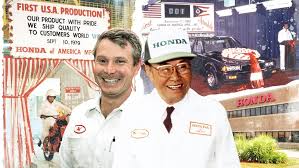
While observers sometimes invoke the U.S.-Japan Trade War as a template for understanding our current tensions with China, the contrasts between the two are probably more instructive than the similarities. A future post will return to the broad comparison. For our purposes here, I will single out one important point of contrast. The U.S.-Japan Trade war became incandescently hot as a political issue in the lead-up to the 1992 U.S. Presidential election. But while that was happening, commercial developments on the ground were already in motion to begin lowering the heat. The industry sector in which the grass-roots transformation took root and started having great effect was the automotive sector. The seed for that bottom-up transformation was the fact that, post-war, Japan had developed intellectual property in their domestic market that made them more competitive than the U.S. industry in a number of vital areas of automotive manufacturing (e.g., inventory management, quality control, customer-based innovation, etc). Led by Toyota, the Japanese and U.S. industries started reaching an accommodation even before politicians in the U.S. turned up the volume on their anti-Japan megaphones. Japan would license out its intellectual property and bring its production closer to its customers in the U.S. by building factories and supplier networks in the U.S. In return, American companies would gain access to know-how in areas where its competitiveness was lagging and also gained greater access to the restricted Japanese market. At a political level, investments in new state-of-the-art production facilities in the non-unionized south brought jobs into key congressional districts. Of equal importance, auto workers, their families and their communities started having the experience of working alongside Japanese managers on U.S. soil. In the process, real-world people-to-people experiences built on collaboration replaced the one-dimensional caricatures being amplified by politicians and the media.
The Chinese have studied this experience whereby Japan lessened the political tension of the U.S.-Japan Trade War while, simultaneously expanding access to the lucrative U.S. market and affluent U.S. consumers. For various reasons, they have not been as successful in applying the model. We’ll examine the broader set of reasons in a future post but, for present purposes, one salient reason is that China, generally speaking, has not developed the portfolio of intellectual property focused in high-value industries (like, for Japan, automotive and consumer electronics) and highly sought after by U.S. companies. Except, that is, until now as China emerges with competitiveness in advanced technology fields such as artificial intelligence, robotics, and autonomous vehicles.

Looking at Both Sides Now:
The U.S. innovation ecosystem represented by Silicon Valley is, and is likely to remain for the foreseeable future, peerless in many important respects – depth of talent and experience, access to capital, connectivity to leading universities, basic research capability and innovation mindedness. In three respects, however, emerging tech competitors in China enjoy advantages which U.S. firms can’t match. First, China has been for years the biggest and fastest growing market in the world and U.S. companies can’t afford to cede that base of users entirely to their Chinese competition to monopolize. However, the ability of U.S. firms to access those consumers is highly constrained by a whole raft of protections – many non-WTO compliant and others not yet covered by WTO ground-rules — by which the Chinese government limits foreign access to its home market and by which it supports its home-grown champion companies. Second, China may enjoy a tactical advantage through its laser-focus on market applications (as opposed to research and academically-based innovation). Third, AI firms in China definitely enjoy a leg-up in algorithm development because they have direct access to the world’s largest user-base for smart phones and are less constrained by privacy protections for those users. These latter two advantages for Chinese tech firms are persuasively presented by the former President of Google China, Kaifu Lee (a Taiwanese national whose computer science PhD thesis at Carnegie Mellon gave birth to the world’s first speaker-independent, continuous speech recognition system) in his book AI Superpowers: China, Silicon Valley and the New World Order. In Lee’s view, “the United States may have been a first mover in AI but that advantage will not last forever. The AI era will reward the quantity of solid AI engineers over the quality of elite researchers. Strength will come from an army of well-trained engineers and entrepreneurs, and China is training just such an army.”
So, stepping back, there is now for the first time since normalization of U.S.-China relations a strategically-important (emerging) industry where Chinese firms hold important competititve advantages over the U.S. Unlike democratic Japan, this high-stakes competition is associated with a Communist regime with all that that entails for public attitudes in the U.S. And there is little in the of way local ties-that-bind being built quickly and effectively on a people-to-people basis. Nothing that can match the stabilizing experience with Japan investment into the U.S. in the 1990s. Together, these three factors go a long way to illuminating the huge pressures that have been building up under the U.S./China technology faultline on both sides of the U.S. political aisle.

Where’s The TikTok Deal Likely to Go?
Despite the fact that practically nothing is known yet about the details of the PRC government restrictions announced on Friday, two things can be safely said. First, the fact that the PRC government is invoking national security as a basis for governing the commercial activities of its leading artificial intelligence firms is hardly surprising. The competition between the U.S. and China is, for reasons just examined, acute. The U.S. and other countries routinely monitor and manage international commercial activity for their technologically-advanced products and services, especially those that are ‘dual-use’ in both commercial and military applications. The second point is that the timing of the announcement tends to be viewed in the U.S. as so transparently tied to the on-going negotiation involving TikTok that it will be viewed more as a political beanball, than a fair pitch. This despite the fact, as pointed out by an astute comment (see below), that these new regulations had been proposed prior to Trump’s August 6th announcement and were in a public comment process.
The Chinese government action raises the prospect that key algorithms and other vital data – everything that makes TikTok tick — may be stripped out of the sale by its Chinese parent corporation as a new requirement of Chinese law. That result would fundamentally change the value proposition for both the Microsoft/Walmart and Oracle bidding teams. It’s like the difference in value between a top-of-the-line computer and that same computer with all its electronics removed. At the very least, the PRC government action will force all parties to slow the pace of their negotiations and delay the deal being sealed until there’s greater clarity about what will ultimately be allowed.
With Friday’s move, it’s likely that the Chinese government will be satisfied with slowing the deal and changing the trajectory of its fall-out for global technology competition. Scuppering the deal entirely would risk dramatically escalating the issue with Trump and his Administration. That would go against China’s temporary strategy of muted response to the Trump Administration’s recent, pre-election flurry of jabs. The idea in Zhongnanhai in the run-up to November 3rd is to give its wolf-warriors and nationalistic netizens enough to appease their appetites but not enough to risk fanning Washington-Beijing flames out of control.
So, with the clock ticking down to 64 days before the U.S. election and with 78 days before the Trump Executive Order 90-day deadline expires on November 12th, the endgame of this global chess match is now ruled by the time-clock.
TikTok, TikTok, TikTok …

Volume 2, Number 3 in Global TECHtonics: U.S./China Fault-line series

A U.S.-led initiative to reach out to China and to welcome it into the community of Western nations began with President Nixon trip to Beijing in February 1972. Orchestrated by Henry Kissinger, Nixon’s National Security Advisor at the time, the trip was a brilliant Cold War gambit to exploit the growing rift between Moscow and Beijing. The trip kicked off a seven-year process of “normalizing” relations between the West and “the sleeping dragon” of Asia and, in so doing, divided the Soviet bloc. Through almost half-a-century and a bipartisan succession of Presidents, the effort to engage with China continued as that country woke from its Cultural Revolution nightmare and began to rise up, shaking the world as it did so.
February 1972 was the Year of the Rat (Water Element) in the Chinese zodiac. Forty-eight years later we are again in the Year of the Rat under the Metal Element. In Chinese traditional thinking, we have gone from a time of suppleness and fluidity to a time of hardness and intransigence. In the minds of most Western observers, we have passed from a strategic engagement with China to, under President Trump, a time of open competition on the world stage and strategic disengagement (“de-coupling”) in the technology arena.
This post will save for another time the broader discussion about how and why this shift came about other than to make three general, even obvious, points. First, there was undoubtedly a measure of optimistic naïveté in the West in assuming China’s willingness to dutifully assume the role of a ‘responsible stakeholder’ in the post-WWII world order. If the Chinese had conceived of their nation as only having been born in 1949, assuming the mantle of responsible Pax Americana stakeholder might have fit more comfortably. As it was, Chinese conceived the People’s Republic of China as the heir to a Chinese polity which had been the dominant economy in the world for sixteen of the previous eighteen centuries. They weren’t predisposed to simply adopting some newcomer’s rules and norms as to how China should conduct itself on the world stage. Second, there has undoubtedly been tactical overreach and ill-advised swaggering by President Xi Jinping since his triumphalist speech at the 19th Party Congress in September 2017. U.S.-China relations would undoubtedly be on a more stable track today had Xi Jinping played his cards differently, following suit more with Deng Xiaoping’s opening bid of “keeping a low profile (hiding one’s capacity) and biding one’s time” (韜光養晦、有所作為) rather than flashing his Made in China 2025 card so conspicuously. It can be argued that it’s better from the U.S. standpoint for this “world order competition” to be out in the open. Third, the horse is definitely out of the barn. No U.S. Administration is going to try to get that horse back on the 1972-2017 normalization track. The world has changed and what is needed is a U.S. Administration which recognizes real challenges from China but does not exaggerate them and which marshals the resources to address those challenges in an efficient and effective way, rather than wastefully and non-productively.
The remainder of this post uses last week’s The Four Levels of Risk post as a backdrop to a quick sketch outlining just how wasteful and ineffective the Trump Administration’s policy of technology de-coupling from China is becoming. I’ll do this sketch with three brushstrokes – the view from U.S. boardrooms, the view from the cultural sidelines and the view from history.
The View from U.S. Boardrooms
 A CNBC.com article by Arjun Kharpal published on June 4, 2019 made no reference to the Tiananmen anniversary but did point out that the Trump Administration’s Huawei policy was quickly hoisted on its own petard – failing to get allies to broaden the campaign but leading to a marked acceleration of China’s efforts to develop its own semiconductor industry to supplant U.S. semiconductor supply in the Chinese market and, eventually, in world markets. “The Huawei incident has indeed stimulated the development of China’s domestic chip industry,” Gu Wenjun, analyst at China-based semiconductor research firm ICWise, told CNBC by email” wrote Kharpal at the time. Now, one year later, Trump Administration policy is digging this hole deeper and at a faster pace:
- Qualcomm is reported to have lost current orders worth as much as $8 billion as a result of the Trump Administration’s May 2020 tightening of trade restrictions imposed against Huawei. The new regulations block all chipmakers that use U.S.-made equipment or software from producing chips for Huawei (though companies can apply for a license to continue supply)
- Following the Trump Administration’s August 6th signing of an Executive Order banning transactions by U.S. companies with Tencent, the owner of the WeChat app, market research firms scrambled to assess the impact on Apple and its installed base of iPhones in the strategically vital Chinese market. The surveys all pointed to the same result – as many as 90% of iPhone users in China would drop the Apple product and switch to Android devices if the WeChat app were no longer available on their iPhones.
- The same August 6th Executive Order targeted Bytedance, parent company to the massively popular TikTok app. Seasoned observers who are able to gauge the U.S.-side push-back against this action and know the sloppiness with which the Executive Order was drafted, expect an eventual climbdown by the Administration – if not before the November 3rd election, then shortly after it.
The View from the Cultural Sidelines
 There are two culture wars raging – a partisan one in U.S. domestic politics and an international one between a suddenly tarnished U.S. model and a much-hyped “bright and shiny” new Chinese model. The same dynamics at play with the COVID-19 pandemic are at play in the technology sphere. Domestically, Trump works to energize his base with claims that China is the enemy and that his Administration’s COVID response and China de-coupling response are “the best” that any President could possibly do. Front-line health workers and tech experts know that, in both cases, the claim lies far afield from the truth.
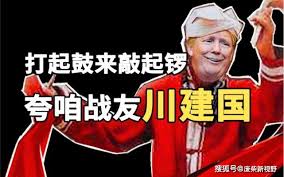
In China, the popular view cuts to the bone of Trump Administration posturing. His new nickname is 建国 (Jiànguó), a popular name given by parents to their infants especially during the nationalistic years of the Cultural Revolution. It means “Build the Country.” In other words, Trump Administration policies are widely seen as accelerating the same nationalistically-driven Sputnik-type race to advanced semiconductors, artificial intelligence, robotics and the tech future which the policies ostensibly are meant to forestall. Trump’s impulsive “Only I Can Fix It” approach playing to a grandstand of partisan supporters has made the challenge which Xi Jinping’s China presents the U.S. more acute. An approach which takes measured and deliberate stock of that challenge and which aligns interests and works closely with the U.S. business community and international partners would be far more effective. Pumping up nationalist sentiment in both the U.S. and China serves only to narrow options and increase risks of conflict spiraling.
The View from History
 A pithy take on Trump’s approach to the U.S.-China technology challenge comes from a widely-respected former colleague who has decades of high-level experience with China from political, national security, economic and think-tank perspectives. He writes “(Trump is like) King Canute trying to fight, instead of the ocean tides, the tides of technology.”
I’ll conclude with another, somewhat longer historical reference which illuminates Trump’s campaign of China-bashing as a central element of his re-election strategy. It is drawn (almost) verbatim from Episode 66 of The History of Rome podcast series by Mike Duncan:
“Conscious that his standing with the people was taking a hit, the Emperor decided he needed to find someone to take the fall for the fire. Someone he could point to and say it was them, not me, I didn’t have anything to do with it. But he couldn’t just grab someone off the street because, with his popularity sinking like a stone, that would just engender the further charge that he was setting up some innocent to take all the blame. What Nero needed was someone, some group that the people disliked even more than him, someone that the people were ready, willing and able to believe had done this horrible thing if for no other reason than that the people were looking for an excuse to round up and punish them. Enter the Christians. In the thirty odd years since the death of Christ, nascent Christian communities had begun cropping up throughout the Empire. At first, they were primarily Jewish in character but through the missionary work of St Paul, known later as the Apostle to the Gentiles, this new religion began to spread into the Greco-Roman world. By the Emperor’s reign, a tiny community of believers, led according to tradition by St. Peter, had established a religious beachhead in Rome itself. The problem the early Christians faced in Rome, though, was not just that their religion, in comparison to the wider pagan world, struck the average Roman as downright weird, but also that at this point most Christian adherents were non-citizen resident aliens in the city who spoke primarily Greek or Hebrew. So the Christians in Rome looked different, spoke a different language, usually came from the lower rungs of the social ladder, and belonged to a strange monotheistic cult that seemed to have cannibalistic overtones. All in all, they were capital O Other in every sense of the word. And as has been proven over and over again by history, whenever terrible things happen to a community – economic problems, floods, plagues, fires – it is the capital O Others who usually get blamed. So desperate to shift responsibility for the great fire away from himself, the Emperor looked at these Others and decided to lay it all on them.”
The only change I have made to this podcast text, recorded in August 2009, was my substitution of the central character’s title instead of his name. Even with that switch, there’s little surprise who that Emperor was.
Nero.
Everything that I have ever done professionally has been approached and viewed through the lens of one of two disciplines. Eventually, I learned to combine the two.
The first was the discipline of cultural anthropology. A twelfth-grade class in 20th c. religious thought led me to major in Asian Comparative Religion at Princeton which led me (after a year of traveling overland from Europe to Taiwan via Turkey, Iran, Afghanistan, Pakistan, India and Nepal) to a joint MA/PhD program at the University of California at Berkeley. Two and a half years living at 10,500’ in the village of Tengyi in the Manang Valley north of Annapurna (pictured below), taught me how to see the world through the eyes of people with different circumstances and values.

The other was the discipline of diplomacy. I joined the U.S. Foreign Service in the spring of 1988, a little more than two years after getting my degree. (I should mention at this point that I made very good use of the intervening time by moving to New York to court Grace, by marrying Grace, and by renovating our first house in Brooklyn.) Having cleared the various assessment hurdles of the Foreign Service test and having been given an offer to join, it wasn’t a hard decision. My clearest career idea upon receiving my doctorate was that I did not want to stay in academics. And my only interview in the corporate world – with SmithKline (now Glaxo) – could have made for an amusing episode of The Office. So I took the offer. Having come in initially through the State Department, I asked for a lateral transfer into the U.S. Department of Commerce branch of the Foreign Service, because my sense was that — for the two places I really wanted to be posted, China and Japan – a lot of the Embassy action was on the business side. I wasn’t wrong. Anyway, the point I want to make here is that the anthropological viewpoint worked well with the diplomatic viewpoint to help me see issues in three dimensions and, with that better field of vision, helped me resolve some the issues at the heart of the U.S.-Japan Auto Talks and other knotty diplomatic challenges. I don’t think I ever told business clients, and rarely told Embassy colleagues, that I was trained as a cultural anthropologist. I definitely never contemplated for a moment putting PhD on my business cards. But I used the anthropological perspective every day during my time in the Foreign Service.

With this as personal introduction, I’ll share here the three roadmaps – ‘pathmaps,’ more accurately – which have been most helpful in guiding me through both the magnificent panoramas and the minefields of modern U.S.-China relations. In coming weeks, I will give each of these works its own dedicated post. Today will simply list the three with brief thumbnail intros and identify the common thread I have found most useful.
1
Wealth and Power: China’s Long March to the Twenty-First Century
By Orville Schell and John Delury
Random House (2013)

Given to me for Christmas in 2013 by James Gibney — former Foreign Service colleague in Tokyo, editor extraordinaire, and godfather to my younger son – Wealth and Power brings to life a simple but profound insight. Through the life stories of eleven completely different individuals — in some cases, mortal enemies – Schell and Delury show how all eleven hew to a single goal, China’s rejuvenation through the acquisition of wealth and power. The early 19th c. scholar Wei Yuan and the activist Feng Guifen proposed completely different courses of action; the Empress Dowager Cixi, the “new citizen” Liang Qichao and the reformer Sun Yaat-sen all saw radically different pathways to modernization, Chiang Kai-shek and Mao Zedong led opposing sides of a decades-long civil war, and Zhu Rongji (whom I met as Mayor of Shanghia on several occasions during my first posting there) and Nobel Prize winner Liu Xiabo had entirely different conceptions of the moral duty of a citizen in modern China. Nonetheless, despite differing in their ideas of the best means to reach the goal, they all shared an absolutely identical understanding of the most urgent goal in their lives – helping China acquire enough wealth and power to regain its traditional standing as a world colossus. (This goal, incidentally, continues to be inculcated in the education of every school child in China today).
2
Belt and Road: A Chinese World Order
By Bruno Maçães
Hurst Publishers (2019)
 This book is included not because it is one of the best books about China. Far from it. John Pomfret’s The Beautiful Country and the Middle Kingdom and countless other books would make that cut in front of Maçães. The reason for Belt and Road’s inclusion here is that Maçães does something few too scholars and commentators on China bother to do. He puts himself into the minds and mindset of the Chinese government planners who are charting China’s future. This is what an anthropologist does and the insight it provides helps minimize misunderstanding and creates more space for successful diplomatic outcomes.
Maçães is himself a former Portuguese diplomat with extensive experience in Hong Kong and China. To give just a sense of his approach, Maçães argues that Western theories of international relations entirely miss the basic conception at the heart of the Belt and Road Initiative (BRI). In Maçães’ view, that conception “follows Taoist logic: the single concept first divides in two — land and sea — then in several — the corridors and coutnries — then in many — the specific projects and privileged locations” in the BRI enterprise.
3
The U.S. and China in the 21st Century: Sub-National Sino-American Relations
Course Number IMPA 608 in the School of Liberal & Professional Studies (FY 2019 & 20)
International Masters of Public Administration, Fox Leadership International
Instructor: Terry Cooke Co-Instructor: Liyiran (Shelly) Xia
 This is the course I taught at Penn for two years before COVID-19 hit and the course was furloughed. I hasten to point out that I am adding it here because of the input from students, rather than because of my syllabus. The course is designed in two parts: the first seven weeks involves readings, lectures and classroom discussion structured on the basis of my syllabus; the second seven weeks, the most valuable part of the course, is a knowledge co-creation exercise based on original research, much of it in Chinese, which the students conduct and present. It is through this knowledge co-creation exercise and through insights provided by the students and Co-Instructor Shelly Xia that I have been able to articulate the framework which informs the Ambitions portion of the TEA Collaborative project (T = Technology, E = Energy/Environment, A = Ambitions). The Ambitions portion seeks to understand and systematically present the MacroDevelopment vision which Chinese government planners have been elaborating and adjusting since the birth of the People’s Republic of China in 1949 (and have been communicating clearly in their Five Year Plans). It is an effort to apply the joint lens of anthropology and diplomacy to better understand the motivation and to better delineate the opportunities and challenges associated with China’s MacroDev trajectory. We use three time periods (and, in the last time, period two different geographies) to organize this undertaking:
1949 – 1978: Version 1.0 of the PRC MacroDev Model
1982 – 2009: Version 2.0 of the PRC MacroDev Model
2012 – Current: Version 3.0 of the PRC MacroDev Model
A) Domestic Release
B) International Release (Belt & Road Initiative
Note: the years not covered above were years of opaque, internal deliberation
within the Chinese Communist Party leadership
The Common Thread

I hope the point is obvious. The common thread here is being able to understand the world as seen through the eyes of your counterpart. As in business, you don’t always know whether your counterpart will prove to be protagonist or antagonist, friend or foe. In order to negotiate the best possible deal, however, it is always vital to understand as well as possible that counterpart’s motivations, core values and thought processes. Whether the climate of U.S.-China relations is chilly or warm, I choose to stand firmly on that ground.
Volume 2, Number 2 in Global TECHtonics: U.S./China Fault-line series
One of the most memorable moments from the two months of A-100 training I received upon entry into the U.S. Foreign Service was a leadership training film about the 1985 Bradford City Football (Soccer) Stadium fire. A small fire, sparked in a code-violation trash pile, was quickly whipped by winds into a fire engulfing substantial portions of the stadium. The raging fire trapped spectators, killing 56 and injuring at least 265.
Filmed on-site during the panic, the key point in this very graphic film involved the challenge of communications in a crisis. As described by Wikipedia, “In the mass panic …, fleeing crowds escaped on to the pitch but others at the back of the stand tried to break down locked exit doors to escape, and many were burnt to death at the turnstiles gates, which had also been locked after the match had begun.” The specific problem was that people at the front of the mass of people trying to flee from the gates quickly recognized that those gates were locked but, in the panic, could not communicate the problem back to the people pressing forward from behind. Had clear communication been possible, everyone could have found an alternative exit. As it was, scores of people ended up pinned against the gates and perished.
The lesson for the U.S.-China technology upheaval currently underway is straightforward: the implications of the upheaval appear different to different parties, depending upon their position in the field of action, and there is danger of differing reactions and poor communications compounding the danger and likewise leading to tragedy.
The goal of this post is to set out in very general terms the different industry groups affected by the Trump Administration’s efforts to date to “decouple” the U.S. and Chinese tech spheres – denying various sub-sectors of the Chinese tech industry access to the U.S. market, incentivizing U.S. firms to bring their production from China back to the U.S., and also encouraging allied governments to reinforce both approaches. There are four major technology sub-sectors that, to date, have been affected by these policy moves. In addition to providing simple, thumbnail descriptions of each of these four sub-sectors and how they have been affected by the Trump Administration policy approach, we will also rank them in terms of national security risk and look at the potential for a seismic reaction being triggered.
A simple way of assessing national security risk and gauging the related potential for a Bradford Stadium-type chain of events is to think in terms of crisis management. Crisis management experts generally identify four distinct stages as a true crisis develops. The following is drawn from the Crisis Prevention Institute’s Crisis Development Model:
- Anxiety
Anxiety prompts changes in behavior and looking at things differently. It’s a time to listen and observe, not dictate what should happen next.
- Defensive Behavior
Defensive behavior can be a natural escalation of anxiety; it’s the point where actors in crisis begins to lose rationality.
- Risk Behavior
Risk behavior is displayed as actors enter crisis and reach the point of propensity to harm themselves or others.
- Tension Crisis
Every crisis reaches a point of meltdown or tension reduction. Crisis behaviors, as they escalate, expend a tremendous amount of energy.
So here we go …
 Level One
Among the earliest Trump Administration actions targeting technology products from China involved the use of tariffs. While the various rounds of tariff actions are too technical and convoluted to get into here, a few broad generalizations can be made. First, the tariff actions put into effect were more targeted to electronic components than to finished electronic consumer products. For instance, componentry for modems, routers and televisions were subject to two rounds of steep tariff increases and microelectronic chips were assessed a hefty 25% tariff while consumer products such as cellphones, laptops and video games, despite a series of threats by Trump to impose tariffs in the summer and fall of 2019, have still not been hit with any tariffs to date. The President’s advisors apparently convinced him, as the Christmas season approached, that voters would not take kindly to sudden price increases for these products. Second, there is little evidence to suggest that these tariffs inflicted enough pain on Chinese technology manufacturers and exporters to induce them to substantially change their behavior or to protest loudly to their government for relief. Tariff increases can be absorbed at any link in the supply chain stretching from the manufacturer and its supplier network (in China) to the importer, distributor and retail outlet (in the U.S.) or, alternatively, can end up simply be passed on to the consumer (in the U.S.). Preliminary analysis indicates that the U.S. side of the supply chain in technology products has likely absorbed as much pain from these rounds of tariff actions as the Chinese side has been forced to absorb. Third, tariffs are the quintessential sledgehammer used to crack open a peanut. Even if they actually hit the peanut, it tends not to yield anything worth the effort and can cause considerable damage to the surroundings.
At the same time that the Trump Admistration was rolling out waves of tariffs to target imported goods from China, they were also tightening and expanding limits on investment into the U.S. by Chinese technology companies – as well as certain other types of companies – on the grounds that they represent a risk to U.S. national security. The mechanism for achieving this was through expansion of the review powers of the Committee for Foreign Investment in the United States (CFIUS), an inter-agency body comprising nine cabinet-level departments and chaired by the U.S. Secretary of the Treasury.
As with the tariff actions, the heightened scrutiny of potential Chinese investments into the U.S. by CFIUS served primarily to send a political signal to the Chinese side that the commercial and economic climate was getting chillier for Chinese companies in the U.S. Chinese companies looked for work-arounds, adjusted their business plans, and in some cases looked to other world markets to take up the slack. These two sets of actions caused some tremors but did not cause the ground to fundamentally shift under U.S.-China relations. This represented, broadly speaking, the Anxiety Phase of the building crisis.
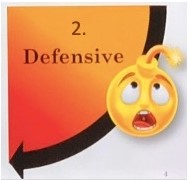 Level Two
The first indication of a second, potentially more consequential level of tension occurred in the spring of 2018, as President Trump was repeatedly threatening to levy tariffs on China but before the imposition of the first round of tariffs in July of that year. That second front involved Shenzhen-headquartered ZTE, one of China’s largest makers of smartphones and telecommunications equipment. In March, two ZTE affiliates agreed to a civil and criminal penalty of $1.19 billion for having illegally shipped telecommunications equipment to Iran and North Korea. Two months later, after it was found out that ZTE had failed to reprimand and had, in fact, paid bonuses to the executives involved in those illegal shipments, a seven-year ban on the export of U.S. components to supply ZTE’s manufacturing facilities in China was instituted. This ban was widely viewed as a likely ‘death sentence.’ The manufacture of ZTE smartphones would not be possible without access to U.S.-made microelectronic hardware and Android operating system software. Moreover, the fact that ZTE had been designated as a risk to U.S. national security hung like a sword of Damocles over the country’s future. But, almost immediately, the sentence was lifted without clear explanation. On May 13th, President Trump tweeted “President Xi of China, and I, are working together to give massive Chinese phone company, ZTE, a way to get back into business, fast. Too many jobs in China lost. Commerce Department has been instructed to get it done.” One week later, the U.S. Commerce Department eased the restrictions and on June 7th a deal was reached whereby the Chinese company agreed to complete a $400 million escrow payment in return for the complete lifting of the seven-year export ban.
The whole sequence of events was somewhat baffling except for what it indicated about President Trump’s penchant for injecting himself personally into company-specific matters and for taking public and dramatic steps to build his rapport with President Xi. There is widespread speculation that Trump hoped, through this off-again on-again courtship of Xi, that he would get a trade deal which would allow for the lifting of the whole raft of “Level One” tariffs and give him a major trade deal to tout in the run-up to the 2020 elections.
It was not to be. U.S. and Chinese trade negotiators continued to slog through their negotiations inconclusively and an apparently frustrated Trump and the U.S. national security apparatus soon turned their attention to an even larger target than ZTE–Huawei, China’s national champion in that industry space. Founded in 1987 by Ren Zhengfei, a former army officer, and also headquartered in Shenzhen, Huawei employs 200,000 and manufactures telecommunications equipment, particularly equipment used in the infrastructural backbone of the new 5G standard for telecom, and consumer electronics, particularly smartphones. As was the case with ZTE, the Trump Administration voiced a specific legal concern and general national security concern in launching its campaign against Huawei. The legal matter concerned charges that Huawei too had created elaborate corporate structures to evade the U.S.-led “maximum pressure” sanctions regime against Iran. Specifically and most visibly, that legal issue crystallized around the detention in Canada of Ren’s daughter and Huawei CFO, Meng Wanzhou in early December 2018. The charges, unveiled publicly by the U.S. Justice Department in late January 2019, alleged a decade-long attempt by Huawei and Meng to steal trade secrets, to obstruct a criminal investigation and to evade economic sanctions on Iran. Canada was asked to extradite Meng to the U.S. to face trial on these charges.
The broader national security issue behind the campaign against Huawei centered on the charge that the Chinese government would be able to get access to the torrent of data coursing through next generation 5G telecom networks. To the extent that Huawei-supplied network components are built into the backbone of those networks, Huawei could gain access to the data. And, the thinking goes, that since Huawei is a China-based, PRC-supported champion company, Huawei would have no ability – protestations by the founder and company spokespeople to the contrary – to resist Chinese government requests for access to that data.
The two characteristics of the still on-going U.S. government-led campaign against Huawei which sharply distinguish it from the earlier actions against ZTE are its long duration and its expansion to the international field. Each one of these two characteristics presents complexity which defies easy summarization. Future posts will examine the international dimension of this campaign which has brought the Trump Administration some hard-won headway but also a sometimes stunning level of push-back and public repudiation from traditional allies.
For now, the point is simply that the initial evanescent campaign against ZTE and now the sustained campaign against Huawei can together be thought to represent the second level of effort, and risk, in forcing U.S.-China tech decoupling. Representing a natural escalation of the anxiety provoked by the various tariff rounds, these two sets of actions – and, particularly, the Huawei campaign — reveal factors of irrationality coming into play. On the Chinese side, the issue is a personal affront to Xi Jinping. It is also catnip for the millions of Chinese “netizens” who use nationalistic vitriol and memes to inflame public opinion which, in turn, further narrows the options available to Xi and his government policy makers. On the U.S. side, Trump Administration officials have tried to cajole other countries into raising their own costs and slowing their own transition to 5G by foregoing Huawei equipment without providing specific evidence of the claimed threats to help countries justify taking these steps. Domestically, the Administration has failed to provide a clear rationale and consistent messaging so that the public can assess the risks. Instead, the Administration has framed the issue in terms that are highly personalized to Trump and in a tone that is more macho than rational. It has become, in effect, a bullet point in Trump’s “I’m tougher on China than Sleepy Joe will ever be” reelection strategy.
The factor which has perhaps kept these actions from destabilizing U.S.-China relations even more is that the U.S. doesn’t have its own horse in the 5G sweepstakes. The two major competitors to Huawei are Ericsson (Sweden) and Nokia (Finland). The fact that European allies have been so reluctant to sign on to the U.S. campaign against Huawei, even though two major EU companies stand to gain competitively, underlines just how weak the national security case which Trump officials put forward has been. Over recent months, as the campaign has made some headway following an initial and embarrassing series of stalls out of the gate, Samsung (Sourth Korea) has also emerged as a potential provider of 5G telecom infrastructure components.
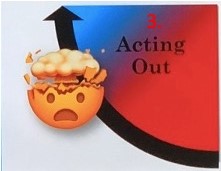 Level Three
A third, but more nascent, level of conflict is now beginning to take shape around social media networks and search engine companies. The players at center-stage of this now emerging drama are the tech giants: Apple, Google, Facebook, Amazon and Microsoft in the U.S. and Baidu, Alibaba, and Tencent (the so-called ‘BAT’ trio) and Bytedance in China. For U.S. readers not familiar with the commercial landscape in China, Baidu, the weakest of the trio, makes money, somewhat like Netflix, principally through advertising and content subscription services built around its Baidu search engine. Alibaba, the strongest of the trio, operates a vast Amazon-like selling site for both business (B2B) and consumer (B2C) end-users. Leveraging extraordinary global reach and profitability with this base of operations in e-commerce sales and delivery, the Alibaba family of companies is increasingly branching into business areas as diverse as cloud computing, media and entertainment, microfinance and tourism. Tencent is the owner of WeChat, a multi-purpose messaging, social media and mobile payment app which has achieved far greater penetration in the Chinese market – and has become more of an indispensable feature in the lives of its users — than any comparable app has achieved in the U.S. Bytedance is the owner of the massively popular TikTok app.
The market access picture for U.S. firms in China has been markedly less open than that traditionally enjoyed by the above Chinese firms in the U.S. Put simply, there has not been reciprocity and the U.S. Big Five Tech Giants have long faced restrictions limiting their ability to do business in China. This is a direct reflection of the Chinese government’s sensitivity, verging on paranoia, about its citizenry’s ability to access sources of information beyond the government’s control. (The three pillars of control for the Chinese Communist Party (CCP) have been, even before assuming control of the nation in 1949, the so-called Three P’s – the Party, the PLA (People’s Liberation Army) and Propaganda). Of the five U.S. companies, Apple’s iPhone and Microsoft’s personal computers and LinkedIn business networking service have enjoyed relatively freer access to the Chinese market, though that access is nonetheless significantly constrained. Microsoft, which has had a presence in China since 1992, has fared the best. Its operating system controls more than a third of the market in China and through its research center in China (its second largest in the world), Microsoft works closely with major Chinese companies on innovative product development. Apple has enjoyed some access for its iPhones, however, the iPhone’s penetration has been limited in China by its high price-point and positioning as an aspirational brand undercut in price by Huawei and Xiaomi. The other three companies have been largely shut out of the market: Google by its refusal to accede to demands, explicit and implied, to make search results and other data available to the Chinese government; Facebook has flatly failed to get government permission to operate in the Chinese market despite years of personal lobbying by Mark Zukerberg (which included Zuckerberg learning Mandarin, recommending Xi Jinping’s book to his employees and even asking Xi Jinping to suggest a name in Chinese for his baby); and Amazon, which faced stiff price competition from Alibaba and JD.com, decided in early 2019 to shut down its uphill effort to build an e-commerce marketplace business in China.
While fierce competition is an undoubted factor in explaining some of this picture of limited presence by the U.S. tech giants in China, government policy is the paramount issue. As previously mentioned, an overriding element of the government’s restrictive policy has to do with control over information. An additional element has to do with the government’s drive – also seen in the aerospace and financial sectors – to give homegrown companies a protected space to grow domestically in order to develop into global competitors and foreign exchange earners. That this is inconsistent with commitments which China made upon entry into the WTO in December 2001 is a cause of concern for the global community. That it creates an unequal playing field for U.S. firms in China is a common concern shared by both political parties in the U.S. and needs to be addressed. That there is evidence of Chinese firms using their penetration of the U.S. market to conduct unauthorized data collection from U.S. citizens is even a greater matter of concern, one that demands strong and strategic counter-measures.
On this last point, it is an established and publicized fact that WeChat has been used to collect data from the devices of U.S. citizens on U.S. soil without the individual’s or the U.S. Government knowledge and, of course , without any legal authorization. Any and all information on a compromised device is at risk in these instances. The pattern of known instances of compromise suggests strongly that there has been a directed campaign by the PRC at work rather than a series of random or accidental intrusions by Tencent. Substantially more information on this vulnerability is known within U.S. government circles than has been shared to date through public sources.
It is this type of vulnerability which is the behind the Trump Administration’s announcement on August 6th of this year of signed Presidential orders to ban commercial transactions with WeChat’s parent company, Tencent, and with Bytedance, Tiktok’s parent. The fact that 60% of users of the TikTok platform are under the age of 24 make it seem, at first blush, to be an unlikely target for PRC government-directed surveillance. But closer inspection shows that risks are not negligible. There is the established precedent from WeChat. There is the vast user base – 85 million in the U.S and 1 billion worldwide. Also, as any expert will tell you, surveillance and espionage seek to exploit any vulnerability and one’s children can be a significant vulnerability. Finally, younger people are disproportionately represented in the workforce of some of the most innovative and cutting-edge industries.
I will have occasion in the future to post on several aspects of this emerging arena of U.S.-China conflict. One topic involves the “geo-commercial” advantage which China enjoys with its population size, its unmatched number of smart-phone users, and its lax privacy laws, standards, and public expectations. As a result of these factors, Chinese companies are able to develop algorithms for new products and services more effectively and efficiently than their competitors. Bytedance’s TikTok is itself an example of this phenomenon. A second topic will be ‘balkanization’ of the Internet which will accelerate as the U.S. and China continue to de-couple and de-globalize their tech interests. A third topic will be the decisive role which India is likely to play in this contest as it balances its position as a massive market for cut-rate, Chinese-made smart-phones and as an important English-language strategic partner for Facebook and other U.S. social media and internet content and service providers.
For now, we can wrap this section with the observation that this emerging front in U.S.-China tech de-coupling involves a unique level of risk. It is so entwined in the lives of so many users and it touches on the core interest of so many behemoth companies in both the U.S. and China that it is markedly different from the risks found on the ZTE and Huawei front. While we are likely just in the early days of this new sphere of competition, it brings the U.S.-China relationship clearly into the third, risk behavior phase of the crisis development cycle. As this front continues to become a focal point, the public attitude and corporate bottom-line interests at stake are so core that entry into a mutually-destructive cycle of action and counter-action is almost foreordained unless both sides exercise great discernment and discipline.
 Level Four
In last week’s post, Timing Matters, we touched on the issue of supply chains for semiconductors and advanced electronics. Because these products are the ‘brains’ behind entire emerging industries – artificial intelligence and robotics, autonomous vehicles, the commercialization of space, and others – this is where the United States’ and China’s economic competition is most fierce. Because these supply chains inextricably pass through Taiwan and Taiwan-headquartered industry leaders like TSMC – the economic risk is compounded by political risk.
The Assessing China ”Global TECHtonics: U.S./China Fault-line” series will delve much more deeply into this issue in the months ahead. Suffice it to say for now, that microelectronics and the global supply chains which help produce and distribute semiconductors and related products globally will be the fault-line which either ends up triggering a cataclysmic upheaval between the U.S. and China or, through inter-governmental negotiation, helps to settle the entire relationship on a new, more stable and sustainable basis.


 ______Assessing China / The TEA Collaborative______