
You are currently browsing the category archive for the ‘Technology’ category.
Volume 2, Number 4 in Global TECHtonics: U.S./China Fault-line series
The weekend’s big development in the technology arena is Beijing’s eleventh-hour move to alter the timing and trajectory of the sale of TikTok’s U.S. operation.
We touched on the Trump Administration’s August moves against TikTok’s parent Bytedance in the U.S./China De-Coupling: 4 Levels of Risk post two weeks ago. On August 6th, President Trump signed two executive orders which started a 45-day time-clock involving two Chinese companies with hugely popular social media apps – ByteDance (owner of TikTok) and Tencent (owner of WeChat). According to those orders, U.S. citizens and businesses would be barred, once the 45-day period expired, from any transaction involving the company and/or its products. On August 14th, the Trump Administration modified the order as far as it affected TikTok by putting a new order in place, giving TikTok 90-days within which to complete the divestiture of its U.S. operation to an approved U.S. corporate buyer.
The widely-presumed reason for this change being made so shortly after the announcement of the original order is that U.S. potential buyers interested in acquiring the U.S. operations of TikTok had pitched their interest to the White House. It is not surprising that U.S. potential acquirers would be focused on TikTok and not WeChat. The number of TikTok users in the U.S. is estimated at 80 million in comparison with 19 million for WeChat. Its growth rate in global markets is far faster and, critically, its algorithms have nearly ubiquitous applicability whereas WeChat algorithms are more geared to Chinese user behavior and are so less replicable in other world markets.
Two groups of interested buyers have emerged publicly since the August 14th announcement:
- Microsoft/Walmart: As Instagram and other social networks edge into offering shopping features, Microsoft and Walmart are looking to establish themselves at the strategic center of this opportunity with one bold acquisition move. Put simply, Walmart would provide the e-commerce component for TikTok while Microsoft would manage the crucial cloud-computing infrastructure. The deal offers competitive advantages to both firms – Walmart would become better positioned to compete with Amazon and Microsoft would gain experience with an innovative and cutting-edge set of algorithms and data-sets.
- Oracle: According to analysis by the New York Times business reporter Mike Isaac, “Oracle could use TikTok’s data about social interactions to benefit its cloud, data and advertising businesses.” Also, like Microsoft and Walmart, Oracle is interested in the opportunity the deal would afford “to offer customers a hyper-personalized experience in both content and commerce.”
Going into the weekend, the expectation was high that Bytedance’s preferred acquisition partner would become known and that negotiations would shift to a new phase of negotiation with only that chosen partner.
So, what was the development over the weekend which changed the trajectory and pace of this deal? The Chinese government announced late in the day on Friday that any sale of Bytedance’s assets would be subject to a brand-new set of restrictions affecting artificial intelligence exports. As reported in still-developing coverage in the Wall Street Journal, “the new Chinese restrictions highlight the extent to which TikTok, a breakout social-media hit—especially with younger U.S. users—has been thrust into a geopolitical contest between the U.S. and China over the future of global technology.”
I’ll limit my commentary on this development to three main points – a historical observation, a key point having to do with the present-day competition in advanced technologies between the U.S. and China, and my personal handicapping of where this deal is likely to go in the weeks ahead.
Historical Antecedent: The U.S.-Japan Trade War
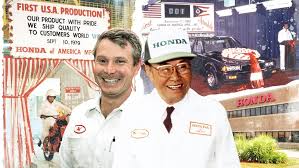
While observers sometimes invoke the U.S.-Japan Trade War as a template for understanding our current tensions with China, the contrasts between the two are probably more instructive than the similarities. A future post will return to the broad comparison. For our purposes here, I will single out one important point of contrast. The U.S.-Japan Trade war became incandescently hot as a political issue in the lead-up to the 1992 U.S. Presidential election. But while that was happening, commercial developments on the ground were already in motion to begin lowering the heat. The industry sector in which the grass-roots transformation took root and started having great effect was the automotive sector. The seed for that bottom-up transformation was the fact that, post-war, Japan had developed intellectual property in their domestic market that made them more competitive than the U.S. industry in a number of vital areas of automotive manufacturing (e.g., inventory management, quality control, customer-based innovation, etc). Led by Toyota, the Japanese and U.S. industries started reaching an accommodation even before politicians in the U.S. turned up the volume on their anti-Japan megaphones. Japan would license out its intellectual property and bring its production closer to its customers in the U.S. by building factories and supplier networks in the U.S. In return, American companies would gain access to know-how in areas where its competitiveness was lagging and also gained greater access to the restricted Japanese market. At a political level, investments in new state-of-the-art production facilities in the non-unionized south brought jobs into key congressional districts. Of equal importance, auto workers, their families and their communities started having the experience of working alongside Japanese managers on U.S. soil. In the process, real-world people-to-people experiences built on collaboration replaced the one-dimensional caricatures being amplified by politicians and the media.
The Chinese have studied this experience whereby Japan lessened the political tension of the U.S.-Japan Trade War while, simultaneously expanding access to the lucrative U.S. market and affluent U.S. consumers. For various reasons, they have not been as successful in applying the model. We’ll examine the broader set of reasons in a future post but, for present purposes, one salient reason is that China, generally speaking, has not developed the portfolio of intellectual property focused in high-value industries (like, for Japan, automotive and consumer electronics) and highly sought after by U.S. companies. Except, that is, until now as China emerges with competitiveness in advanced technology fields such as artificial intelligence, robotics, and autonomous vehicles.

Looking at Both Sides Now:
The U.S. innovation ecosystem represented by Silicon Valley is, and is likely to remain for the foreseeable future, peerless in many important respects – depth of talent and experience, access to capital, connectivity to leading universities, basic research capability and innovation mindedness. In three respects, however, emerging tech competitors in China enjoy advantages which U.S. firms can’t match. First, China has been for years the biggest and fastest growing market in the world and U.S. companies can’t afford to cede that base of users entirely to their Chinese competition to monopolize. However, the ability of U.S. firms to access those consumers is highly constrained by a whole raft of protections – many non-WTO compliant and others not yet covered by WTO ground-rules — by which the Chinese government limits foreign access to its home market and by which it supports its home-grown champion companies. Second, China may enjoy a tactical advantage through its laser-focus on market applications (as opposed to research and academically-based innovation). Third, AI firms in China definitely enjoy a leg-up in algorithm development because they have direct access to the world’s largest user-base for smart phones and are less constrained by privacy protections for those users. These latter two advantages for Chinese tech firms are persuasively presented by the former President of Google China, Kaifu Lee (a Taiwanese national whose computer science PhD thesis at Carnegie Mellon gave birth to the world’s first speaker-independent, continuous speech recognition system) in his book AI Superpowers: China, Silicon Valley and the New World Order. In Lee’s view, “the United States may have been a first mover in AI but that advantage will not last forever. The AI era will reward the quantity of solid AI engineers over the quality of elite researchers. Strength will come from an army of well-trained engineers and entrepreneurs, and China is training just such an army.”
So, stepping back, there is now for the first time since normalization of U.S.-China relations a strategically-important (emerging) industry where Chinese firms hold important competititve advantages over the U.S. Unlike democratic Japan, this high-stakes competition is associated with a Communist regime with all that that entails for public attitudes in the U.S. And there is little in the of way local ties-that-bind being built quickly and effectively on a people-to-people basis. Nothing that can match the stabilizing experience with Japan investment into the U.S. in the 1990s. Together, these three factors go a long way to illuminating the huge pressures that have been building up under the U.S./China technology faultline on both sides of the U.S. political aisle.

Where’s The TikTok Deal Likely to Go?
Despite the fact that practically nothing is known yet about the details of the PRC government restrictions announced on Friday, two things can be safely said. First, the fact that the PRC government is invoking national security as a basis for governing the commercial activities of its leading artificial intelligence firms is hardly surprising. The competition between the U.S. and China is, for reasons just examined, acute. The U.S. and other countries routinely monitor and manage international commercial activity for their technologically-advanced products and services, especially those that are ‘dual-use’ in both commercial and military applications. The second point is that the timing of the announcement tends to be viewed in the U.S. as so transparently tied to the on-going negotiation involving TikTok that it will be viewed more as a political beanball, than a fair pitch. This despite the fact, as pointed out by an astute comment (see below), that these new regulations had been proposed prior to Trump’s August 6th announcement and were in a public comment process.
The Chinese government action raises the prospect that key algorithms and other vital data – everything that makes TikTok tick — may be stripped out of the sale by its Chinese parent corporation as a new requirement of Chinese law. That result would fundamentally change the value proposition for both the Microsoft/Walmart and Oracle bidding teams. It’s like the difference in value between a top-of-the-line computer and that same computer with all its electronics removed. At the very least, the PRC government action will force all parties to slow the pace of their negotiations and delay the deal being sealed until there’s greater clarity about what will ultimately be allowed.
With Friday’s move, it’s likely that the Chinese government will be satisfied with slowing the deal and changing the trajectory of its fall-out for global technology competition. Scuppering the deal entirely would risk dramatically escalating the issue with Trump and his Administration. That would go against China’s temporary strategy of muted response to the Trump Administration’s recent, pre-election flurry of jabs. The idea in Zhongnanhai in the run-up to November 3rd is to give its wolf-warriors and nationalistic netizens enough to appease their appetites but not enough to risk fanning Washington-Beijing flames out of control.
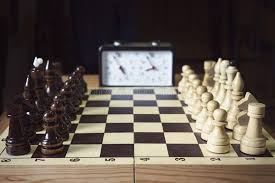
So, with the clock ticking down to 64 days before the U.S. election and with 78 days before the Trump Executive Order 90-day deadline expires on November 12th, the endgame of this global chess match is now ruled by the time-clock.
TikTok, TikTok, TikTok …

Volume 2, Number 3 in Global TECHtonics: U.S./China Fault-line series

A U.S.-led initiative to reach out to China and to welcome it into the community of Western nations began with President Nixon trip to Beijing in February 1972. Orchestrated by Henry Kissinger, Nixon’s National Security Advisor at the time, the trip was a brilliant Cold War gambit to exploit the growing rift between Moscow and Beijing. The trip kicked off a seven-year process of “normalizing” relations between the West and “the sleeping dragon” of Asia and, in so doing, divided the Soviet bloc. Through almost half-a-century and a bipartisan succession of Presidents, the effort to engage with China continued as that country woke from its Cultural Revolution nightmare and began to rise up, shaking the world as it did so.
February 1972 was the Year of the Rat (Water Element) in the Chinese zodiac. Forty-eight years later we are again in the Year of the Rat under the Metal Element. In Chinese traditional thinking, we have gone from a time of suppleness and fluidity to a time of hardness and intransigence. In the minds of most Western observers, we have passed from a strategic engagement with China to, under President Trump, a time of open competition on the world stage and strategic disengagement (“de-coupling”) in the technology arena.
This post will save for another time the broader discussion about how and why this shift came about other than to make three general, even obvious, points. First, there was undoubtedly a measure of optimistic naïveté in the West in assuming China’s willingness to dutifully assume the role of a ‘responsible stakeholder’ in the post-WWII world order. If the Chinese had conceived of their nation as only having been born in 1949, assuming the mantle of responsible Pax Americana stakeholder might have fit more comfortably. As it was, Chinese conceived the People’s Republic of China as the heir to a Chinese polity which had been the dominant economy in the world for sixteen of the previous eighteen centuries. They weren’t predisposed to simply adopting some newcomer’s rules and norms as to how China should conduct itself on the world stage. Second, there has undoubtedly been tactical overreach and ill-advised swaggering by President Xi Jinping since his triumphalist speech at the 19th Party Congress in September 2017. U.S.-China relations would undoubtedly be on a more stable track today had Xi Jinping played his cards differently, following suit more with Deng Xiaoping’s opening bid of “keeping a low profile (hiding one’s capacity) and biding one’s time” (韜光養晦、有所作為) rather than flashing his Made in China 2025 card so conspicuously. It can be argued that it’s better from the U.S. standpoint for this “world order competition” to be out in the open. Third, the horse is definitely out of the barn. No U.S. Administration is going to try to get that horse back on the 1972-2017 normalization track. The world has changed and what is needed is a U.S. Administration which recognizes real challenges from China but does not exaggerate them and which marshals the resources to address those challenges in an efficient and effective way, rather than wastefully and non-productively.
The remainder of this post uses last week’s The Four Levels of Risk post as a backdrop to a quick sketch outlining just how wasteful and ineffective the Trump Administration’s policy of technology de-coupling from China is becoming. I’ll do this sketch with three brushstrokes – the view from U.S. boardrooms, the view from the cultural sidelines and the view from history.
The View from U.S. Boardrooms
 A CNBC.com article by Arjun Kharpal published on June 4, 2019 made no reference to the Tiananmen anniversary but did point out that the Trump Administration’s Huawei policy was quickly hoisted on its own petard – failing to get allies to broaden the campaign but leading to a marked acceleration of China’s efforts to develop its own semiconductor industry to supplant U.S. semiconductor supply in the Chinese market and, eventually, in world markets. “The Huawei incident has indeed stimulated the development of China’s domestic chip industry,” Gu Wenjun, analyst at China-based semiconductor research firm ICWise, told CNBC by email” wrote Kharpal at the time. Now, one year later, Trump Administration policy is digging this hole deeper and at a faster pace:
- Qualcomm is reported to have lost current orders worth as much as $8 billion as a result of the Trump Administration’s May 2020 tightening of trade restrictions imposed against Huawei. The new regulations block all chipmakers that use U.S.-made equipment or software from producing chips for Huawei (though companies can apply for a license to continue supply)
- Following the Trump Administration’s August 6th signing of an Executive Order banning transactions by U.S. companies with Tencent, the owner of the WeChat app, market research firms scrambled to assess the impact on Apple and its installed base of iPhones in the strategically vital Chinese market. The surveys all pointed to the same result – as many as 90% of iPhone users in China would drop the Apple product and switch to Android devices if the WeChat app were no longer available on their iPhones.
- The same August 6th Executive Order targeted Bytedance, parent company to the massively popular TikTok app. Seasoned observers who are able to gauge the U.S.-side push-back against this action and know the sloppiness with which the Executive Order was drafted, expect an eventual climbdown by the Administration – if not before the November 3rd election, then shortly after it.
The View from the Cultural Sidelines
 There are two culture wars raging – a partisan one in U.S. domestic politics and an international one between a suddenly tarnished U.S. model and a much-hyped “bright and shiny” new Chinese model. The same dynamics at play with the COVID-19 pandemic are at play in the technology sphere. Domestically, Trump works to energize his base with claims that China is the enemy and that his Administration’s COVID response and China de-coupling response are “the best” that any President could possibly do. Front-line health workers and tech experts know that, in both cases, the claim lies far afield from the truth.
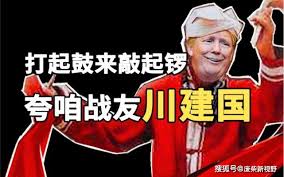
In China, the popular view cuts to the bone of Trump Administration posturing. His new nickname is 建国 (Jiànguó), a popular name given by parents to their infants especially during the nationalistic years of the Cultural Revolution. It means “Build the Country.” In other words, Trump Administration policies are widely seen as accelerating the same nationalistically-driven Sputnik-type race to advanced semiconductors, artificial intelligence, robotics and the tech future which the policies ostensibly are meant to forestall. Trump’s impulsive “Only I Can Fix It” approach playing to a grandstand of partisan supporters has made the challenge which Xi Jinping’s China presents the U.S. more acute. An approach which takes measured and deliberate stock of that challenge and which aligns interests and works closely with the U.S. business community and international partners would be far more effective. Pumping up nationalist sentiment in both the U.S. and China serves only to narrow options and increase risks of conflict spiraling.
The View from History
 A pithy take on Trump’s approach to the U.S.-China technology challenge comes from a widely-respected former colleague who has decades of high-level experience with China from political, national security, economic and think-tank perspectives. He writes “(Trump is like) King Canute trying to fight, instead of the ocean tides, the tides of technology.”
I’ll conclude with another, somewhat longer historical reference which illuminates Trump’s campaign of China-bashing as a central element of his re-election strategy. It is drawn (almost) verbatim from Episode 66 of The History of Rome podcast series by Mike Duncan:
“Conscious that his standing with the people was taking a hit, the Emperor decided he needed to find someone to take the fall for the fire. Someone he could point to and say it was them, not me, I didn’t have anything to do with it. But he couldn’t just grab someone off the street because, with his popularity sinking like a stone, that would just engender the further charge that he was setting up some innocent to take all the blame. What Nero needed was someone, some group that the people disliked even more than him, someone that the people were ready, willing and able to believe had done this horrible thing if for no other reason than that the people were looking for an excuse to round up and punish them. Enter the Christians. In the thirty odd years since the death of Christ, nascent Christian communities had begun cropping up throughout the Empire. At first, they were primarily Jewish in character but through the missionary work of St Paul, known later as the Apostle to the Gentiles, this new religion began to spread into the Greco-Roman world. By the Emperor’s reign, a tiny community of believers, led according to tradition by St. Peter, had established a religious beachhead in Rome itself. The problem the early Christians faced in Rome, though, was not just that their religion, in comparison to the wider pagan world, struck the average Roman as downright weird, but also that at this point most Christian adherents were non-citizen resident aliens in the city who spoke primarily Greek or Hebrew. So the Christians in Rome looked different, spoke a different language, usually came from the lower rungs of the social ladder, and belonged to a strange monotheistic cult that seemed to have cannibalistic overtones. All in all, they were capital O Other in every sense of the word. And as has been proven over and over again by history, whenever terrible things happen to a community – economic problems, floods, plagues, fires – it is the capital O Others who usually get blamed. So desperate to shift responsibility for the great fire away from himself, the Emperor looked at these Others and decided to lay it all on them.”
The only change I have made to this podcast text, recorded in August 2009, was my substitution of the central character’s title instead of his name. Even with that switch, there’s little surprise who that Emperor was.
Nero.
Volume 2, Number 2 in Global TECHtonics: U.S./China Fault-line series
One of the most memorable moments from the two months of A-100 training I received upon entry into the U.S. Foreign Service was a leadership training film about the 1985 Bradford City Football (Soccer) Stadium fire. A small fire, sparked in a code-violation trash pile, was quickly whipped by winds into a fire engulfing substantial portions of the stadium. The raging fire trapped spectators, killing 56 and injuring at least 265.
Filmed on-site during the panic, the key point in this very graphic film involved the challenge of communications in a crisis. As described by Wikipedia, “In the mass panic …, fleeing crowds escaped on to the pitch but others at the back of the stand tried to break down locked exit doors to escape, and many were burnt to death at the turnstiles gates, which had also been locked after the match had begun.” The specific problem was that people at the front of the mass of people trying to flee from the gates quickly recognized that those gates were locked but, in the panic, could not communicate the problem back to the people pressing forward from behind. Had clear communication been possible, everyone could have found an alternative exit. As it was, scores of people ended up pinned against the gates and perished.
The lesson for the U.S.-China technology upheaval currently underway is straightforward: the implications of the upheaval appear different to different parties, depending upon their position in the field of action, and there is danger of differing reactions and poor communications compounding the danger and likewise leading to tragedy.
The goal of this post is to set out in very general terms the different industry groups affected by the Trump Administration’s efforts to date to “decouple” the U.S. and Chinese tech spheres – denying various sub-sectors of the Chinese tech industry access to the U.S. market, incentivizing U.S. firms to bring their production from China back to the U.S., and also encouraging allied governments to reinforce both approaches. There are four major technology sub-sectors that, to date, have been affected by these policy moves. In addition to providing simple, thumbnail descriptions of each of these four sub-sectors and how they have been affected by the Trump Administration policy approach, we will also rank them in terms of national security risk and look at the potential for a seismic reaction being triggered.
A simple way of assessing national security risk and gauging the related potential for a Bradford Stadium-type chain of events is to think in terms of crisis management. Crisis management experts generally identify four distinct stages as a true crisis develops. The following is drawn from the Crisis Prevention Institute’s Crisis Development Model:
- Anxiety
Anxiety prompts changes in behavior and looking at things differently. It’s a time to listen and observe, not dictate what should happen next.
- Defensive Behavior
Defensive behavior can be a natural escalation of anxiety; it’s the point where actors in crisis begins to lose rationality.
- Risk Behavior
Risk behavior is displayed as actors enter crisis and reach the point of propensity to harm themselves or others.
- Tension Crisis
Every crisis reaches a point of meltdown or tension reduction. Crisis behaviors, as they escalate, expend a tremendous amount of energy.
So here we go …
 Level One
Among the earliest Trump Administration actions targeting technology products from China involved the use of tariffs. While the various rounds of tariff actions are too technical and convoluted to get into here, a few broad generalizations can be made. First, the tariff actions put into effect were more targeted to electronic components than to finished electronic consumer products. For instance, componentry for modems, routers and televisions were subject to two rounds of steep tariff increases and microelectronic chips were assessed a hefty 25% tariff while consumer products such as cellphones, laptops and video games, despite a series of threats by Trump to impose tariffs in the summer and fall of 2019, have still not been hit with any tariffs to date. The President’s advisors apparently convinced him, as the Christmas season approached, that voters would not take kindly to sudden price increases for these products. Second, there is little evidence to suggest that these tariffs inflicted enough pain on Chinese technology manufacturers and exporters to induce them to substantially change their behavior or to protest loudly to their government for relief. Tariff increases can be absorbed at any link in the supply chain stretching from the manufacturer and its supplier network (in China) to the importer, distributor and retail outlet (in the U.S.) or, alternatively, can end up simply be passed on to the consumer (in the U.S.). Preliminary analysis indicates that the U.S. side of the supply chain in technology products has likely absorbed as much pain from these rounds of tariff actions as the Chinese side has been forced to absorb. Third, tariffs are the quintessential sledgehammer used to crack open a peanut. Even if they actually hit the peanut, it tends not to yield anything worth the effort and can cause considerable damage to the surroundings.
At the same time that the Trump Admistration was rolling out waves of tariffs to target imported goods from China, they were also tightening and expanding limits on investment into the U.S. by Chinese technology companies – as well as certain other types of companies – on the grounds that they represent a risk to U.S. national security. The mechanism for achieving this was through expansion of the review powers of the Committee for Foreign Investment in the United States (CFIUS), an inter-agency body comprising nine cabinet-level departments and chaired by the U.S. Secretary of the Treasury.
As with the tariff actions, the heightened scrutiny of potential Chinese investments into the U.S. by CFIUS served primarily to send a political signal to the Chinese side that the commercial and economic climate was getting chillier for Chinese companies in the U.S. Chinese companies looked for work-arounds, adjusted their business plans, and in some cases looked to other world markets to take up the slack. These two sets of actions caused some tremors but did not cause the ground to fundamentally shift under U.S.-China relations. This represented, broadly speaking, the Anxiety Phase of the building crisis.
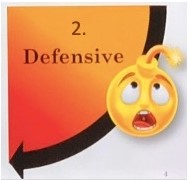 Level Two
The first indication of a second, potentially more consequential level of tension occurred in the spring of 2018, as President Trump was repeatedly threatening to levy tariffs on China but before the imposition of the first round of tariffs in July of that year. That second front involved Shenzhen-headquartered ZTE, one of China’s largest makers of smartphones and telecommunications equipment. In March, two ZTE affiliates agreed to a civil and criminal penalty of $1.19 billion for having illegally shipped telecommunications equipment to Iran and North Korea. Two months later, after it was found out that ZTE had failed to reprimand and had, in fact, paid bonuses to the executives involved in those illegal shipments, a seven-year ban on the export of U.S. components to supply ZTE’s manufacturing facilities in China was instituted. This ban was widely viewed as a likely ‘death sentence.’ The manufacture of ZTE smartphones would not be possible without access to U.S.-made microelectronic hardware and Android operating system software. Moreover, the fact that ZTE had been designated as a risk to U.S. national security hung like a sword of Damocles over the country’s future. But, almost immediately, the sentence was lifted without clear explanation. On May 13th, President Trump tweeted “President Xi of China, and I, are working together to give massive Chinese phone company, ZTE, a way to get back into business, fast. Too many jobs in China lost. Commerce Department has been instructed to get it done.” One week later, the U.S. Commerce Department eased the restrictions and on June 7th a deal was reached whereby the Chinese company agreed to complete a $400 million escrow payment in return for the complete lifting of the seven-year export ban.
The whole sequence of events was somewhat baffling except for what it indicated about President Trump’s penchant for injecting himself personally into company-specific matters and for taking public and dramatic steps to build his rapport with President Xi. There is widespread speculation that Trump hoped, through this off-again on-again courtship of Xi, that he would get a trade deal which would allow for the lifting of the whole raft of “Level One” tariffs and give him a major trade deal to tout in the run-up to the 2020 elections.
It was not to be. U.S. and Chinese trade negotiators continued to slog through their negotiations inconclusively and an apparently frustrated Trump and the U.S. national security apparatus soon turned their attention to an even larger target than ZTE–Huawei, China’s national champion in that industry space. Founded in 1987 by Ren Zhengfei, a former army officer, and also headquartered in Shenzhen, Huawei employs 200,000 and manufactures telecommunications equipment, particularly equipment used in the infrastructural backbone of the new 5G standard for telecom, and consumer electronics, particularly smartphones. As was the case with ZTE, the Trump Administration voiced a specific legal concern and general national security concern in launching its campaign against Huawei. The legal matter concerned charges that Huawei too had created elaborate corporate structures to evade the U.S.-led “maximum pressure” sanctions regime against Iran. Specifically and most visibly, that legal issue crystallized around the detention in Canada of Ren’s daughter and Huawei CFO, Meng Wanzhou in early December 2018. The charges, unveiled publicly by the U.S. Justice Department in late January 2019, alleged a decade-long attempt by Huawei and Meng to steal trade secrets, to obstruct a criminal investigation and to evade economic sanctions on Iran. Canada was asked to extradite Meng to the U.S. to face trial on these charges.
The broader national security issue behind the campaign against Huawei centered on the charge that the Chinese government would be able to get access to the torrent of data coursing through next generation 5G telecom networks. To the extent that Huawei-supplied network components are built into the backbone of those networks, Huawei could gain access to the data. And, the thinking goes, that since Huawei is a China-based, PRC-supported champion company, Huawei would have no ability – protestations by the founder and company spokespeople to the contrary – to resist Chinese government requests for access to that data.
The two characteristics of the still on-going U.S. government-led campaign against Huawei which sharply distinguish it from the earlier actions against ZTE are its long duration and its expansion to the international field. Each one of these two characteristics presents complexity which defies easy summarization. Future posts will examine the international dimension of this campaign which has brought the Trump Administration some hard-won headway but also a sometimes stunning level of push-back and public repudiation from traditional allies.
For now, the point is simply that the initial evanescent campaign against ZTE and now the sustained campaign against Huawei can together be thought to represent the second level of effort, and risk, in forcing U.S.-China tech decoupling. Representing a natural escalation of the anxiety provoked by the various tariff rounds, these two sets of actions – and, particularly, the Huawei campaign — reveal factors of irrationality coming into play. On the Chinese side, the issue is a personal affront to Xi Jinping. It is also catnip for the millions of Chinese “netizens” who use nationalistic vitriol and memes to inflame public opinion which, in turn, further narrows the options available to Xi and his government policy makers. On the U.S. side, Trump Administration officials have tried to cajole other countries into raising their own costs and slowing their own transition to 5G by foregoing Huawei equipment without providing specific evidence of the claimed threats to help countries justify taking these steps. Domestically, the Administration has failed to provide a clear rationale and consistent messaging so that the public can assess the risks. Instead, the Administration has framed the issue in terms that are highly personalized to Trump and in a tone that is more macho than rational. It has become, in effect, a bullet point in Trump’s “I’m tougher on China than Sleepy Joe will ever be” reelection strategy.
The factor which has perhaps kept these actions from destabilizing U.S.-China relations even more is that the U.S. doesn’t have its own horse in the 5G sweepstakes. The two major competitors to Huawei are Ericsson (Sweden) and Nokia (Finland). The fact that European allies have been so reluctant to sign on to the U.S. campaign against Huawei, even though two major EU companies stand to gain competitively, underlines just how weak the national security case which Trump officials put forward has been. Over recent months, as the campaign has made some headway following an initial and embarrassing series of stalls out of the gate, Samsung (Sourth Korea) has also emerged as a potential provider of 5G telecom infrastructure components.
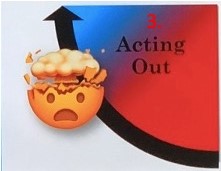 Level Three
A third, but more nascent, level of conflict is now beginning to take shape around social media networks and search engine companies. The players at center-stage of this now emerging drama are the tech giants: Apple, Google, Facebook, Amazon and Microsoft in the U.S. and Baidu, Alibaba, and Tencent (the so-called ‘BAT’ trio) and Bytedance in China. For U.S. readers not familiar with the commercial landscape in China, Baidu, the weakest of the trio, makes money, somewhat like Netflix, principally through advertising and content subscription services built around its Baidu search engine. Alibaba, the strongest of the trio, operates a vast Amazon-like selling site for both business (B2B) and consumer (B2C) end-users. Leveraging extraordinary global reach and profitability with this base of operations in e-commerce sales and delivery, the Alibaba family of companies is increasingly branching into business areas as diverse as cloud computing, media and entertainment, microfinance and tourism. Tencent is the owner of WeChat, a multi-purpose messaging, social media and mobile payment app which has achieved far greater penetration in the Chinese market – and has become more of an indispensable feature in the lives of its users — than any comparable app has achieved in the U.S. Bytedance is the owner of the massively popular TikTok app.
The market access picture for U.S. firms in China has been markedly less open than that traditionally enjoyed by the above Chinese firms in the U.S. Put simply, there has not been reciprocity and the U.S. Big Five Tech Giants have long faced restrictions limiting their ability to do business in China. This is a direct reflection of the Chinese government’s sensitivity, verging on paranoia, about its citizenry’s ability to access sources of information beyond the government’s control. (The three pillars of control for the Chinese Communist Party (CCP) have been, even before assuming control of the nation in 1949, the so-called Three P’s – the Party, the PLA (People’s Liberation Army) and Propaganda). Of the five U.S. companies, Apple’s iPhone and Microsoft’s personal computers and LinkedIn business networking service have enjoyed relatively freer access to the Chinese market, though that access is nonetheless significantly constrained. Microsoft, which has had a presence in China since 1992, has fared the best. Its operating system controls more than a third of the market in China and through its research center in China (its second largest in the world), Microsoft works closely with major Chinese companies on innovative product development. Apple has enjoyed some access for its iPhones, however, the iPhone’s penetration has been limited in China by its high price-point and positioning as an aspirational brand undercut in price by Huawei and Xiaomi. The other three companies have been largely shut out of the market: Google by its refusal to accede to demands, explicit and implied, to make search results and other data available to the Chinese government; Facebook has flatly failed to get government permission to operate in the Chinese market despite years of personal lobbying by Mark Zukerberg (which included Zuckerberg learning Mandarin, recommending Xi Jinping’s book to his employees and even asking Xi Jinping to suggest a name in Chinese for his baby); and Amazon, which faced stiff price competition from Alibaba and JD.com, decided in early 2019 to shut down its uphill effort to build an e-commerce marketplace business in China.
While fierce competition is an undoubted factor in explaining some of this picture of limited presence by the U.S. tech giants in China, government policy is the paramount issue. As previously mentioned, an overriding element of the government’s restrictive policy has to do with control over information. An additional element has to do with the government’s drive – also seen in the aerospace and financial sectors – to give homegrown companies a protected space to grow domestically in order to develop into global competitors and foreign exchange earners. That this is inconsistent with commitments which China made upon entry into the WTO in December 2001 is a cause of concern for the global community. That it creates an unequal playing field for U.S. firms in China is a common concern shared by both political parties in the U.S. and needs to be addressed. That there is evidence of Chinese firms using their penetration of the U.S. market to conduct unauthorized data collection from U.S. citizens is even a greater matter of concern, one that demands strong and strategic counter-measures.
On this last point, it is an established and publicized fact that WeChat has been used to collect data from the devices of U.S. citizens on U.S. soil without the individual’s or the U.S. Government knowledge and, of course , without any legal authorization. Any and all information on a compromised device is at risk in these instances. The pattern of known instances of compromise suggests strongly that there has been a directed campaign by the PRC at work rather than a series of random or accidental intrusions by Tencent. Substantially more information on this vulnerability is known within U.S. government circles than has been shared to date through public sources.
It is this type of vulnerability which is the behind the Trump Administration’s announcement on August 6th of this year of signed Presidential orders to ban commercial transactions with WeChat’s parent company, Tencent, and with Bytedance, Tiktok’s parent. The fact that 60% of users of the TikTok platform are under the age of 24 make it seem, at first blush, to be an unlikely target for PRC government-directed surveillance. But closer inspection shows that risks are not negligible. There is the established precedent from WeChat. There is the vast user base – 85 million in the U.S and 1 billion worldwide. Also, as any expert will tell you, surveillance and espionage seek to exploit any vulnerability and one’s children can be a significant vulnerability. Finally, younger people are disproportionately represented in the workforce of some of the most innovative and cutting-edge industries.
I will have occasion in the future to post on several aspects of this emerging arena of U.S.-China conflict. One topic involves the “geo-commercial” advantage which China enjoys with its population size, its unmatched number of smart-phone users, and its lax privacy laws, standards, and public expectations. As a result of these factors, Chinese companies are able to develop algorithms for new products and services more effectively and efficiently than their competitors. Bytedance’s TikTok is itself an example of this phenomenon. A second topic will be ‘balkanization’ of the Internet which will accelerate as the U.S. and China continue to de-couple and de-globalize their tech interests. A third topic will be the decisive role which India is likely to play in this contest as it balances its position as a massive market for cut-rate, Chinese-made smart-phones and as an important English-language strategic partner for Facebook and other U.S. social media and internet content and service providers.
For now, we can wrap this section with the observation that this emerging front in U.S.-China tech de-coupling involves a unique level of risk. It is so entwined in the lives of so many users and it touches on the core interest of so many behemoth companies in both the U.S. and China that it is markedly different from the risks found on the ZTE and Huawei front. While we are likely just in the early days of this new sphere of competition, it brings the U.S.-China relationship clearly into the third, risk behavior phase of the crisis development cycle. As this front continues to become a focal point, the public attitude and corporate bottom-line interests at stake are so core that entry into a mutually-destructive cycle of action and counter-action is almost foreordained unless both sides exercise great discernment and discipline.
 Level Four
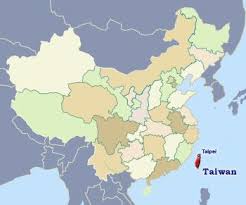
In last week’s post, Timing Matters, we touched on the issue of supply chains for semiconductors and advanced electronics. Because these products are the ‘brains’ behind entire emerging industries – artificial intelligence and robotics, autonomous vehicles, the commercialization of space, and others – this is where the United States’ and China’s economic competition is most fierce. Because these supply chains inextricably pass through Taiwan and Taiwan-headquartered industry leaders like TSMC – the economic risk is compounded by political risk.
The Assessing China ”Global TECHtonics: U.S./China Fault-line” series will delve much more deeply into this issue in the months ahead. Suffice it to say for now, that microelectronics and the global supply chains which help produce and distribute semiconductors and related products globally will be the fault-line which either ends up triggering a cataclysmic upheaval between the U.S. and China or, through inter-governmental negotiation, helps to settle the entire relationship on a new, more stable and sustainable basis.
There are a lot of things people don’t realize about Taiwan. I’ll mention three. First, it is the United States’ 11th largest trading partner worldwide, despite the island’s small population of just under 24 million. Second (and surprisingly given that China maintains iron-fisted control over its strategic industries), Taiwan “owned’ (both figuratively and in the sense of being the equity owner) most of the factories producing semiconductors, advanced information technologies and even some of the key communications equipment in China throughout the 1990s and, diminishingly but still decidedly, into the new millenium. (These Information and Communications Technologies make up the so-called ICT industry. Just think of Apple, Microsoft, Hewlett-Packard, AT&T and Verizon and all of their various competitors as comprising one vast and strategically vital sector). Third and still somewhat under-appreciated in the U.S. is the story of the growth of Taiwan’s vibrant democracy, which started taking root with reforms under Generalissimo Chiang Kai-shek’s son, Chiang Ching-kuo, in the mid-1980s and flowered under President Lee Teng-hui who was in power from 1988-2000 (and who passed away last month, on July 30th). The significance of this last point is that Taiwan’s experience has repudiated, with underlining, bolding and an exclamation mark, the self-serving claim voiced by generations of authoritarian-leaning leaders in Greater China and Asia – namely, that the Chinese (ethnic Han) people, heirs to a long tradition of imperial rule, are simply not suited to Western-style democracy.
Today’s post is a scene-setter for the “Global TECHtonics: U.S./China Faultline” series of technology-related posts which will be forthcoming on a weekly basis, usually on Mondays, starting next week. This scene-setter will draw mostly on my personal experience. It will also tug mostly on the economic and technological threads mentioned above and will only touch lightly on the political one. (In two weeks’ time, we’ll pick up the political thread more directly and weave it more visibly as the background to an examination of the current, very acute semiconductor supply chain tensions involving Taiwan, China and the United States in the run-up to the U.S. elections as well as what China’s recent imposition of a new security law in Hong Kong portends for Taiwan.)
Personally, I’ve had the good fortune to live in Taiwan for three separate periods in my life: for six months in early 1977 (trying to consolidate, in an entirely ad hoc and ultimately ineffective way, the Mandarin language I had studied for three years in college), for a full year in 1979-80 (finally succeeding at consolidating my Mandarin through the rigorous Stanford Inter-University Program for Chinese Language Studies at Taiwan National University in Taipei, the springboard I did succeed in identifying in 1977 as a way of achieving, on a deferred basis, my goal of nailing down the language ) and finally for three years 1999-2002 when I served as head of the Commercial Section of the American Institute in Taiwan (AIT operates as the de facto U.S. Embassy in Taiwan. Along with the AIT Washington Headquarters – the de facto counterpart to the U.S. Department of State for all things Taiwan – AIT was created in 1979 as part of the Taiwan Relations Act, whereby the U.S Congress spelled out the terms of continued U.S. involvement with Taiwan (the Republic of China) following President Carter’s decision earlier that year to de-recognize the Republic of China as “China” and to our recognize the Peoples Republic of China as “China” instead.
It was my three years of experience as the Senior Commercial Officer at A.I.T. which gave me a front-row seat – and sometimes got me inside the ring – of the complicated, three-way tag-team match involving the U.S., Taiwan and China in the global ICT arena. I’m going to give a few glimpses of what that entailed. Not that any of this reveals anything particular about me (except for revealing my questionable golfing skills). The experiences were all simply part and parcel of the position I was lucky enough to fill. My point in sharing these experiences is to set-up to the main point which this post is aiming for – a glimpse into how timing matters, particularly in Washington.
So, what did that three years at AIT make possible for me? For starters, I was able to forge close relationships with the trail-blazers of Taiwan’s global IT preeminence – Morris Chang, the founder and then Chairman of Taiwan Semiconductor Manufacturing Corporation (TSMC); Stan Shih, the founder and then Chairman of Acer Computer and later of the Acer Group (Stan and I were equally erratic on the golf course which made for a strong bonding experience); and, to a lesser extent with the more aloof Terry Gou, founder and Chairman of Hon Hai Precision Industries (better known by its tradename Foxconn, the electronics contract manufacturer which assembles iPhones throughout China). This level of diplomatic access is somewhat rarefied even for Ambassadors around the world but in Taiwan – like in Berlin, the post I served in prior to Taiwan – the U.S. was viewed as the guarantor of the country’s existence (for Taiwan as a current and on-going reality and for Berlin as a Cold War period reality) and important doors, even in the Presidential Office Building, were open for me.

Along the way, I was called on by American companies to help prepare for Y2K and then to clear up the debris of their local operations following the ‘Tech Wreck,’ the fallout of the sudden collapse of the dot.com bubble following its a valuation peak in March 2000. Months later, I was involved in the delicate minuet whereby China was welcomed into the World Trade Organization in December 2001, followed by Taiwan’s accession minutes later.
Along the way, I was honored to be the local host in Taiwan when then-Taipei Mayor (and later President of Taiwan) Ma Ying-jeou invited Bill Gates, Carly Fiorina and Michael Dell, along with scores of other U.S. IT industry leaders, to the World Congress on Information Technology (WCIT) in June 2000. And, again in 2006, I was asked to be the “WCIT Ambassador” responsible for organizing and bringing to Austin, TX for WCIT XV the official delegation from Taiwan, the second largest international delegation among the more than 2,000 official delegates at that event.
So, as China’s economy continued to grow by double-digits over these years and as China began to close the technology gap between Taiwan-owned ICT manufacturers operating in China and its own home-boosted technology companies, the stakes started rising for the developed economies and particularly for the U.S. The crux of the high-stakes gambit involved the global supply-chains linking U.S. brands and Taiwan OEMs (Original Equipment Manufacturers) producing the hardware for top U.S. brand-name companies, such as Foxconn’s manufacturing of Apple iPhones, previously mentioned here, or TSMC’s backstopping of production and supply of Intel’s chips. The questions in the early 2000s were many: did relocation of so many Taiwan-owned production facilities to the mainland, where labor costs were cheaper, pose risk to the integrity and sustainability of these vital supply chains? Would the increasing economic integration taking place between Taiwan and China tend to stabilize the political situation in East Asia or would it add a new dimension of instability? In the simplest formulation, could – and would — economics trump politics? Could global supply chains function as the cords to tie together the Asian region – historically fragmented and politically divided – into a more integrated polity more closely resembling stable Europe or could they get ripped out on the whim of a political leader?
With these questions in the headlines – at least in the business sections – of major newspapers and business periodicals, I was invited on three occasions to give expert testimony about these global ICT supply chain issues to a Congressional Commission, then called the China Economic Security Review Commission, during the 107th ,108th, and 109th Sessions of the U.S. Congress.

On a parallel track over this same period, I was able to get peer-reviewed articles giving my answers to these questions in several academic journals and books. In 2006, my article The Politics of Greater China’s Integration into the Global Info Tech Supply Chain was published in The Journal of Contemporary China (Vol. 13, No. 40) and in 2007 my paper Taiwan’s FTA Prospects from the Global IT Supply Chain Perspective was published in the book Economic Integration, Democratization and National Security in East Asia, edited by Peter C.Y. Chow (Edward Elgar Publishing).
If you’re reading this sentence, it means you’ve stayed patiently with me through a lengthy set-up for an ending tag-line which holds irony and hopefully some insight into how things work (sic) in Washington and what pot is close to boiling over at the moment on the world’s front burner. I’ll be able to wrap this up now. Just keep in mind the title of that last article – “Taiwan’s FTA Prospects …” which refers to the Taiwan’s prospects for finalizing a Free Trade Agreement (FTA) with the U.S. (The knot identified in that article was that a U.S.-Taiwan FTA would shore up for U.S. firms the strength and resilience of supply chains to the most advanced ICT products from Taiwan’s top tech firms but come at the risk of provoking a rageful reaction from China for throwing shade on its “One China” shibboleth.)
So what’s the finale to this set piece? In 2005, Ambassador Jim Lilley took it upon himself to introduce me to the American Enterprise Institute for a possible appointment as a fellow or scholar there. AEI trends a little to the right of my own political perspective but Jim Lilley was already established there as a Senior Fellow and, having gone through Tiananmen with him at the helm of the U.S. Mission, I had utmost respect for him and was flattered by his effort to get me on board. Also, my boarding school classmate, Nick Eberstadt, was well-established there as a demographic diviner of the harsh realities underlying North Korea’s inscrutable surface as was Arthur Waldron, another China expert I knew well from UPenn. Jim arranged for me to have a series of conversations with various experts during the course of the day and, in each conversation, we grappled with the various questions outlined above. At the end of the day, I was invited into the President’s office and was informed by senior management that, although they found the day-long discussion intellectually invigorating, they didn’t see my expertise as particularly relevant to government policy or to AEI’s mission. The essence of the message was that the free market would take care of all these questions and that government policymakers didn’t need to, and actually shouldn’t try, to think about them too much.
So that was 2005. Now in 2020, the jury is in and those questions are not only recognized as highly relevant to policy makers, they are at the incandescent center of U.S.-China relations. The global supply chain question is now at the beating heart of the Trump Administration’s moves to “decouple” the U.S. and Chinese technology universes. Just Tuesday, Apple was on the line with the White House along with a dozen other top U.S multinational companies, explaining the massive hit they project their iPhone sales in China will take if the President’s banning of WeChat takes effect.
Another example: Throughout the year, Taiwan Semiconductor Manufacturing Corporation (TSMC) has found itself ever-closer to a “impossible choice,” one forcing it to abandon its long-established strategy of serving both the U.S. (including Intel) and PRC (including Huawei) markets and instead to choose one at the expense of the other. Some military strategists fret that Xi Jinping, after having brought Hong Kong to heel with imposition of a new security law, will be tempted to take advantage of the pandemic and make its next move in the near-term on Taiwan. The rationale? Fulfillment of a “Chinese Dream” ambition for reunifying an imagined China from the past, of course, but for much more practical aims as well. Ninety-miles across the Strait of Taiwan, in the Hsinchu Science-based Technology Park (and other locations nearby) lies perhaps the world’s greatest single concentration of advanced microelectronic engineering talent and production facilities. This prowess has eluded China’s attempts, over decades, to home-grow. A quick power grab by China — while the world is distracted with COVID and the U.S. is internally riven by partisanship – may be highly unlikely but it is not at all inconceivable. We need to be anticipating, and guarding against, worst-case scenarios if we hope to effectively forestall them.
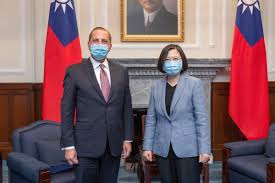
For me, the most satisfying single example of how my set of questions and provisional answers from fifteen years ago is finally getting serious traction in DC happened on Wednesday. Earlier in the week, President Tsai Ing-wen had hosted Health & Human Services Secretary Alex Azar on an official, multi-day visit to Taiwan for discussions about Taiwan’s exemplary response to the COVID-19 pandemic and the need for Taiwan to be allowed full participation, over Beijing’s objections, in the World Health Organization. The visit by Azar was the highest-level visit to Taiwan by a U.S. official, and the only Cabinet-level visit, since Taiwan’s de-recognition in 1979. Immediately after the “wheels-up” departure of Secretary Azar, President Tsai held a news conference in which she set out a single priority for U.S.-Taiwan relations in the upcoming year: to begin negotiations with the U.S. Government for a U.S.-Taiwan Free Trade Agreement (FTA) to strengthen trade flows and to safeguard supply chains.
Sweet.
By Anum Yoon
Reposted from the Triple Pundit website post on May 2015

This year’s Sustainable Cities Index reported the top 10 sustainable cities of 2015. The Index provided an overview of 50 of the world’s cities and what their performance rankings were in relation to the factors of people, planet and profit – the three pillars of the triple bottom line. Europe dominated the top 10 overall rankings, holding seven of the 10 places. And with good reason: Europe has developed an impressive environmental legislation over the past 40 years. They have continuously demonstrated how improving the environment could drive innovation and job creation, while improving the quality of life for everyone.
But seeing those European cities on the list isn’t what impressed me. I was more fascinated by the fact that the remaining three rankings were held by Asian cities. While no American city made the top 10 list (with Boston holding 15th place), three cities proved that global sustainability is becoming increasingly dependent on the implementation of effective environmental policies in the developed cities of Asia.
Here are the sustainable cities in Asia that were successful in finding a better equilibrium in terms of development and progress:
Seoul: Ranked No. 7
Over the past 60 years, South Korea has grown from a war-torn nation to a major world power, becoming the 13th largest economy in terms GDP. This is quite impressive for a nation with a population of only 50 million. The capital and largest city, Seoul, is the product of this rapid economic growth. With over 25.6 million people living in the metropolitan area, Seoul shares the same problems as other large cities, including detrimental impact on the environment. It seemed the citizens of Seoul faced the choice between an improved quality of life and helping the environment… Or did they?
Forward-thinkers look to the idealized notion of the “ubiquitous city” in order to strive toward becoming a more sustainable city. The key to the ubiquitous city concept is technology. Seoul is a world leader in terms of digital governance and open data. This includes an extensive high-speed Internet network. In a ubiquitous city, the free flow of data allows citizens to understand their impact on the environment, as well as the best steps to take in order to reduce their negative effect. The idea is that, by improving technology infrastructure, urban residents can shape their lifestyles in an eco-friendly manner. An example of this in action is the Personal Travel Assistant system. This system delivers real-time information of the public transportation network. It allows the user to access information on carbon emissions and other green transportation options.
South Korea has taken this idea a step further by initiating a project on a huge scale, with the purpose of building the “smart city” Songdo. This city lies near the Seoul airport and has a future projected population of 2 million. This “city on a hill” has the technology and green space to live up to this moniker. It will successfully sustain an underground system of tubes for disposing of waste, universal broadband, integrated sensor networks, and green buildings to truly make it the “city of the future.”
Songdo may soon become the benchmark that the rest of Seoul will work toward, for achieving both a high quality of living and a sustainable city.
Hong Kong: Ranked No. 8
Hong Kong rose to international prominence in the late 1970s, acting as a trading hub between China and the rest of the world. This led Hong Kong to become one of the world’s financial centers that boasts a high GDP and quality of living. This rapid growth, however, also brought about the age-old problems that go hand in hand with urbanization: pollution and environmental degradation. Hong Kong has thus taken steps to curb these negative effects.
Hong Kong has a Council for Sustainable Development, which operates the Sustainable Development Fund. This fund of $100 million is provided to act as financial support for initiatives that will promote awareness for sustainable development, as well as initiatives that encourage sustainable practices. This promotes the active involvement of the citizenry through nonprofit organizations and educational institutions. Leadership in Hong Kong seems to take the view that individual efforts and policy changes will lead to sustainable growth.
Technology has also played an important role in Hong Kong’s sustainability. Citizens of Hong Kong extensively utilize non-motorized and public transit. The Octopus Smart Card makes it easy for users to pay for public transit as well as parking. The smart card can also be used for grocery stores and vending machines. This convenience and usability makes public transit a more desirable option. There are also laws preventing certain types of personal behavior, such as spitting in public, littering, and consuming food or drinks on any public transportation.
Singapore: Ranked No. 10
Singapore has made tremendous progress since its independence in 1965. Lee Kuan Yew, the country’s first prime minister, wanted Singapore to outshine other developed countries in areas of cleanliness and efficient transport systems. Singapore’s famouschewing gum ban is one of the many successful environmentally-friendly initiatives that are enforced through the legal system. You’re even legally required to flush public toilets in Singapore. It’s interesting to note that Hong Kong is one of Singapore’s biggest admirers in terms of imposing bans and penalties on certain types of “rude” behavior.
Singapore also has something called the Sustainable Singapore Blueprint, which outlines a cohesive plan of action for all citizens to follow in order to create a more sustainable city. It targets green and blue spaces, transportation, resource sustainability, air quality, drainage, and community stewardship. Much like Hong Kong and Seoul, Singapore relies on advanced technology and a robust public transportation network.
However, Singapore was able to take on a problem unique to its city — the need to import potable water from Malaysia — and turned it into an economic strength. Singaporean policies supporting innovation to solve this problem lead to over 100 companies developing a profitable niche industry in collecting rainwater and recycling water. Their technologies have spread around the globe.
Singapore not only relies on technology, but also on its own citizens. The Sustainable Singapore Blueprint emphasizes community involvement in conserving resources and preserving green spaces.
The future of urbanization
It seems that these three cities have some significant similarities:
- Robust and convenient public transportation
- Relatively recent economic growth
- Utilization of advanced technology
- High GDP per capita ($30,000+ GDP per capita)
- Space limitations
Space limitations may be the driving force for these advanced Asian cities and their environmentally friendly innovations. Singapore, Hong Kong and Seoul are all small areas that have space restrictions, and thus high population densities. Where in other places, people can simply spread out (see Los Angeles), these cities cannot. Singapore is a city-state; Hong Kong was historically bordered by not-so-friendly China; and the Seoul metro area is slowly taking over South Korea, with half of the country’s population, 25 million people, living in the Seoul metro. Everyone feels the need to live in these cities, even when there is a severe lack of space.
With space constraints, pollution gets worse; there is less green space, more litter and a higher demand for resources. This led these three cities to deal with the sustainability issue in similar ways, which all boil down to infrastructure. Since each city has the wealth to deal with the problem, they do, using technology to improve infrastructure. Infrastructure means more communication between citizens, better recycling efforts, better public transit, better waste disposal and better emissions management.
Image credits: 1) Songdo IBD All others via Flickr – M.Bob & Kenny Teo
Anum Yoon is a writer who is passionate about personal finance and sustainability. As a regular contributor to the Presidio Graduate School’s blog, she often looks for ways she can incorporate money management with environmental awareness. You can read her updates on Current on Currency.
The summer’s over and the new work-year has begun. No better way to kick it off than with a reprise of our summer’s big news — China Partnership of Greater Philadelphia and the City of Philadelphia were recognized at the annual high-level U.S.-China talks in Beijing this summer with one of six new U.S.-China EcoPartnerships. Our partner is the Tianjin Economic-technological Development Area or TEDA. Our PHL-TEDA EcoPartnership focuses on funded projects in Tianjin for smartgrid online monitoring systems (OMS), wetlands urban water management (WUWM), and green building energy efficiency (GBEE).
 Back row: Philadelphia Delegates Terry Cooke, CPGP (4th from left) and Gary Biehn, White & Williams (2nd from left)
Front row (from right to left) China’s State Councilor Jiechi Yang , Sec of State Kerry, Amb. Baucus & Counselor to the President, John Podesta
In other posts to follow, I’ll share some more background on what the five-year old U.S.-China EcoPartnership program is (and why it matters), give thumbnails on the other five EcoPartnership awardees in 2014, and provide a listing of the twenty-four active EcoPartners since the inauguration of the program in 2014.
In the meanwhile, here are links publicizing our new three-year PHL-TEDA EcoPartnership:
U.S. State Department Press Release
Secretary Kerry remarks at July 10th EcoPartnership signing ceremony
U.S. Government website for the U.S.-China EcoPartnership program
Official photo from U.S. Department of State
City of Philadelphia Press Release (on City’s blog)
City of Philadelphia Press Release (on City Facebook page)
Happy Year of the Snake!
I have some major catching up to do so let me begin here with a link to my book which the Wilson Center launched on September 24, 2012. (Note: if you want to download the PDF of the book, just right-click and use the Save As option).
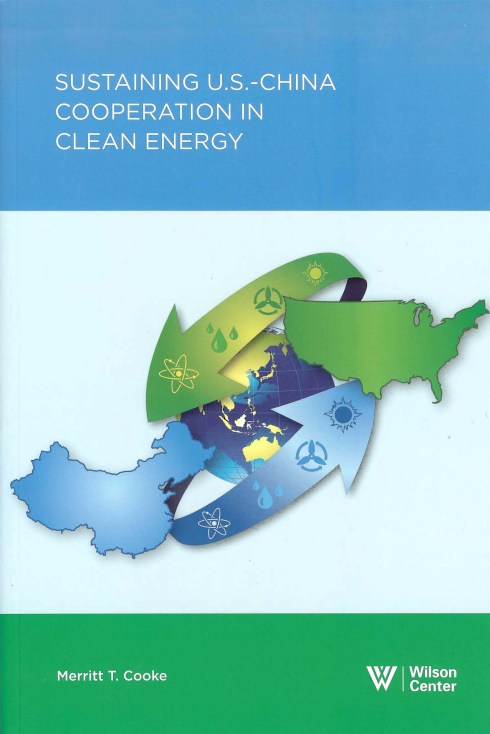
More 2012/3 updates to follow in rapid sequence.
Thanks for hanging in there,
This is the first of regular weekly Cooketop News blog posts (scheduled to appear each Monday).
By reviewing the previous week’s top stories involving — broadly speaking — China clean energy, the idea is to identify and comment on a particular emerging trend/issue which points forward and can help illuminate news-in-the-making for the week(s) ahead.
By radio analogy, the commentary is meant to cut through static in the general coverage of whatever’s the issue at hand and present a clear frequency and better ‘signal-processing’ for helping to tune in on an enduring news issue.
* * * * * * * * * * * * * * * *
THIS WEEK’S COMMENTARY — HUNTSMAN, REPUBLICANS & CHINA
Last week was the Iowa caucus and Tuesday of this week the New Hampshire primary. The related questions which these contests have raised are what have Jon Huntsman’s China connections and qualifications done for his campaign effort and what are the implications for China given the current crop of Republican candidates.
Let’s start with the second question. Liz Economy from the Council of Foreign Relations has done a better job than anyone at assessing the remaining field of candidates through the lens of their public positions on China. To borrow liberally from her analysis, here’s what we’re looking at:
Mitt Romney says it’s all about the economy, stupid: Mitt Romney’s China policy is all about trade measures —keeping counterfeits out, protecting intellectual property, levying sanctions against unfair trade practices, pressing China on its currency, etc. The question for an anti-“Big Government” candidate is who does all this work if not the government.
Ron Paul wants to make love, not war: Ron Paul appears to want to “go along to get along” with China: stop intrusive surveillance, reconsider the Taiwan Relations Act, drop the idea of import tariffs in retaliation for Beijing’s currency manipulation, and mute protestations over human rights issues. As Economy has put it, there’s little doubt that “candidate Paul …would be Beijing’s pick for top dog.”
Jon Huntsman is long on experience but short on traction: No surprise that the expertise in China policy is with former U.S. Ambassador to China Jon Huntsman. Huntsman has all his facts in line. You can agree or disagree with his specific positions — opposing a China currency bill or engaging to promote political change in China—but you have to admit he knows his stuff.
Newt Gingrich jettisons balance to keep ship afloat: Gingrich’s initial positions in the campaign were balanced and reasonable, calling on the U.S. to do the right thing and take action on the home front in order to be more competitive. As his electoral options have narrowed though, his positions appear to be veering in a more extreme direction. Stay tuned for his advertising campaign in South Carolina to see if he starts demonizing China.
With Rick Santorum, the question is ‘Where’s the beef?’: Despite having a lengthy book and a Senatorial career in the public record, there’s almost nothing to go on to explain how Santorum would approach China if elected President. He did make a quote about going “to war with China” to “make America the most attractive place in the world to do business.” Huh?.
Rick Perry talks the talk but doesn’t walk the walk: “Communist China is destined for the ash heap of history because they are not a country of virtues. When you have 35,000 forced abortions a day…, when you have the cyber security that the PLA has been involved with, those are great major issues both morally and security-wise that we’ve got to deal with now.” His actions? Courting Huawei, a problematic company, to invest in Texas.
So, on to the related question, what has Jon Huntsman’s Mandarin-speaking ability and Ambassadorial command of the issues meant for his election prospects? The answer, like a Rorschach, depends entirely on who you talk to. His proponents invariably cite it as a positive (see NY Times article) and his detractors cite it as a liability (see story from last Thursday below). Where’s the traction? Answer: there’s maybe some but not much.
Fault-lines have been exposed in the body politic over these questions. There’s no question that one of Ron Paul’s supporters went way, way over the line by insinuating Huntsman was questionably ‘American’ because he and his wife keep their adoptive children from China and India exposed to cultural traditions from those two civilizations, but nonetheless ideological conservatives generally seem to view his competence with China as itself a cause for suspicion.
The first generation of Mandarin competent statesmen drew heavily from the offspring of Christian missionaries who grew up in China, people like the late Ambassador James Lilley. Huntsman represents a second wave of high-level U.S. government officials who have Mandarin-competence through their two years of Mormon service abroad. (Tim Stratford, a former Assistant U.S. Trade Representative for China, is another example of this group of experts). The third wave will come from younger Americans who, in step with China’s opening to the world, have been able to burrow deeper into language and cultural expertise. They are making their way up the ladder of the U.S. government. I can only hope that the American electorate — and the Republican Party — can find a way to value the knowledge they bring to public service. The top rank of challenges which the U.S. faces will simply not be solved without constructive and effective engagement with China — and that requires people who understand, respect, and can operate in the sphere of Chinese language, culture and values.
(Disclosure: I have worked at various points in my career for Jim Lilley, Jon Huntsman, and Tim Stratford.)
* * * * * * * * * * * * * * * *
LAST WEEK’S COOKETOP NEWS
Here’s a listing of some of the top stories covered in Cooketop News for Week 1 of 2012 (with hyperlinks):
Monday, January 2, 2012
 Foxconn enters solar
Chinavasion’s High-capacity Solar Charger
Protest in China – Ripple or Wave?
Bridge construction as economic development lever
10 Predictions for Cleantech in 2012
Tuesday, January 3, 2012
 Top 20 Green Building Innovations of 2011
USDOC Sec. Bryson Faces a China Challenge
Cleantech Start-ups to Watch
Is China’s Solar Industry Entering Eclipse?
Public Housing Key as Export Machine Slows
Wednesday, January 4, 2012
 ‘Culture Campaign’ Dents Programming
Green Cars & Clean Energy: The China Angle
Cleaner Technology in Global Arctic Oil Race
Chinese Philanthropists Join to Protect Nature
China’s IPOs Top World’s Exchanges Despite Slump
Thursday, January 5, 2011
 Air Pollution Hazardous for China’s Economic Health
Drought Drying out Poyang Lake in Jiangxi Province
Rustbelt Cities Go Green to Strengthen Economies
China’s Corporate Debt Issuance Soars in 2011
Huntsman’s China Cred No Boost to his Prospects
Econ Ties to China Key Issue in Taiwan Election
Friday, January 6, 2011
 10 Emerging Sustainable Cities to Watch
Solar Turbine Makers Turn to India & China
U.S. Manufacturers of Steel Wind Towers Cite China
LDK Solar Snags $64mm from PRC for U.S. Projects
China Announces Plan to Levy Carbon Tax by 2015
* * * * * * * * * * * * * * * *
That’s it for this week. I hope you find this of some value to your own pursuits. Give me a holler — either by leaving a comment below or by email — to let me know what you think, positive or negative. For anyone with a driving passion to get each day’s edition of Cooketop News (minus the summary listing and commentary that I provide in this weekly post), you can subscribe by going to the Cooketop News site at http://paper.li/mterrycooke/1324752421 and clicking on the upper-right Subscribe button. There is also an Archive feature on the site (upper-center) which allows you to look up any previous edition.
Oh, before signing off, I owe you an answer to the question in the title. Jon Huntsman’s name in Chinese? 洪博培. (And by the way, if you try searching for the name on China’s Twitter clone — Weibo — when you’re in China, you’ll likely find the name has been blocked).


 ______Assessing China / The TEA Collaborative______