In my network, there’s a lot of interest in — and considerable disagreement over — the meaningfulness of the PRC statement of principles toward resolving the Ukraine crisis released on Friday. I gave my on-the-spot personal view in the post 1% Words, 99% Work on the day of the statement’s release but, since then, I have been fielding comments and questions from a number of friends and associates.
I am going to share here one of those conversations. The questions were posed to me by another college classmate, in this case a person with a lifetime of deep and wide professional experience in China. I hope that these questions and answers might prompt readers of Assessing China to continue to think about this issue in a curiosity-forward and thoughtful way.
Here is the Q&A exchange:
What factual inaccuracies do you find in it (the official PRC Position on the Political Settlement of the Ukraine Crisis)?
It’s important to note at the outset that this is a position paper (clarifying the PRC’s own position) rather than a peace proposal (aimed at bringing the two warring sides together). With that in mind, the PRC is perfectly entitled to set out their position in any 12 — or any 120 — points which they chose. However, it is also clear that they are using this position paper in order to position themselves to be seen as a potential mediator between the two warring parties. Whether they pull off that positioning exercise depends both on whether the PRC proves ready, willing and able to play that role and whether key parties to the conflict support them playing that role.
Factual problems are only one dimension of what can be problematic in a document like this. On the factual inaccuracy front, I will limit myself to the very first point. Since 1945, there has been no definition of sovereignity which squares with Russia’s invasion. To this day, China has backed Putin’s language (a special military operation, not a war or invasion) and its worldview (revanchism and restoration by force of past empire are legit). If you can’t get past the first principle, it’s hard to take the rest of the document seriously. For the rest …
Point 2: A dig at the U.S. An assertion with no real substance.
Point 3: The question is how and under whose terms: 21st c. norms of forward-looking sovereignity protecting the rights of citizenry developed over the past 75+ years or the Putin/Xi aggrieved, backward-looking version all in the mind of an individual leader with the power to enforce conformity to his — it’s usually a man — viewpoint
Point 4: We can all hope for peace talks but neither of the warring party appears ready to consider these. They each hope to establish a position of strength before entering into them. Temporary stalemate.
Point 5: There’s a lot China could do unilaterally on this point. Words are cheap. The U.S and the West have demonstrably done a lot already. China?
Points 6, 7, 8 & 9: Who has been the responsible party for these specific problems? Hardly a gray area to my mind. Russian summary execution of captured soldiers and civilians in Bukha and other villages they invaded and occupied. Russian forcible evacuations of children to camps in Russia. Russian sustained artillery assaults on the nuclear plant at Zaporizhzhia (not to mention indiscriminate attacks on civilian infrastructure). Russian interdiction of Ukrainian grain exports at ports and railways. What are the comparables from the Ukrainian side? I personally don’t think there are many but, in any case, law always gives special consideration to the responder rather than the initiator, the defender rather than the attacker.
Point 10: Equivalent to stripping Ukraine of one of the ways which the world community has provided to help them defend themselves.
Points 11 & 12: We can all agree that these would be desirable
And what’s your view on why U.S hegemony has been good for the world for the last 70 years, despite some of the bad that we did?
I’ll just offer two points of response
Providing the world with a longer period of sustained peace — not perfect of course but far better than anything that preceded it — and also more measurable human advancement (educational, health, wealth, human rights) than previously achieved at any point in history
Providing China with the opportunity, tools and resources to help raise 800 million of their citizens out of poverty
If “U.S. hegemony” is just part of China’s ideology, isn’t “democracy vs. autocracy” part of our ideology?
I quite agree with you about the “U.S. hegemony” as contrasted with the “autocracy vs democracy” point. There are levels to that though and I focus on the third level:
Level 1: both terms are established political science terms and describe real things in international behavior
Level 2: as is their right, both Beijing and Washington choose to amplify the political concept that best suits their purpose
Level 3: I come down against ceding there is equivalency between the two for two reasons:
Focus on ‘hegemony’ is rooted in a sense of historical grievance and doesn’t offer the world much unless other players share that grievance and all agree to do something about it. ‘Authoritarianism vs democracy’ draws a clear distinction between two different systems and encourages everyone to think about, and ultimately choose, their preference. Xi is at liberty to assert China offers a superior form of democracy to Western liberal democracy. Not many governments or people around the world seem to buy into that. The U.S. has over 65 formal allies based on shared values rooted in liberal democracy and the post-WWII order. China has one — North Korea — and is working hard at adding Russia and Iran to the list
There’s no inherent accountability to Xi’s and China’s use of the term hegemon in describing the U.S. Top-down and echoed throughout a propaganda apparatus which can’t be questioned because, as Marxist-Leninist doctrine holds, it definitionally represents what is best for the people. In the Biden Administration’s amplifying of “authoritarianism vs democracy” however, it can be questioned and jettisoned come January 2025 if that is the will of the majority of Americans.
Washington had been urging China since the beginning of Russia’s war to play some role in peace negotiations, and now it has offered to do so, outlining the basic principles. I think that’s a good thing. The U.S. cannot be an honest broker, nor can any country in NATO. Perhaps China could pay a useful role in stopping the fighting.
I think what the U.S. has been urging China is (1) aspirationally, to encourage China to come down from fence-sitting and use its suasion with Moscow to promote post-WWII norms of sovereignity (versus might makes right) but (2) more importantly not to aid and abet the instigator in this war of choice with sanctions-cushioning actions and (c) definitely, definitely not with sanctions-evading support and supply of lethal munitions. China has chosen to completely reject (1) and (2) and, as for (3), is in advanced negotiation with Russia to set pricing and scale of supply for offensive drones and ammunition, possibly also artillery.
The U.S. and NATO don’t offer themselves or pretend to be honest brokers. They have clearly taken the side and will continue to take the side of Ukraine since Feb 24, 2022. The fundamental problem is that China is trying to have its cake and eat it too — on the one hand, giving consistent, significant and now increasing levels of support for Russia over the past twelve months while also now posturing with this position paper as a potential honest broker. I share your hopes and think its good that Zelinsky will meet with Xi. I just don’t expect that, in the final analysis, much will come of it for the reasons outlined above.
My concluding comment: I commend this interlocutor for asking thoughtful and useful questions. Many of the exchanges I had were with people who wanted to convince me that their interpretation of the situation was the correct one. One of the common denominators of those perspectives seems rooted in fear … fear of the Ukraine crisis spilling over into nuclear strikes, fear of the U.S. government missing a chance to work with China to resolve the situation, fear of the U.S. finding itself on the wrong side of history as Brazil, Hungary, Saudi Arabia, Turkey, South Africa, India and Indonesia gravitate into a Chinese orbit. I personally do not share those fears. In fact, I believe that the surest way of avoiding any of those scenarios becoming even plausible is for us to lose the clear-sightedness and the bedrock values which have guided our reaction to Russia and China since February 24, 2021.
On the one-year anniversary of Russia’s invasion of Ukraine, China has released its 12-point peace proposal. The official English-language version is here. Below is a simplified graphic covering the 12 points.
Here’s my 4-point response:
There’s no reason to go beyond the first point. If that were to be upheld, there would be no ‘special military operation’ crisis to solve.
China is not a credible or honest broker to bring about peace. Just look at its year-long pro-Russia messaging campaign — both domestically and internationally — and its well-documented sanctions cushioning and sanctions evasion assistance to Russia (oil purchases, currency support, dual-use supplies (microchips, electronics, etc) and now on the verge of adding artillery, drones and other lethal military hardware to the list). Zelensky is willing to talk to China but only in the hope that China will pressure Putin to back off. Unlikely China will apply that pressure in any way forceful enough for Putin to give it a second thought.
Words are the easy part. Brokering peace is 99% about engaging in good faith and intensive consulations with both sides and then buckling down to sustained application of leverage and excruciating follow-through. There’s no indication that Beijing is ready to undertake — or even interested in undertaking — this hard part.
The document primarily serves Xi Jinping’s purposes rather than Kyiv’s and Moscow’s. It gives him a modicum of ballast as he postures as sitting on the fence whereas, in reality, he has a foot firmly down on Moscow’s side and his “frirendship without limits.” Additionally, it serves to score points against the U.S. in line with his new “direct confrontation with the United States” policy while also providing some catnip to non-aligned global players like Brazil, Hungary, Turkey, South Africa, India and Indonesia.
In short, non-credible but a sly and carefully orchestrated move to advance Xi Jinping’s own gameplan.
P.S. Since today is the one-year anniversary of Russia’s invasion of Ukraine, I am providing a link here back to the post I made on the eve of that invasion on February 21, 2022. It has unsettling resonances when reconsidered one year later.
I received an email yesterday from a college friend who is bright, informed and engaged with world events. She is not a China specialist but over the last few years we have had an on-going exchange of views about China, both privately and in a public forum.
Her message from yesterday read,”Terry: Yikes. Do you have access to Le Monde? I can’t read the rest of the article, but the first half is alarming. R.” The article she hyperlinked is from Le Monde and that article in turn hyperlinks to a strategy document which the People’s Republic of China (PRC) has just released in conjunction with the visit by Wang Yi, Xi Jinping’s principal foreign policy advisor, to Munich for the 59th Munich Security Conference with NATO member countries and then on to Russia for meetings with Foreign Minister Sergey Lavrov and yesterday with Putin himself. The document is titled “American hegemony and its dangers.” As headlined — accurately, I might add — in the Le Monde article, the focus of Xi’s Foreign Ministry is now on “‘direct confrontation with the United States.”
Today’s brief post is both my response to her and a way of brushing off the cobwebs after a long holiday vacation — lasting from Thanksgiving through Chinese New Year — I have taken from Assessing China.
Mao’s Young Red Guards Stand Up to the American Hegemon
To keep it simple, there are two main reasons that this newly overt stance of direct confrontation with the U.S. comes as no surprise from Xi’s PRC in 2023.
The first goes back as far as 1921 with the founding of the Chinese Communist Party (CCP) in Shanghai. Inspired by the Bolsheviks’ gains in the October Revolution, Chen Duxiu and other founding leaders of the CCP made Leninist ideology (soon to become Leninist-Stalinist ideology after Stalin’s rise to power in 1924) the central tent-pole of the party. According to that ideology, the bases of CCP power were the Three P’s — the Party, the PLA (People’s Liberation Army) and propaganda. Since seizing the mainland and ousting Chiang Kaishek’s rival Kuomintang Party in 1949, the centrality of this ideology has only been tested twice. The first was the slow-boil Sino-Soviet split which began in 1956 and culminated in 1972 when China turned its back on its Big Brother in Communist ideology and welcomed Richard Nixon. The second came with the introduction of Deng Xiaoping’s economic reforms which started experimentally in 1978 and were formally adopted in 1982.
The effect of these reforms was monumental. For the first time since 1921, decision-making within the CCP was to be based on a predictable economic logic and not on malleable political ideology. It ushered in a 30-year period of economic growth which according to the World Bank has lifted 800 million people out of poverty. Western observers, myself included, tended to assume that this three decade burst of wealth creation under the post-WWII Pax Americana would be enough to make PRC leadership want to become a permanent “stakeholder” in this global order. In hindsight, we underestimated the strength of the CCP’s ideological ‘muscle memory,’ of its basic political motivation and of China’s civilizational pride (and resentments). What is a seventy-five year Post-WWII order measured against a four thousand year civilizational record in which the Peoples’ Republic of China is, in cultural terms, its latest dynasty. And, as Orville Schell has masterfully made the case in Wealth and Power, not even Deng Xiaoping probably ever saw wealth-creation for China in a Washington-led world order as an end in itself, but rather as a step toward global power that would enable China to challenge that world order in due course. For Xi Jinping, a true ideologue inspired by his father’s revolutionary experience, that time is now.
Secondly, the path that China has been taking to overt confrontation with the West has been revealing itself in planned and increasingly obvious stages ever since 2008. 2008 was the year of the Global Financial Crisis, which China weathered with less turmoil and damage than the advanced economies in the West and Asia. That is the year that CCP leadership started taking stock of what it had gained in capital accumulation and talent acquisition and began thinking about striking out on its own different path. There was still a need to access Western consumer and financial markets and to promote inflow of management expertise along with inbound investment but the critical need was technology. In 2008, China was in no position to compete with the West and Western-aligned countries like Japan, Taiwan and South Korea in advanced technology. For that reason, over the next fifteen years, CCP ambitions were always partially cloaked but increasingly revealed with each Five Year Plan cycle. (See Xi’s Ascension to the CCP Pantheon for a more detailed mapping of that 15-year course). In 2012, the CCP selected Xi Jinping as the horse they would ride on this epochal journey. He would break the mold which Deng Xiaoping had set limiting Chinese leaders to two five-year terms. And he would use his longer leash to bring Hong Kong and Taiwan to heel before stepping down. To usher in the next Five Year cycle of the Politburo in 2017, Xi gave a triumphalist speech telling the world what to expect in the years ahead. Now, fresh from securing an unprecedented third term of formal power last year, Xi is moving to make those stated intentions a reality. The pandemic and Putin’s invasion of Ukraine and Biden’s CHIPS Act were not part of the plan. But Xi and the CCP are ‘unswerving’ in pushing forward with this plan. It has been fifteen years in the making and, for much of it, the U.S. and its allies have been distracted in the Middle East and Ukraine. With its population now in decline, Xi knows the window is closing for him to reshape the global order to his and the CCP’s liking.
With ‘ideology in command’ and riding fifteen years of planning momentum, China’s direction under Xi is now clear for all to see. Xi’s strategic accommodation with junior partner (and client-state energy supplier) Russia last February was simply another way-station on its path. The path to open confrontation with the leaders of the post-WWII order, and the scramble for influence with less tightly aligned global players like Brazil, Hungary, Turkey, South Africa, India and Indonesia, is afoot.
The SARS-COV-19 outbreak was first detected almost exactly three years ago in Wuhan. In large part because of PRC Government obfuscation and delay, the world was caught off-balance in ensuing months. We all know the toll in human lives and suffering that has followed.
For democratic-leaning, economically-advanced societies, the road back to a semblance of “normalcy” has been long and difficult but citizens in these countries are now embracing their return to “the new normal.” For less developed countries in the Global South, the journey has been even more arduous and painful due to constrained resources (though, interestingly, the genetic stock of African nations seems to have insulated many of their populations from the worst of Covid-19’s virulence). It is only in China — and perhaps also in North Korea but who knows what has been happening there — that the experience has been dramatically different. Xi Jinping’s “steadfast” policy of Zero Covid — and, subsequently, Dynamic Zero Covid — has resulted in coercive lockdowns of as much as 20% of the country’s population at a given time and in an ineffective vaccination program weakened by hostility to foreign-made mRNA vaccines and propaganda-induced vaccine-hesitancy among its elderly. Today, only 40% of the most vulnerable segment of Chinese seniors — those over 80 — have received two doses and a booster of the Chinese-made vaccine, a combination which has been shown to be no more effective than two doses (without booster) of the Moderna, Pfizer and comparable Western-developed vaccines.
The crippling effects of Xi’s Zero Covid and Dynamic Zero Covid policies on China’s economic performance, coupled with the unprecedented nation-wide protests against the lockdowns flaring up in late November prompted the PRC Government to suddenly drop the policies — and, in fact, any mention of these policies — in early December. As well documented in front-page reporting in today’s New York Times (After Scuttling ‘Zero Covid,’ Xi Offers No Plan), this about-face is potentially catastrophic in its suddeness: the PRC government has not readied any robust vaccination or even public education program to fill the vacuum left in the wake of Zero Covid, reliable data about infections is no longer available since government-mandated mass-testing has been dropped and people are being told to self-test at home, and Xi Jinping is nowhere to be seen, having snuck out the back door of the monument to his infallibility and PRC governmental superiority he built around his Zero Covid policy.
Xi’s Zero Covid policy has clearly boomeranged on him — and, more tragically, on the Chinese people:
But does the boomerang effect end there? Despite today’s excellent reporting by the Times and recent reporting by other news outlets, the scope of what is happening in China is only dimly understood outside of China. In large part, this is due to the fact that the scope is not well understood in China — except anecdotally and in felt individual experience — due to the heavy curtain of state-media censorship. The scope may be vast …
There are many reasons we should be attending closely to these developments. Humanity and empathy are high among those reasons. But perhaps the most important reason is that this could all come back and boomerang on us again, too. Unchecked spread among a vast, poorly-protected population can easily give rise to a new strain in China that could once again spread throughout the world.
What goes around, comes around. Wuhan Redux? If so, the finger of blame is to be pointed directly at Xi Jinping.
Today’s post shares excellent analyses of the on-going protests in China courtesy of Foreign Affairs:
Across China, people are protesting the country’s strict “zero COVID” policy, in a rare show of dissent against President Xi Jinping’s regime and the Chinese Communist Party (CCP). The wave of outrage started after a deadly fire in the city of Urumqi, the capital of the Xinjiang region, killed at least 10 people on November 24. The city has been under lockdown for more than 100 days. Protesters are calling for an end to the zero-COVID policy—but also for greater democracy and even the removal of Xi.
As Yanzhong Huang writes, it has been clear for some time that Xi’s commitment to zero COVID is a risky move. “Having staked enormous political capital on zero COVID,” Chinese officials have had to pursue “excessively harsh measures in an effort to avoid any outbreaks that might embarrass the government.” But “Beijing’s intransigence has come at an escalating cost.”
What could mounting public distrust and discontent mean for Xi’s regime? The country’s punishing lockdowns “could contain the seeds of future political transformation,” Huang writes. If the Chinese government refuses to alter course, it could face a serious crisis of legitimacy. And Xi’s power is already being questioned as never before, Chinese dissident Cai Xia notes. Despite Xi’s outward projection of confidence, his popularity is slipping—while “in the shadows, resentment among CCP elites is rising.” As demonstrators clash with Chinese authorities across the country, we’ve compiled some of the best recent coverage in Foreign Affairs on how China’s zero-COVID policy is putting the country’s political stability at risk—and what it could mean for Xi and his grip on power. Start reading below.
I am frequently asked questions about Covid in China. The three most commonly posed questions are: (1) how and where did it originate; (2) how is Xi’s Zero-Covid policy faring and (3) what is the reaction in China among both businesspeople and ordinary citizens.
In this post, I’ll take on the first two questions but with the caveat that definitive answers to any of the three questions are almost impossible to arrive at given the complexity of the underlying facts and the fierce political skirmishing over establishing the “truth” of the matter.
I am going to stay above the fray and offer simple generalizations to put each of the first two questions into clear perspective and revealing context. On the second question, I will add substantial commentary from today’s edition of Sinocism by Bill Bishop, which has been well described as “the Presidential Daily Brief for China hands” by Evan Osnos of the New York Times. (Note: Bill Bishop gives his subscribers leave to share, on occasion, content from his newsletter which I am doing for the first time here). For anyone interested in the answer to the third question, I’d say for now that both the business response and popular response is dismal at best but would encourage you to keep an eye out for my fuller response coming soon.
Origins of Covid-19
I am not going to venture where even leading epidemiologists fear to tread but will confine myself to one unassailable truth. The Chinese Government has consistently and systematically denied the world community — both its cadre of scientists and its relevant governmental and non-governmental organizations — access to the sites, data and interviews which would facilitate pinpointing the origins of Covid-19. It may eventually be possible through painstaking DNA regression analysis to pinpoint the origin of Covid-19 with certainty despite this lack of Chinese cooperation. Meanwhile, the glaringly obvious question raised by China’s stance is what is the PRC government trying to hide?
Zero-Covid Thought Control
Ever since Xi Jinping held forth his Zero-Covid policy as the basis for claiming the superiority of “Chinese democracy” over traditional liberal democracy, his adherence to that policy has been “unflinching” and “unswerving.” This was especially apparent in the run-up to the 20th National Party Congress in Beijing last month, even in the face of plummeting economic performance. Emerging from that once-in-five-years leadership shakeup with a plalanx of Standing Committee loyalists in place, Xi acknowledged the economic fall-out and popular discontent by announcing on November 11th some tweaks to enforcement policies under the banner of “optimizing Zero-Covid.” The results of this ‘optimization?’ Today’s infection rate and number of partial lockdowns is, in toto, more widespread and deleterious (see below) than the earlier, traumatic nadir experienced during the Shanghai lockdown last spring. It is ironic, but not altogether surprising, that “the Emperor” insists, as a sop to his pride, that his citizens all change the way they talk and think about his Zero-Covid policy — now “optimized” — rather than that he change the policy meaningfully to ease their personal and economic lives.
Addendum: Extracts from today’s edition of Sinocism on ‘optimized Zero-Covid’
Lockdowns by another name continue in parts of several cities as daily cases are approaching the level of the Shanghai disaster earlier this year. Right now it feels like we are seeing a repeat of Shanghai in late March, when local officials tried targeted and precise measures, before realizing that Omicron overwhelms all those efforts, leaving officials with the choice between letting it start to rip or instituting suffocating lockdowns. Near term I think they will have to choose the latter as they are not where they need to be with vaccinations and hospital capacity. But even then they have a massive problem with virgin immunity, so until they are willing to tolerate larger numbers of serious illness and death, or have better therapeutics, I do not think there is a specific end date. I know it is popular now to say March, pegged to the “two meetings”, but I am not sure why that is really an end date. They really seem stuck.
“China is seeing a record level of lockdowns,” said Ting Lu, chief China economist at Nomura. “It’s even a bit worse than during the [spring] Shanghai lockdown because so many cities are partially locked down.”
The bank estimates Covid restrictions have hit areas responsible for one-fifth of China’s gross domestic product…
In Chongqing, another pandemic hotspot, the arrival on Monday of Sun Chunlan, a vice-premier known for her draconian approach to battling the pandemic, led to widespread panic shopping among residents, concerned about the potential for a tough Shanghai-style lockdown.
China’s top health officials vowed to stick with Covid Zero at a Tuesday briefing, saying outbreaks across the board remain “severe and complex.” Beijing is telling local governments to implement the updated guidelines, which were outlined in 20 measures earlier this month. Localities shouldn’t be excessive when it comes to Covid controls, but they also shouldn’t loosen too much either, said Mi Feng, spokesperson of the National Health Commission.
Party Secretary Yin Li: Yin Li: Firmly and resolutely win the overall war of epidemic prevention and control, the war of resistance and annihilation, realize the prevention of epidemic situation and stabilize the development of economic security.
Comment: “歼灭战”, literally “war/battle of annihilation” seems hard to win with piecemeal shutdowns. Hearing that some beijing cadres issuing localized lockdown orders verbally only not going to inspire confidence in the “optimization” of dynamic zero-Covid on the road to reopening. why are they hiding it? from whom are they trying to hide it?
The ongoing epidemic is witnessing growing infections. The average daily new cases this week reached 22,200, nearly double last week’s level, Hu Xiang, an official of the national epidemic prevention and control bureau, said at a press conference on Tuesday.
Hu noted that the epidemic, which has hit many provinces and regions, showed complex transmission chains. Some provinces are facing the severest and most complicated epidemic in the past three years.
Densely populated cities like Guangzhou in South China’s Guangdong Province and Southwest China’s Chongqing Municipality are epicenters of the ongoing outbreaks, as the large population, high personnel mobility and frequent gatherings in key spots like schools increased the risk of epidemic transmission and the difficulty of putting the epidemic under control, according to Hu…
Citing experts who closely follow the situation of China’s epidemic, some media outlets predicted on Tuesday that this round of the epidemic would continue to expand until the middle of December.
Beijing official: two seriously ill Beijing patients, one 52 and the other 89, did not get the booster shot and the booster rate for those over 60 is low and for those over 80 is not even 30% 例新冠肺炎重症感染者分别为52岁和89岁,均未接种加强针, 30% 60岁及以上感染者全程和加强免疫接种率均偏低,80岁及以上感染者加强免疫接种率不足30%
According to the requirements of epidemic prevention and control in Beijing, starting from November 24th, residents and visitors must hold a negative nucleic acid test certificate within 48 hours to visit the municipal parks and the National Botanical Garden.
China should optimize and adjust its COVID control measures, depending on how the pandemic situation evolves domestically and beyond its borders, a page-one Economic Daily commentary said. Still, it said COVID control is a daunting and long-term endeavor, and that officials must not slack in implementing related measures to contain outbreaks. The pieces quote Xi from his comments to the Wuhan delegation at the delayed NPC meeting in May 2020 – “针尖大的窟窿能漏过斗大的风” – a hole the size of a needlepoint can let in a huge wind”. So how are officials supposed to respond, when they are being reminded that even the slightest slackening can lead to an outbreak? They have seemingly impossible and contradictory tasks
“It’s maybe 10 steps forward and nine steps back,” said Chen Long, a policy analyst at Plenum, a Beijing consulting firm…
Citizens will only be reassured, said Wang Xiangwei, a Beijing commentator and newsletter ( Wang Xiangwei’s Thought of the Day on China) writer, when trusted health experts appear on television to discuss the lack of severity of the Omicron variant for those who have been vaccinated, particularly young people who also have strong immune systems. A possible candidate, he said, was Zhong Nanshan, who helped uncover the SARS outbreak in 2003 and played a key role in drawing national attention to the initial Covid outbreak in Wuhan nearly three years ago.
After several recent outbreaks at colleges and Universities, The the Ministry of Education held two meetings this month to make plans to prevent the relaxation of prevention and control in the name of “optimization”
The National Health and Health Commission has made it clear that emergency rooms, dialysis rooms, operating rooms, delivery rooms and intensive care units are not to be shut unless necessary.
Xinhua on the key takeaways from the Joint Prevention and Control Mechanism of the State Council presser, concludes with:
In the affected areas, medical institutions at risk of the epidemic should not be “shut down” or “locked down” under the pretext of epidemic prevention and control, especially emergency rooms, dialysis rooms, operating rooms, delivery rooms, and intensive care units in medical institutions. These important departments should be “not sealed up and controlled unnecessarily” to ensure the treatment of patients. It is possible to minimize the impact of epidemic prevention and control on the daily medical services of medical institutions and meet the needs of the people for medical treatment.
The relationship between epidemic prevention and control, normal production and life, and economic and social development is complementary and dialectically unified. To better respond to and resolve the reasonable demands of the masses and solve the practical difficulties of the people is not only an inherent requirement to adhere to the supremacy of the people and life, but also the right thing to do to firmly implement the general policy of “dynamic zero-Covid”. The struggle against the epidemic in the past three years has profoundly revealed to us that only when the epidemic can be prevented can people’s lives be safe and secure; The only way to effectively coordinate epidemic prevention and control with economic and social development is to take concrete measures to reduce the negative impact of the epidemic and ensure sustained, healthy and stable economic and social development with good results.
The government also encouraged residents in Chaoyang district to “slow down their lives” at a press conference on Tuesday, asking them to not leave the district unless absolutely necessary, use online learning, online meetings and telephone communications to reduce visits to schools and offices.
Chinese regulators have warned that a wave of initial public offerings from companies claiming to be involved in China’s booming Covid-19 testing sector will be subject to added scrutiny over concerns that their high growth is unsustainable.
According to Chinese media outlets, a community staff member later suggested that this was a non-official, self-initiated move by the property management and that it has since been corrected.
The path to reopening “may be slow, painful and bumpy,” the Nomura economists wrote in a note, suggesting a “back and forth” approach as rising cases stir reluctance among policymakers to ease curbs quickly. Nomura forecasts gross domestic product growth of 4.3% for 2023, lower than a median estimate of 4.9% in a Bloomberg survey.
On Monday, China reported two Covid-related deaths, one in Henan province and one in Sichuan province, after Beijing recorded three virus-related deaths over the weekend.
The municipality of Tianjin near Beijing on Tuesday became the latest to order citywide testing, after a similar announcement on Sunday by the northern city of Shijiazhuang.
CQ Researcher asked me to argue the Pro side of the question “Should the U.S. cooperate with China in the global transition to clean energy.” That Pro/Con feature was published last week as part of the in-depth Geopolitics of Green Energy volume. Followers of Assessing China know that I have published a Wilson Center book advocating for U.S.-China cooperation in clean energy, have led a U.S. Government-awarded sub-national non-profit to advance this cooperation, and taught for three years at the Masters level at UPenn about the importance of sub-national cooperation in clean energy. Oddly, this is the first time I have argued the Pro side in a strict Pro/Con format. (The only other time I have engaged in this format was at Princeton a number of years ago when I was asked, in the spirit of rhetorical debate, to take the Con side which I tried gamely to do). Anyway, the appearance in (digital) print of this piece last Friday is very timely, appearing four days after Presidents Biden and Xi agreed face-to-face in Bali to resume binational U.S.-China climate change cooperation. The following day, the U.S. climate envoy John Kerry, sat down with his Chinese counterpart, Xie Zhenhua, as they rolled up their sleeves to resume that cooperative work (which Xi Jinping had unilaterally terminated in the wake of Speaker of the House Nancy Pelosi’s visit to Taiwan in August of this year).
Geopolitics of Green Energy
Pro/Con
Should the U.S. cooperate with China in the global transition to green energy?
The United States should continue to seek cooperation with China in the global transition to green energy for four principal reasons.
Scientifically, the knowledge basis on which the transition depends has no political boundaries. Just as an accurate understanding of human evolution requires archaeological digs in every country, as well as international scientific exchange to synthesize those findings, the scientific foundation for a global low-carbon future is strengthened by U.S.-Chinese scientific cooperation. Of course, that exchange must be conducted on the basis of stringent academic standards and strict safeguards for intellectual property. But scientists recognize that a molecule of any greenhouse gas produced anywhere is bad for our future everywhere.
Commercially, the logic for continued engagement in developing green energy products and services — through trade and investment — outweighs any arguments for decoupling. The U.S. comparative advantage is in basic research and development, technology innovation and the efficiency of our capital markets to bring breakthrough products to scale. China’s comparative advantage is in the size of its market and the market certainty fostered by its top-down political model. It is far more advantageous for the United States to be smart and vigilant in protecting its core assets from unfair trade practices than to forgo access to the world’s largest and still dynamically growing green energy market.
Politically, it is a harder call to make, but there is no reason to turn our backs on political cooperation entirely. From 2009 through 2019, there was a formal program of U.S.-Chinese cooperation on energy and the environment (read “green energy”) signed at the presidential level (and, in its early days, supported on a bipartisan basis in Washington). That framework expired several years ago and, following House Speaker Nancy Pelosi’s visit to Taiwan in August, China formally terminated all national programs of U.S.-Chinese cooperation. However, cooperation at the level of states, cities and businesses can and should proceed when it is in the interest of those entities to do so. The absence of a binational framework makes that subnational cooperation more difficult but is not a reason to forgo it.
Morally, the issue could not be clearer. Transition to a green energy future is not an option, it is a necessity. The current moment presents us — as a species — with an existential threat of our own making and forces us again to prove our species’ resilience and ability to adapt. Cooperation, not conflict, improves our odds for pulling that off.
The idea that cooperation is needed between the United States and China, the world’s largest energy consumers, to tackle global energy challenges sounds almost tautological.
The high point of such cooperation was 2014, when Presidents Xi Jinping and Barack Obama jointly announced their new climate commitments, winning support for their proposals in both countries while adding crucial momentum to the process leading up to the 2015 Paris agreement. Since then, the political dynamics in both countries have changed in a way that would make such a joint announcement politically unattractive. This was clear when China announced in 2020 that it would reach carbon neutrality in 2060 and when it pledged last year to stop building coal power plants overseas. Both announcements were unilateral.
The two countries do not need technology or financing from one another. Rather, both are keen to ensure that they have decoupled their supply chains for key strategic technologies and resources.
Xi has set low-carbon development as a strategic priority for China, for obvious reasons: China’s food security, water resources and the regional security environment — all key strategic issues — would be jeopardized by runaway climate change. Clean energy technology is thus now firmly positioned as a strategic sector for national security.
Xi’s announcement of the carbon neutrality goal triggered a dramatic expansion in domestic deployment of clean energy and manufacturing of clean energy technology, particularly solar power equipment, batteries and electric vehicles. China is positioning itself to supply the vast majority of the equipment and technology for the global green energy transition.
The best thing the United States can do is to scale up clean energy deployment and manufacturing at home and increase financing and support for clean energy in developing countries.
China’s leaders have been skeptical of the ability of the often-unruly processes in democratic countries to deliver and implement, scorning their climate pledges as “vague promises.” If Chinese leaders were to see the United States and the European Union pulling ahead with 100 percent clean electricity, smart grids, electrified transport, zero-carbon manufacturing and major financing and technology partnerships with the developing world, China would accelerate its own transition.
The United States and China do still have a shared interest in the success of international climate talks. There are opportunities for coordination and dialogue, but they need to be based on a clear-eyed appreciation of shared and conflicting interests.
Hope you enjoyed the debate. I have allowed comments on this post so please feel free to weigh in with your perspective. Would love to hear from you.
The following is the Introduction and Overview to an in-depth article by Edward DeMarco published today in CQ Researcher. CQ Researcher, a division of CQ Press, provides “in-depth reports on today’s issues.” The full article contains, in addition to the Introduction and Overview replicated here, the following setions: Background, Current Situation, Outlook, Pro/Con, Discussion Questions, Chronology and Short Features. I was invited to write the Pro perspective for the Pro/Con section and I will follow this post up with a separate post replicating that section. Please note that the full article (hyperlinked above) is freely accessible for one week from today but will go behind a paywall starting Friday, November 24th.
Introduction
The postwar, U.S.-dominated geopolitical order shaped by oil is yielding to a new system built on carbon-free renewable energy and electric vehicles. In the emerging international scramble for so-called green energy, China is leading, with its control over many supplies of minerals essential for batteries, wind turbines and other technologies. China is also key to addressing climate change because its coal-powered economy creates more planet-warming greenhouse gas emissions than any other country. To counter China, the United States is rallying allies and friendly mineral-rich countries to forge alternative supply chains that can enable green energy industries to scale up. And, faced with Russian aggression in Ukraine, Europe is shedding energy ties to Moscow and expanding its domestic wind and solar power sources. Clean hydrogen may also create new energy powers — from Australia to Chile and Africa — as industrial demand for fossil-free energy surges. Competition extends into the Arctic, where retreating ice is spurring the hunt for green energy minerals. While the transition will take decades, the rules of the game are being set now — in Beijing and Washington.
The oil-dominated geopolitical order is changing as countries embrace carbon-free energy sources to reduce climate-warming greenhouse gas emissions. That transition has produced tensions, in part due to the need for rare earth minerals used in clean energy technologies, such as these wind turbines and solar panels near Klettwitz, Germany. (Getty Images/Sean Gallup)
Overview
In late September, as Russia was calling up 300,000 military recruits to overcome battlefield losses in Ukraine, and Europe coped with shrinking Russian natural gas supplies due to the war there, U.S. Secretary of State Antony Blinken convened a little-noticed meeting in New York on the sidelines of the U.N. General Assembly.
Attending were ministers from mineral-rich U.S. allies Canada and Australia, along with Britain, France, Japan and South Korea — all among the world’s 10 largest economies.
U.S. Secretary of State Antony Blinken, center, speaks at the Minerals Security Partnership meeting on the sidelines of the U.N. General Assembly in New York in September. Participants included ministers from Australia, Britain, Canada, France, Japan, South Korea and African mining nations. (AFP/Getty Images/Craig Ruttle)
Alongside them sat envoys from other mining nations, including Brazil, Argentina and five African countries — Democratic Republic of Congo, Mozambique, Namibia, Tanzania and Zambia — whose mineral exports are needed for the coming transition from globe-warming fossil fuels to green energy. Those minerals range from lithium and copper used in electric vehicles, to platinum needed for batteries and neodymium required for wind turbine magnets.1(See Short Feature.)
The African and South American mining nations, along with Mongolia, joined members of the newly formed Minerals Security Partnership, which will offer financing, loan guarantees and technical assistance to accelerate the production of key minerals needed for electric vehicles and to boost solar and wind power. The initiative, said Blinken, is needed because “critical mineral supply chains are simply vital to our shared future.”2
In his opening remarks, Blinken did not mention the biggest economy absent from the table — China — whose sizeable control over the global supply of minerals needed for green energy technologies has many of the ministers worried about the international security implications.
As countries deal with increasingly intense storms, droughts, rising seas, human migration and conflict caused by a warming planet, the transition to green energy to reduce emissions of carbon dioxide and other so-called greenhouse gases is reshaping the U.S.-dominated, post-World War II geopolitical system. That system is rooted in the use of fossil fuels — oil, natural gas and coal — the major sources of those emissions. The transition to a carbon-free economy has strengthened the power of China, which controls a large percentage of the world’s green energy minerals and has massive investments in carbon-free technologies and electric cars.3 Many governments worry that China could use its dominance in the green energy market for geopolitical leverage.
“We’ll stand together with others against economic coercion and intimidation,” Blinken said in May, explaining the new U.S. partnership during a China policy speech. “We’ll boost supply chain security and resilience by reshoring production or sourcing materials from other countries in sensitive sectors like pharmaceuticals and critical minerals, so that we’re not dependent on any one supplier.”4
As Washington and Beijing race to establish a framework for that emerging green energy system, other countries — such as Australia, Chile and several African nations — could become consequential energy players.
The joining of economic and mining powers under U.S. leadership highlights the geopolitical shift under way as the world aims to reduce human-caused carbon emissions to “net zero” in the second half of this century, a goal established by the 2015 Paris climate agreement. To achieve that goal, 195 countries pledged to limit the increase in the global average temperature to “well below” 2 degrees Celsius (3.6 degrees Fahrenheit) above preindustrial levels. But even that 2-degree rise, the U.N.’s Intergovernmental Panel on Climate Change (IPCC) warned, would intensify heat, drought and rainfall, harm ocean life and double the share of plants, insects and vertebrates at risk of losing most of their habitat.5
In its 2022 update, the IPCC said achieving the net zero goal would require “a rapid acceleration of mitigation efforts after 2030,” but some models say the world may not reach the goal until the early 2070s. For example, China, the world’s largest carbon dioxide emitter, does not intend to reach its peak carbon emissions before 2030 and will not achieve net zero carbon emissions before 2060.6
Given this timeline, the uncoupling of international fossil fuel alliances will take longer than many green advocates and activist governments would like, experts say. As a result, the two geopolitical systems — one seven decades old and built on oil and an emerging one shaped by the sun, wind and key minerals — are likely to co-exist for some time.
The realization that oil and natural gas are likely to continue to play a major role in the energy economy is an unwelcome reality in many places, including Europe, says former U.S. Energy Secretary Ernest Moniz, chief executive of the Energy Futures Initiative, a clean energy advocacy group in Washington. It “has elevated the importance of more seriously defining the multi-decadal clean energy transition, rather than a simple-minded focus by many on the net-zero end state.”
For example, U.S. crude oil production is forecast to reach a record 12.3 million barrels a day in 2023, while the U.S. share of electrical power generated by renewable energy — solar, wind and hydropower — will increase from 20 percent in 2021 to 24 percent in 2023, according to the U.S. Energy Information Administration.7
And while renewable sources will generate more U.S. electricity than coal this year, China still depends on the fuel for more than 60 percent of its electricity and plans to increase that usage through 2030. Coal-generated electricity powers the growing number of electric vehicles on Chinese streets. This year, a quarter of all new cars bought in China will be electric or plug-in hybrids, served by about 4 million charging units, double the total a year ago. The United States is far behind, with about 140,000 charging units.8
Reaching net zero by 2050 “requires nothing short of a total transformation of the energy systems that underpin our economies,” said the International Energy Agency, a research and coordination organization whose 31 member countries include the United States, Britain, France, Italy, Japan and Germany.9
A man charges an electric bus in Wuhan, China. Although a quarter of China’s new cars are electric or plug-in hybrids, most of the electricity for the country’s 4 million charging stations comes from coal-fired power plants. (Getty Images/Visual China Group)
Japan, the world’s third largest economy, exemplifies the emerging choices at the intersection of energy and national security. Since the Fukushima nuclear power plant disaster in 2011 caused Japan to reduce its reliance on nuclear power, the country has depended on gas and coal to generate electricity, according to IEA data. Yet Japan is pivoting toward green energy, notably hydrogen, and collaborating with developing nations in Asia to accelerate its transition toward carbon neutrality.10
Concern about energy security is also forcing countries to recalculate the geopolitical equation in favor of renewables. Russia’s war in Ukraine exposed Europe’s dependence on Russian gas supplies and prompted a rapid shift of strategy toward renewables. Germany is expanding its wind energy to further displace fossil fuels.11
The war itself may have broken out in part due to international competition for green energy minerals. Some analysts cite the European Union’s 2021 deal to access Ukrainian minerals used in electric vehicles — such as lithium, cobalt and so-called rare earth elements — as a possible factor in Russia’s decision to invade. Rare earths are 15 lesser-known metals such as neodymium and terbium valued for their magnetic and optical properties.12(See Short Feature.)
As the effects of climate change intensify in developing countries, the United States by 2030 is likely to face a high risk of climate-related demands for financing and technology assistance, an influx of climate refugees and a greater need to supply aid and humanitarian relief, according to a U.S. national intelligence estimate.13
“Geopolitical tensions are likely to grow as countries increasingly argue about how to accelerate the reductions in net greenhouse gas emissions needed to meet Paris Agreement goals,” the National Intelligence Council said last year. “Debate will center on who bears more responsibility to act and to pay — and how quickly — and countries will compete to control resources and dominate new technologies needed for the clean energy transition.”14
At November’s 27th conference of parties to the U.N. climate convention (COP27) in Egypt, debate centered on how industrialized countries that generate the bulk of greenhouse gas emissions should compensate developing nations — which spew far less carbon dioxide and methane into the atmosphere — for climate-related damages. Seventeen of the world’s 20 most climate-vulnerable countries are in Africa.
“The most valuable contribution that developed countries can make is to reduce their emissions faster while investing in Africa to build sustainable, green power,” Rwanda President Paul Kagame said at the gathering. “Questioning whether Africa is ready to make use of climate finance should not be used as an excuse to justify inaction.”15
Meanwhile, among the new arenas for global competition are mineral- and sun-rich Africa, as well as the Arctic, where shrinking seasonal ice is opening new shipping channels and aiding the hunt for green energy minerals and untapped oil and gas. (See Short Feature.)
With the world’s largest solar energy potential, Africa could strengthen its geopolitical position as other countries jockey to access the continent’s green energy minerals and seek to convince Africans to protect their carbon-absorbing rainforests.16
One encouraging sign: Hydrogen — the most abundant element in the universe — can be extracted from water to produce a clean fuel. The investment bank Goldman Sachs said $5 trillion may be needed to develop “clean” hydrogen as a fuel source, which could help cut greenhouse gas emissions about 15 percent “while becoming a key pillar of the energy mix.”17 And hydrogen production is arriving at commercial scale in countries as far-flung as Australia and Namibia.
Dozens of countries, including Germany and Japan, have rolled out strategies to harness hydrogen for industrial use and transportation, while stepping up diplomatic outreach to future exporters. The idea is to use renewables such as solar energy to extract “green” hydrogen gas from fresh or salt water through electrolysis, then transport the gas through pipelines or, in liquified form, by ship to industrial markets. The Hydrogen Council, a Brussels-based industry group promoting hydrogen-based energy, said 680 large-scale projects are planned worldwide in this decade, up 50 percent from a year ago. Based on planned hydrogen projects, global capacity could reach 134 gigawatts in 2030, from around 1 gigawatt this year, according to the International Energy Agency.18
As energy strategists, investors and policymakers strive to understand the scale, sources and sequencing of this transition and the countries poised to benefit, these are some of the questions on their agendas:
Will China dictate the pace of the world’s transition to green energy?
In August, China suspended climate talks with U.S. presidential climate envoy John Kerry after House Speaker Nancy Pelosi arrived in self-governing Taiwan, a visit the Chinese government called an affront to its “one China” policy that claims Taiwan as part of China.19
An announcement that the talks would resume came on Nov. 14 after the first face-to-face meeting between U.S. President Biden and China’s President Xi Jinping in Indonesia, a hopeful signal for advocates of more aggressive action on climate change who were meeting at the same time in Egypt at COP27.20
China and the United States had issued a joint declaration in late 2021 on the “seriousness and urgency of the climate crisis” and committed to accelerated actions and cooperation in the 2020s on reducing greenhouse gases, especially methane, and speeding up the shift to renewable energy.21
“Methane is 80 times more potent than carbon, and it accounts for nearly half of the net warming we’re experiencing now,” Biden told the COP27 meeting on Nov. 11. “So, cutting methane by at least 30 percent by 2030 can be our best chance to keep within reach of 1.5 degrees Celsius target.”22
The world’s energy transition would be eased if the United States and China “cooperate substantially, including in technology transfers, both ways,” but rising tensions between the two countries made that unlikely, says Henry Lee, director of the environment and natural resources program at Harvard University’s Belfer Center for Science and International Affairs.
Lithium mines, such as this one in Chile’s Atacama Desert, provide a key element needed for green technology such as electric vehicles. China currently has a lock on the lithium-ion battery supply chain, prompting the United States and others to seek alternate supplies. (Getty Images/John Moore)
Chinese control over key minerals used in electric vehicles and other green technologies sharpen the divide, as reflected in the aim of the U.S.-led Minerals Security Partnership to create alternative supplies. Currently, China refines 68 percent of the world’s nickel, 40 percent of copper, 59 percent of lithium and 73 percent of cobalt, according to the Brookings Institution in Washington. China also controlled 79 percent of lithium-ion battery manufacturing in 2021.23
The United States relies totally on imports for 14 “critical” minerals, including graphite, manganese, niobium and rare earths, and depends on imports for more than 75 percent of 10 others, according to congressional researchers.24
“This is China’s hegemonic weapon,” says James Kennedy, a consultant on rare earth elements, such as dysprosium, used to strengthen magnets for vehicles and wind turbines.25 “The U.S. uses oil and the dollar as hegemonic tools. China is using critical materials as a hegemonic tool.”
In September 2020, President Donald Trump issued Executive Order 13953, which declared that U.S. dependence on “foreign adversaries” for critical minerals was a national emergency. Trump said China had used “aggressive economic practices to strategically flood the global market for rare earth elements and displace its competitors,” while coercing industries that rely on these elements to locate in China.26
Countries key to the minerals-security initiative buttressed the U.S. stance. In June, Canada called for advanced economies to prioritize creation of critical mineral supply chain resilience for lithium, graphite, nickel, cobalt, copper and rare earths. Britain published a similar strategy document in July.27
In August, the European Union said China’s control of critical minerals posed a risk of supplies being “used as a geopolitical leverage, for instance through export restrictions.”28
“We are much more dependent on those critical minerals in comparison to oil and gas,” raising concerns if relations with China deteriorate, says Sergey Paltsev, deputy director of the Joint Program on the Science and Policy of Global Change at the Massachusetts Institute of Technology (MIT).
As the green energy transition accelerates, Chinese companies are securing their international positions. CATL, the world’s biggest electric-vehicle battery maker, last year bought a minority stake in a copper and cobalt mine in Congo. It is setting up factories in Germany and Hungary and reducing carbon emissions in its batteries to meet U.S. and European standards.29
However, says the Belfer Center’s Lee, while China will have a major influence on the green transition, “I don’t think any one country will dictate the pace” of it. “You’re looking at a machine with many moving parts.”
As China flexes its muscles in renewable energy and electric vehicles, it also depends on coal to provide electricity for those cars as it ramps up the use of wind and solar. During his Oct. 16 speech to the Chinese Communist Party congress, Xi pledged to “push forward the clean and low-carbon transition” in industry, transportation and construction, but admitted China would also need to step up its use of fossil fuels. “Coal will be used in a cleaner and more efficient way, and greater efforts will be made to explore and develop petroleum and natural gas, discover more untapped reserves, and increase production,” Xi said.30
That tighter embrace of fossil fuels, however, could diminish China’s influence over the transition from carbon-based fuels.
Stabilizing carbon emissions in 2030, says Neil Hirst, a senior policy fellow for energy and mitigation at Imperial College London, is “a tough call for the Chinese,” because of economic growth and social progress considerations.
The boost in coal use will raise China’s carbon emissions by 1.5 to 2.5 percent by 2025 — above prior estimates — although long-term, carbon-reduction targets should still be viable, says Yang Fuqiang, a senior adviser on climate change and energy transition at Beijing University’s Institute of Energy. “Coal will not go away very soon,” he says. “It will last several decades.” In his projections, coal will still account for 7 to 10 percent of total Chinese energy production in 2050.
China’s renewed commitment to coal contrasts with Xi’s 2021 announcement at the United Nations that China would no longer build coal projects abroad.31
The Climate Action Tracker, produced by German researchers, rates China’s target for reduced greenhouse gas emissions as “highly insufficient” and said that “if all countries followed the level of ambition implicit in this development, it would lead to a warming of 3°C degrees globally,” or 5.4 degrees Fahrenheit.32 That is double the optimal Paris Agreement limit and would threaten a range of natural systems.
A study by the Australian Academy of Science found that just 3 degrees of warming would exacerbate heat waves and drought, diminish water supplies and have ecosystem-changing effects on forests, fisheries and ocean reefs.33
As climate worries escalate and energy goes green, China’s neighbor and rival, India, may be the geopolitical wild card. Access to fossil fuels is crucial for India, the world’s third-largest carbon dioxide emitter. As international pressure mounts to squeeze carbon out of the energy system, India will face challenges in energy-intensive industries such as iron and steel production, cement and chemicals, according to an MIT study.34
Still, India is accelerating its conversion to renewable energy, pushed by Prime Minister Narendra Modi’s ambitions and tens of billions of dollars of planned investment from Indian billionaires. Solar and wind energy will become India’s dominant power sources by 2050, while hydrogen use for transport will increase in this decade, according to The Energy and Resources Institute in New Delhi.35
The United States should “privately work behind the scenes to assist India with the larger policy dilemma about how to begin a transition into a cleaner, green economy and achieve it with American technology and private sector trade,” said Tim Roemer, the former U.S. ambassador to India. “America needs to play this strategically for the long term — and not push India into the powerful gravitation of the China-Russia orbit.”36
Can hydrogen diminish energy competition among nations?
At the World Hydrogen Summit, held in Rotterdam, Netherlands, in May, a futuristic city named Neom claimed a top prize for its plans to generate environmentally friendly hydrogen fuel.37
The accolade was less surprising than the place where Neom is being built: Saudi Arabia, one of the world’s biggest producers of crude oil and natural gas. For decades, the Saudi kingdom has played a central role in the supply and pricing of the world’s oil, making it a crucial geopolitical player.
During a July visit to Jeddah to confer with Crown Prince Mohammed bin Salman, President Biden and the Saudis signed a partnership to develop and finance clean energy sources, such as green hydrogen, nuclear and solar.38
Creating green hydrogen from water by using solar and wind energy to power electrolysis produces carbon-free energy that can be traded internationally. “By opening up the long-distance transport of sunlight and wind, hydrogen will become the new oil,” energy executive Marco Alverá wrote in his 2021 book, The Hydrogen Revolution.39
Siemens Mobility unveils the first hydrogen-powered train in collaboration with German rail operator Deutsche Bahn in Krefeld, Germany, on May 5. Experts hope the use of hydrogen fuel, made from water, can reduce carbon emissions and ease global tensions spawned during the oil era. (AFP/Getty Images/Ina Fassbender)
“Green hydrogen is a huge growth area for us, and we believe it’s going to be a contributor in the future economy and the future energy as we transition to a decarbonized world,” Saudi Investment Minister Khalid al-Falih told Bloomberg in July.40
Saudi Arabia will be competing with a range of green energy newcomers. The United Arab Emirates, the world’s seventh-largest oil producer, is forging a hydrogen partnership with the United Kingdom. Hydrogen could enable the U.A.E. “to maintain or grow its geostrategic energy position despite global decarbonisation policies,” said a study by the Dubai-based World Green Economy Organization.41
As an energy source that is created rather than extracted, hydrogen has raised hopes that it can dissipate global tensions spawned during the oil era. Italian energy researcher Marco Giuli said hydrogen is likely to “reduce the geopolitical sensitivity of energy trade” by focusing more on domestic needs than on “grabbing resources.”42
Others are more cautious, however.
“Hydrogen will certainly play a significant role in decarbonizing multiple sectors of the energy economy,” says Moniz, the former U.S. energy secretary. “However, arguing that it would eliminate geopolitical considerations is a step too far. Hydrogen should abate, but not eliminate, geopolitical competition.”
Countries increasingly are focusing on building a global market for hydrogen and negotiating future trade deals. Germany has opened hydrogen offices in Nigeria and Saudi Arabia, with the goal, in part, of helping oil exporters adapt to the transition and reducing economic disruptions and security risks.43
Chile, which seeks to become a green hydrogen power in South America, is discussing with the Netherlands how to create “export-import corridors” between Chile and Europe. The European Union’s energy strategy is to support three renewable hydrogen import corridors via the Mediterranean Sea, the North Sea and, “as soon as conditions allow, with Ukraine.”44
Some say that hydrogen could “completely democratize global energy markets and let most countries self-produce,” says Jeffrey Beyer, managing director of Zest Associates in Dubai, a clean-energy consultancy, and author of the U.A.E. study. “The reality is that some countries have lots of indigenous energy sources and others don’t.”
Japan, whose reliance on Middle East oil makes it susceptible to geopolitical jolts, is pursuing a regional hydrogen strategy that would support Asian markets. In September, Japan hosted a green energy meeting of 20 nations, including Southeast Asia’s rising economies of Indonesia and Vietnam.45
“Currently, the international finance industry is rapidly withdrawing investments from fossil fuel projects,” Japan’s Minister of Economy, Trade and Industry Nishimura Yasutoshi told the Asia Green Growth Partnership on Sept. 26. “However, Asia is highly dependent on fossil fuels amid growing energy demand and its potential for renewable energy is not necessarily as high as it is in Europe.”46
In February, the specially built ship Suiso Frontier arrived in Kobe, Japan, from Australia with the first cargo of liquified hydrogen in a pilot project, viewed as a milestone in the transition to green energy.47
Australia is also developing hydrogen ties with Germany. “If our current pipeline of clean hydrogen projects is completed on time, Australia could be one of the world’s largest hydrogen suppliers by 2030,” a 2021 Australian government report said.48
An analysis by the International Renewable Energy Agency, an Abu Dhabi-based intergovernmental organization, suggests that about one-third of hydrogen would be traded across borders by 2050, about half of that probably in pipelines, including those now used to transport natural gas. Exporting countries will gain in strategic importance and new shipping routes will shape security and defense plans, the agency said.49
Coastal countries might hold an advantage over dry, inland areas, because desalination of seawater adds only one U.S. cent per kilogram to the cost of hydrogen, energy executive Alverá wrote.50
Hydrogen “will change the dynamics of geopolitics in energy,” says Jamie Speirs, a fellow in energy analysis and policy at the Sustainable Gas Institute at the Imperial College London. “Some countries will do this better than others, and those are the places where green hydrogen will be done at scale.”
China is already the world’s largest producer and consumer of hydrogen, but it is made using coal. China’s new strategy calls for creating 50,000 hydrogen-fueled vehicles by 2025, using more hydrogen in industry and increasing the manufacture of electrolyzers for hydrogen production.51
While hydrogen is riding a wave of optimism, Speirs says it’s “easy to get carried away by the hype” surrounding it. “We might find out that hydrogen isn’t as low-carbon as we hope, or need it to be, to meet our targets,” undercutting the confidence of governments and investors, he says.
Can Africa parlay its green assets into geopolitical influence?
On Africa’s arid southwestern coast, Namibia boasts a population of only 2.7 million people in an area almost twice the size of California, which has nearly 40 million people. Namibia currently depends on electricity from South Africa. Yet, it has two assets of increasing international interest: high solar energy potential and metals coveted for electric vehicles.52
Germany, which is seeking hydrogen to decarbonize its industries, formed a partnership with Namibia last year, linked to a Namibian government initiative that has awarded 1,544 square miles of land to investors for a $9.4 billion green hydrogen project. The enterprise will convert Atlantic Ocean water into hydrogen, fueled by the country’s abundant solar and wind power.53
“The global race for the best hydrogen technologies and the best sites for hydrogen production is already on,” Germany’s federal research minister at the time, Anja Karliczek, said during the signing of the partnership. Namibia could produce hydrogen “at the most competitive price in the world.”54
A recent U.S. assessment described Namibia, which also has new lithium and cobalt mines, as “an up-and-coming source country for critical minerals” used in electric vehicles and battery storage. In October, Namibia Critical Metals said its Lofdal mine could produce significant amounts of dysprosium and terbium — rare earth metals used in the permanent magnets of electric vehicles — to supply Japan long term. China currently controls the world’s supply of dysprosium and terbium.55
Besides Namibia, other African regions are well-positioned to capitalize on the green energy transition — from the continent’s vast, sun-washed deserts and savannas to its carbon-capturing Congo Basin rainforest and the vast supply of cobalt in the Democratic Republic of Congo (DRC). Clean energy investments on the continent are projected to rise sixfold from 2026 to 2030, with total annual energy investment averaging about $190 billion, according to the International Energy Agency.56
Whether Africa can translate those assets into geopolitical clout hinges on tackling entrenched economic barriers.
“Much more needs to happen from African governments to be able to change the game completely” regarding critical minerals, says Alfonso Medinilla, head of climate and green transition geopolitics at ECDPM, a think tank on Africa-Europe relations. African countries need to get away from the current model of merely extracting raw materials and exporting them to be processed elsewhere, he says. Instead, he says, they should process the minerals domestically and export the higher value finished products.
James Mwangi, founder of the Kenya-based Climate Action Network Africa, agrees. Antiquated supply chains that export raw African materials without adding value incur a large carbon cost and concentrate poverty and instability in Africa, he says.
African Development Bank President Akinwumi Adesina told Norwegian investors in September that Africa’s lithium deposits could “make Africa competitive with China and Chile in the race for supplying global value chains for electric cars.” He also touted Africa’s green hydrogen potential, along with a $20 billion “Desert to Power” plan to turn 11 countries in the Sahel — a transition belt between the Sahara Desert and tropical regions to the south — into the world’s largest solar zone.57
Some hydrogen projects already emerging in Egypt, Mauritania, Morocco and South Africa are using renewable energy to make ammonia for fertilizer, which would strengthen Africa’s food security, the International Energy Agency said. African farmers face a shortage of imported fertilizer due to the war in Ukraine.58
Experts say African countries must balance domestic needs and international interests as they strive to amass green geopolitical influence. The DRC illustrates the challenge, as Secretary of State Blinken highlighted during an August visit to its capital, Kinshasa. “On climate, the Democratic Republic of Congo is vital to the future of the planet,” Blinken said. “It’s as simple as that. The Congo Basin rainforest absorbs more carbon than is emitted by the entire continent of Africa.”59
A large swath of flooded rainforest — a region the size of England — runs through the DRC and neighboring Republic of Congo. The peat under the water contains about 30 billion metric tons of carbon — as much as the world emits in about three years.
A moratorium on logging concessions in the DRC rainforest took effect in 2002. Germany, Norway and the United Kingdom have been funding a forest preservation and management initiative that could lead to the lifting of that moratorium in 2023. Western countries would like for the DRC and other Congo Basin nations to leave their rainforests undisturbed or for them to be sustainably developed.
But the African governments also are eyeing the sizeable oil deposits underneath the peat.
“The challenge is to find an equilibrium, a balance between the well-being of the Congolese people” and an ecological framework, said Congolese Foreign Minister Christophe Lutundula.60
A national audit of rainforest logging published this year found that six DRC government ministers in a row had violated forest-protection laws and illegally allocated at least 18 concessions to themselves. The environmental advocacy group Greenpeace Africa, which said the logging moratorium is routinely violated, found that a DRC environment minister had awarded a logging permit to Chinese and other companies covering an area equal to four times the size of Kinshasa.61
Another Central African country, Gabon, has been trying to balance its domestic needs while helping in the global effort to slow climate change. The tiny nation aims to sustainably manage its abundant, carbon-absorbing rainforest by banning exports of logs, controlling and tracking tree harvesting and developing domestic manufacturing of wood products.62
Expanding renewable energy and helping to create an industrial base in Africa could position the United States more strongly against China, says Mwangi. Africa’s projected population surge — estimated to represent 52 percent of world growth by 2050 — makes it an enticing alternative market to China’s for U.S. companies, given current trade tensions between China and the United States, he says.63
“Don’t think about Africa purely as a climate victim,” Mwangi says. Instead, focus on the potential of the African economy to help lower the cost of meeting global net zero emissions targets, he says.
At COP27, Biden announced investments in climate adaptation and green energy in Africa, including early warning systems and disaster-risk protection. He said the United States is joining the EU and Germany in a $500-million effort to help Egypt add 10 gigawatts of renewable energy by 2030 while reducing 5 gigawatts of “inefficient” gas-powered facilities and capturing natural gas that flares or leaks from oil and gas operations.64
During the conference, countries such as Kenya and Nigeria announced the Africa Carbon Markets Initiative, designed to generate $6 billion by 2030 for African communities to invest in renewable energy and other efforts to curb climate change. It would set up a system for trading carbon credits, each representing one ton of carbon dioxide emissions that a polluter can purchase, with the funds being invested in carbon-reduction systems, such as a forest.65
Achieving a so-called African Green Deal would require bold, government-directed efforts to boost energy availability and reduce carbon emissions while expanding economic growth and ensuring social equity, according to the International Renewable Energy Agency. “African leaders must clearly articulate, map and assert their own climate transition and development agendas” with regional coordination, the agency said.66
Ethiopia also aims to become a major player in Africa’s efforts to become a world leader in renewable energy. It seeks to boost its power output ninefold by 2037 by expanding its hydropower, wind, solar and geothermal resources.67
Africa’s largest hydropower dam, the Grand Ethiopian Renaissance Dam on the Nile River, has begun to generate electricity amid tensions with downstream Egypt.68
Construction of the Grand Ethiopian Renaissance Dam, a massive hydropower plant on the Nile River that has begun to generate electricity, caused tension with downstream Egypt, which relies heavily on the Nile for its water. Ethiopia aims to become a major player in Africa’s efforts to be a global renewable energy leader but that plan could be limited by the need for financing. (Getty Images/Anadolu Agency/Minasse Wondimu Hailu)
But Ethiopia’s potential is limited by investment risks and the need for “prohibitively costly” energy-delivery infrastructure, says Mikael Alemu, an Ethiopian-Israeli entrepreneur and co-founder of 10 Green Gigawatt for Ethiopia, a solar energy development company.
“My partners and myself believe in [the] enormous potential of solar energy in Ethiopia, and we know hundreds of investors who share this belief,” he says. “But very few investors today can accept the country and currency risks of Ethiopia, and therefore there is just a handful of private energy developers.”
Some activists say that as the green energy transition gathers momentum, some African countries, such as Mozambique, continue to bet too much on new oil and gas production, where European and Japanese investors are tapping major gas discoveries for export.69
The three-hour face-to-face meeting in Bali between President Biden and President Xi — their first non-virtual meeting in over three years — concluded just over an hour ago.
Much can be said (and is already in digital print) looking at this meeting from various angles:
History of Biden’s personal relationship with Xi
Composition of the small delegations accompanying the heads of state and what those choices say
The wide range of issues discussed including Taiwan, Russia, nuclear arms (and their possible use in Ukraine), North Korea, human rights, resumption of national level cooperation on issues of climate change, health security, global food security, and defense-related communications (to forestall accidents and misunderstandings), etc.
Differences in the official post-meeting read-outs from the two sides and what those differences signify
Atmospherics of the meeting — effect of recent boosts to each leader’s domestic standing; implications of the third-party location on periphery of G20, etc
US President Joe Biden and China’s President Xi Jinping, Nusa Dua Bali, Nov 14, 2022 (Photo by SAUL LOEB/AFP via Getty Images)
But I will go to what I believe to be the heart of the matter. The bottom line, both immediately and over the medium term:
CONTEXT: Gauged charitably, U.S.-China relations are at their lowest point since at least 1991 (post-Tiananmen and pre-Deng’s Tour of the South). Gauged more hard-headedly, they are in their worst shape since before Nixon’s visit to China in 1972 to begin dialogue and explore a relationship amid the Cold War freeze. The vertiginous decline we’ve been experiencing in recent years started very gradually as far back as 2008 when the (Western) Financial Crisis put shortcomings of the Washington Consensus on display in Beijing at the very moment when China was basking in its success in hosting the 2008 Summer Olympics. The hardening of attitudes became personified on the Chinese side with the emergence of Xi Jinping as paramount leader in 2012. Over the following years, the on-going decline in political relations — as contrasted with ever-strengthening commercial ties — became exacerbated for the Obama Administration as China militarized islands in the South and Southeast China Seas, brazenly breaking a commitment Xi had personally given Obama. It was then personified on the U.S. side starting in 2015 with Donald Trump’s racially-tinged campaign and, following his election, by his go-it-alone crusade to punish China with sanctions and Oval Office invective. The rhetoric was answered in 2017 by Xi Jinping upon his re-election as Chinese Communist Party (CCP) head in the form of an uber-triumphalist speech he delivered from the 19th Party Congress stage. The flash-points multiplied during the pandemic with China working hard to obscure the origins of the Covid-19 outbreak and subsequently using its heavy-handed Zero-Covid policy as the linchpin for Xi’s claim that China offered the world a superior system to liberal Western democracy (a claim which non-Western Taiwan makes a mockery of every day and which Hong Kong once also challenged prior to its being brought to heel brutally by Beijing in 2020). The deterioration continued in 2021 as the Biden Administration disappointed Beijing by not reverting to the softer, Obama-era approach to China that the Chinese leadership in Zhongnanhai had expected. Instead, the Biden Administration worked assiduously and with considerable success, to build a broad, values-based partnership with traditional allies and other aligned countries to answer China with a solid front. The Peoples Liberation Army’s practice-run blockade of Taiwan following House Speaker Pelosi’s visit to Taiwan in August further accelerated the downward spiral. And, while not yet fully appreciated by the American public, passage of the Biden Administration’s CHIPS Act into law in August is perceived in China, rightly, as a policy dagger pointed at the heart of its aspirations for seizing dominance in 21st c. technologies for defense, aerospace and space, surveillance and security, and industrial automation and productivity. (It is with the set of issues in these last two sentences — the interlinked issue of Taiwan and the CHIPS Act — that the Assessing China blog is now focused).
THE BOTTOM LINE: The bottom line of today’s meeting is Taiwan. While both sides settled in their separate post-meeting read-outs on emphasizing the lowest common denominator assertion that they’re now working together to stabilize an unstable relationship, their agendas going into the meeting were clearly different. For the Biden Administration, stabilization was the goal. It was enough just to establish a floor to stop further relationship decline and to limit the negative impact further decline would have on the range of issues under discussion (see above). For Xi, the goal was something more — to leverage agreement to stabilize the relationship toward the end of prying out some glimmer of affirmation from the U.S. side to validate his stance on Taiwan. With his eye on 2027 (21st Party Congress) and 2035 (a key CCP goal for China’s development) and with a domestic lock-hold for the next five years in the form of his new Standing Committee of loyalists, Xi is turning his attention — and ambition — to the international sphere. That means Taiwan as the culmination of his China Dream (and, I would wager, the fulfillment of the backroom deal he likely crafted with the CCP in 2012 to let him off the two-term-limit leash). In Xi’s thinking, if the U.S. could commit to the Shanghai Communique in earlier years, he should push as a next step for formal U.S. acceptance of his claim on Taiwan. As Xi put it, Taiwan is “the very core of our core interests.”
The bottom line of their meeting in Bali today may then be that Xi, just like Putin with Ukraine, misreads U.S. politics and society and the resolve of most of the international community concerning Taiwan. The evidence for this view would be the public read-outs: Biden achieved his chief objective while Xi did not.
But another view is possible. As Xi has demonstrated over the last twelve years, he is willing to take large risks to achieve the China Dream but he is methodical about how he goes about taking those risks. Militarization of the South China Sea and the ruthless imposition of the Basic Security Law in Hong Kong are just two examples. Militarily, China has been modernizing and arming up with laser-focus on deterring the U.S. in the Strait of Taiwan for far longer than the Pentagon has been taking steps to respond. As a result, the window of opportunity for Xi to move militarily is expected to be at its widest around 2027 or 2028. Following that, the belated U.S. military revamp in the region will be coming on stream and narrowing that window with each passing year. (It’s worth noting that 2027 coincides with the next Party Congress and therefore coincides well with the ‘chapter structure’ of the narrative Xi has been building about his stature as not only a peer of Mao Zedong in the Communist era but as a Chinese leader of destiny for the ages.)
So does the “failure” of Xi’s bottom-line agenda regarding Taiwan at today’s meeting indicate that he misreads Biden and the U.S. political system? Or might he instead be playing a longer game to a wider audience? If Xi’s sights are indeed firmly fixed on the 2027/8 moment (not only militarily but also politically and in the eyes of history) and if he is focused on exploiting that window of maximum military opportunity, his failure today to make any headway toward some type of formal understanding with the U.S. regarding Taiwan may be exactly the point.
The choreography may be designed to show Xi making a concerted effort to get the U.S. to more fully acknowledge his claim on Taiwan. Xi probably recognizes this won’t happen. The U.S. will not cut a deal with an autocrat to throw 23 million people in a thriving democracy under the bus. But Xi can use that show of effort over the next few years to advantage. He will have made a show for the world to see of having tried hard to exhaust “peaceful measures” prior to being “forced” to make a military move on Taiwan. He will have checked that box. And it won’t be a coincidence if the moment of being “forced” happens at the same moment of the PLA’s maximum military advantage.


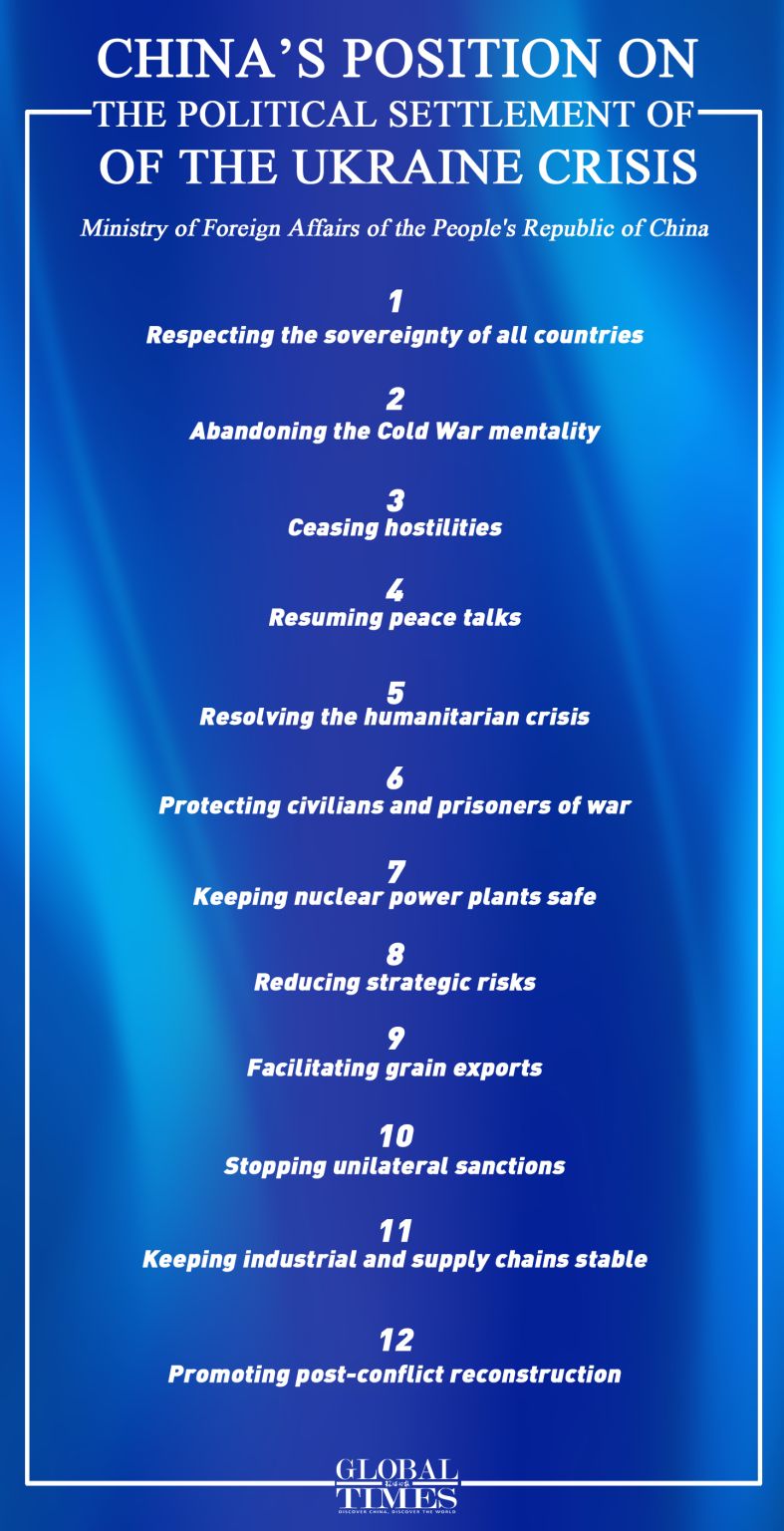


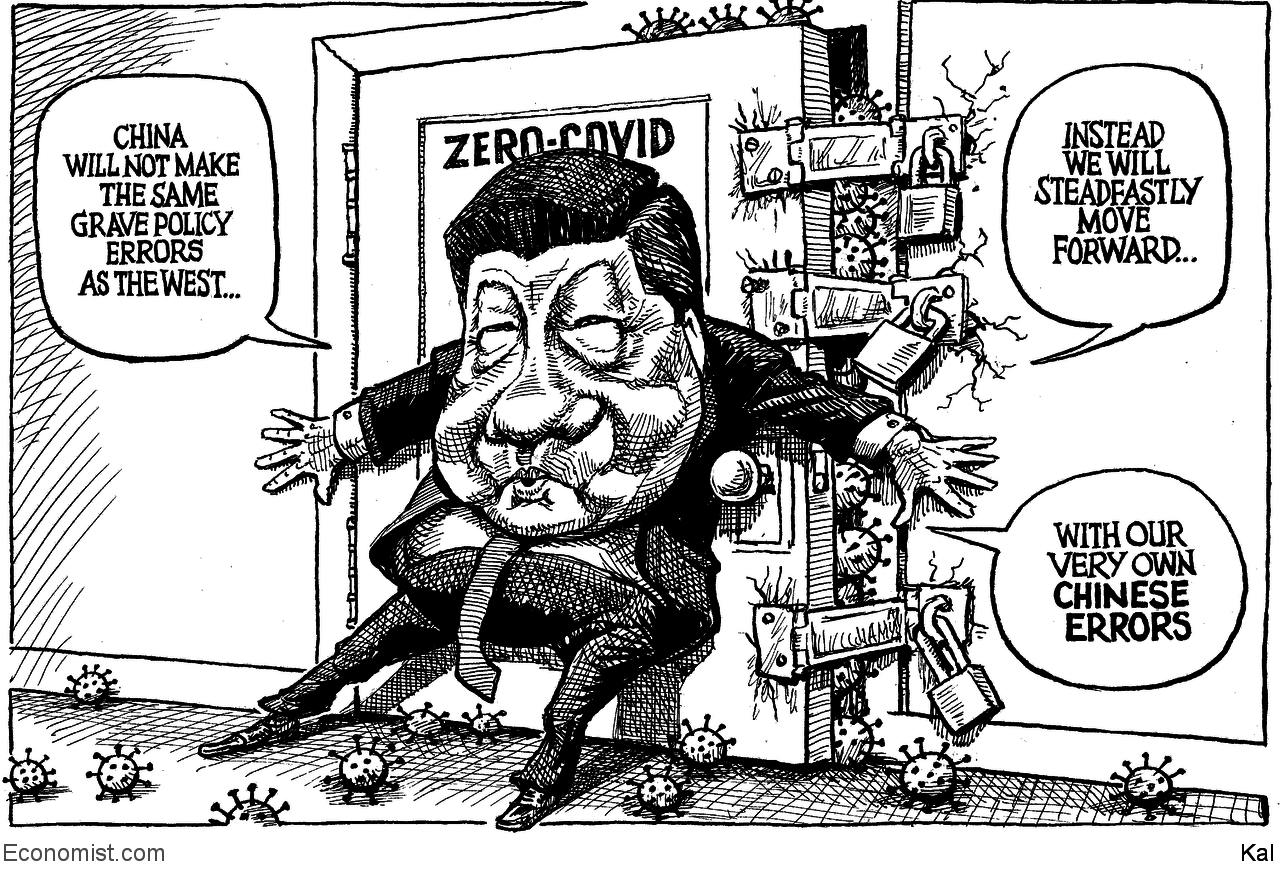

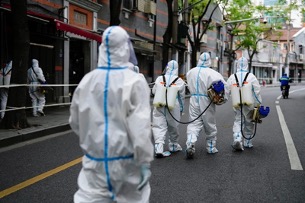

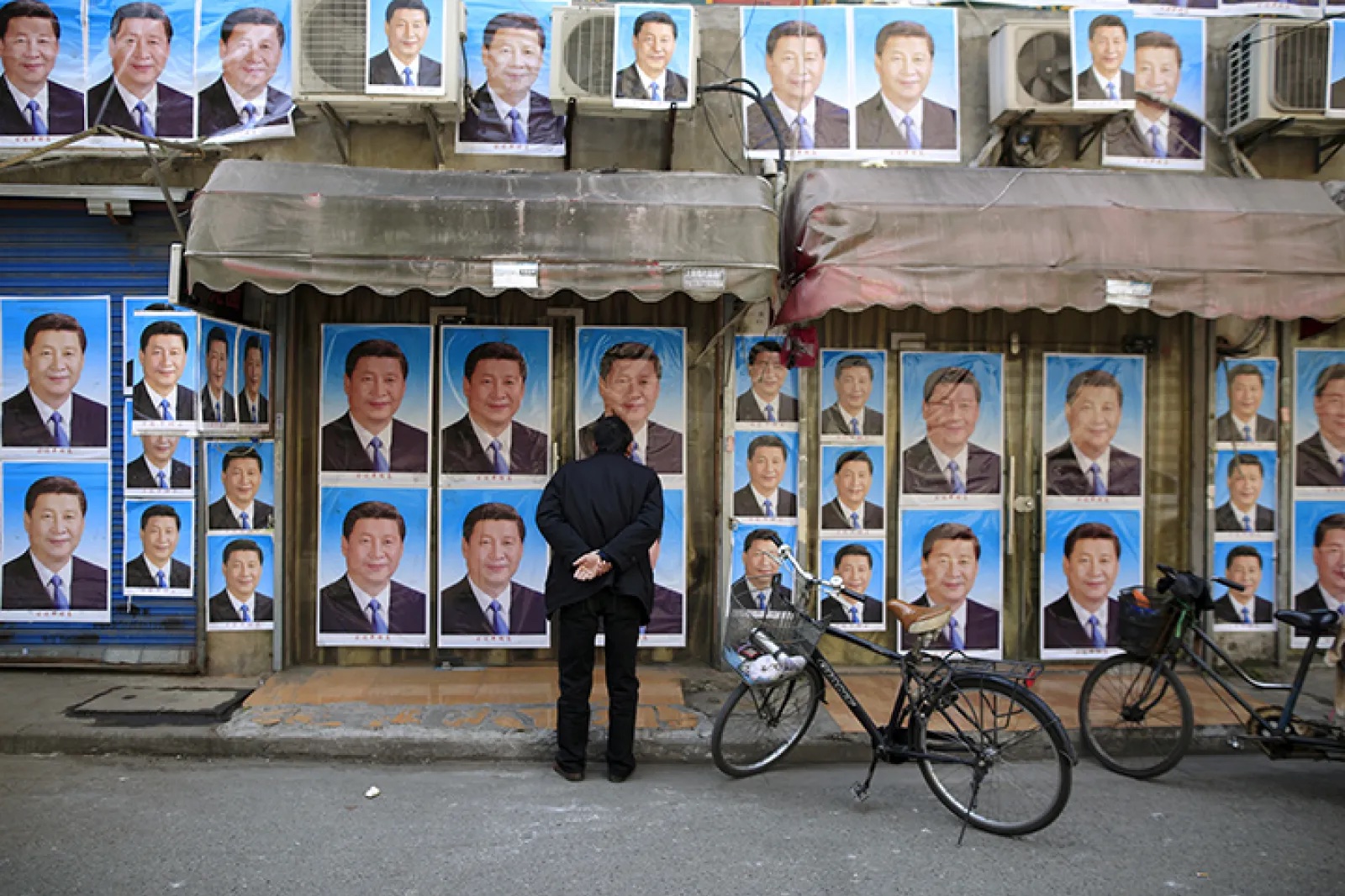
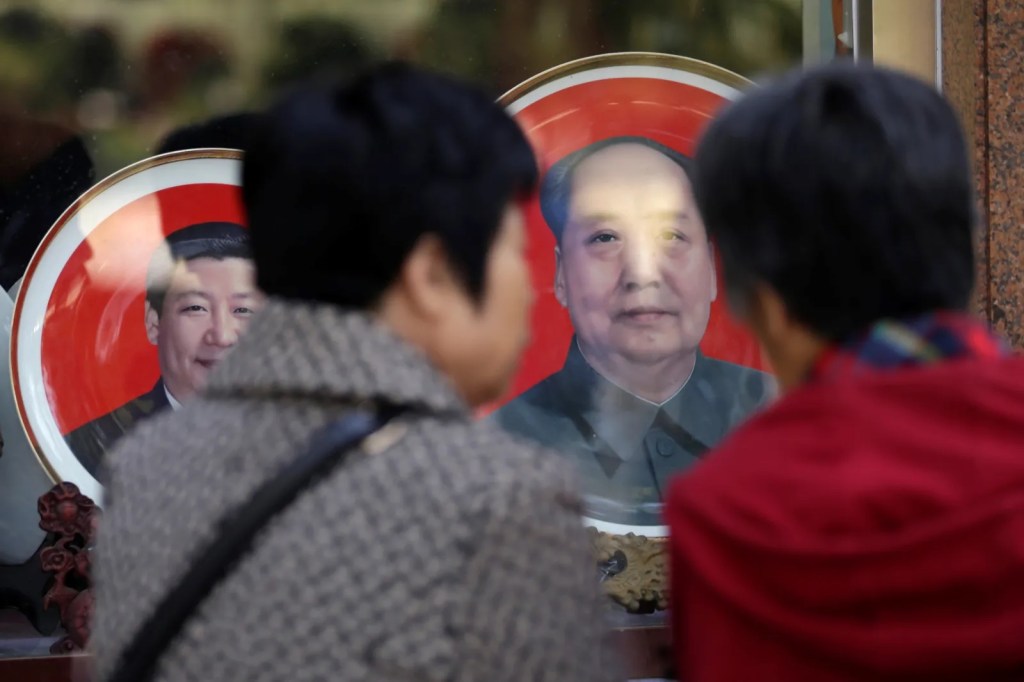

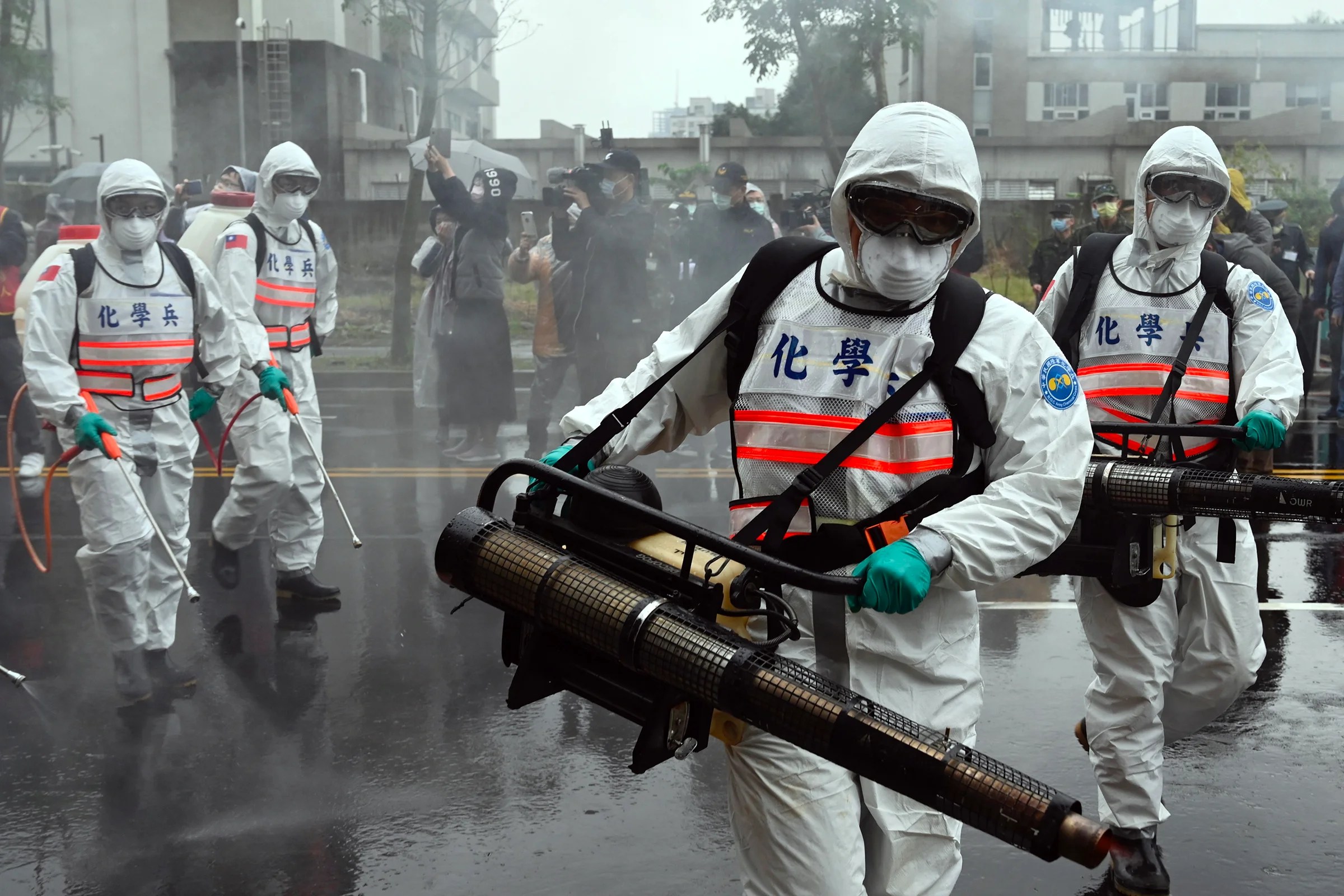



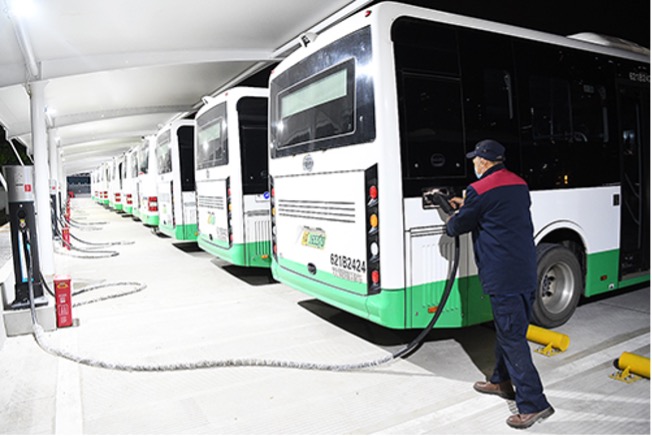


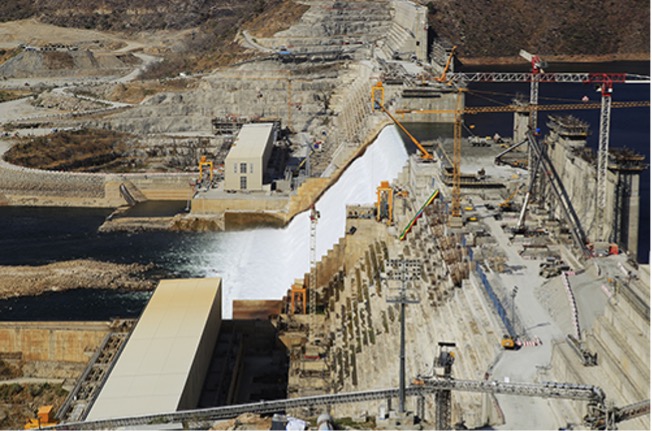
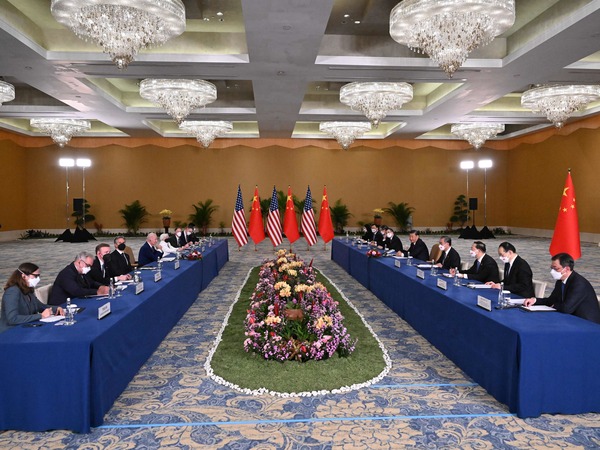


 ______Assessing China / The TEA Collaborative______