Thanks to everyone for their support in 2011 and my best wishes for your health and happiness in 2012!

The U.S./China Clean Energy blog ends the year with close to six thousand views, a level I believe can increase several fold next year following the January 2012 release of Sustaining U.S.-China Cooperation in Clean Energy by the Kissinger Institute of the Woodrow Wilson Center (WashDC).

I’ll close out the year by giving you this preview of Cooketop News, my Paper.Li aggregator providing “front-burner” updates about the U.S. Mid-Atlantic connection and “hot” insights on clean energy technology, investment and policy.  Okay, I’ll remove tongue from cheek now.  More prosaically, Cooketop News will be hitting the Internet airwaves on a regular daily basis (Mon-Fri) starting Monday, January 2nd. A summary of top stories will then be provided each week in a Friday post here on U.S./China Clean Energy along with personal observations about what impact the weeks events are having on ‘U.S.-China sustainability’ trends.

Here is the summary of stories from this week’s trial run:

Monday, December 26, 2011

California’s new Renewables Portfoliio Standard (RPS) program

 Predictions for Cleantech in 2012

 The smart grid according to Cisco

 How do you say ‘Google Search’ in Chinese? 2011 top search results in Asia

 China continues tradition of Christmas crackdowns

Tuesday, December 27, 2011

 JDS Architects wins major Green Building Design Award in Hangzhou

U.S. smart grid gets US$8bn boost toward a smarter and greener future

SEIA & GTM Research release “U.S. Solar Market Insight: 3rd Q 2011” report   

China proposes collecting bio-data on foreign visitors

 Big Oil redrawing the energy map with unconventional fuels

Wednesday, December 28, 2011

Retrofits are the new darling for energy efficiency investors

China needs new policy course as capital tide turns

China plans Asia’s biggest coal-fired plant

Interactive map for tracking China’s global investment by sector

10 predictions for Cleantech and Sustainability in 2012

Thursday, December 29, 2011

Top 10 clean energy stories of 2011

China’s energy consumption now double the world average

U.S. DoE supporting research into advanced solar thermal

China drafting plan protect copper & other investments in Afghanistan

New funding could help lower cost of electric vehicle (EV) chargers

Friday, December 30, 2011

Food security to be a concern for China in 2012

Beijing on the horns of a new yuan exchange rate dilemma

Does China’s rare earth’s monopoly imperil clean energy?

Gordon Chang updates his ‘coming collapse of China’ prediction, 10 yrs later

5 predictions for Boston Cleantech in 2012


That’s it for 2011!  Enjoy an exhilarating slide into 2012 and I’ll look forward to seeing you on the other side of New Year’s Day.   Best wishes for the new year!

In the spirit of sharing news while it’s fresh, I’m copying verbatim a report on the gold nugget in the pile of dross that has passed for this year’s national budget process.

 For those of you who took in (in person or digitally) the Philadelphia’s 21st Century Energy Opportunity event I convened with the Academy of Natural Sciences and the T.C. Chan Center for Building Simulation & Energy Studies on October 11th,  the win is obvious — for the City and the region, for the national effort for cleaner energy jobs and investment, and for our global engagement.  For U.S./China clean energy cooperation, this budget victory also solidifies the framework of U.S./China Clean Energy Research Centers CERC) in building energy efficiency (Lawrence Berkeley Lab), electric vehicles (University of Michigan) and clean coal (University of West Virginia).

Kudos to Mark Muro and Bruce Katz for their success in keeping this ball moving down the field.  Here’s the report from late yesterday afternoon.

Mark Muro and Devashree Saha
December 19, 2011 | 4:10 pm

Notwithstanding the bleak outlook surrounding federal clean energy policy detailed in our recent report “Sizing the Clean Economy,” the FY 2012 omnibus spending compromise hammered out last week actually contains several reassuring affirmations of the value of recent institutional experiments.

One winner is the Advanced Research Projects Agency-Energy, perhaps the Department of Energy’s most popular program.

Although the program is funded at just $275 million–about half the level President Obama had requested–many will probably be relieved that the program has now survived, which hasn’t always seemed a certainty. Moreover, the deal improved on earlier bills that have circulated, suggesting that the cause of the government fomenting disruptive innovation using “outside-the-box” investments in venturesome technology ideas may be gaining traction. That’s good news.

So is another happy surprise in the deal: the authorization of two new DOE Energy Innovation Hubs, one specializing in rare earths and energy-critical materials and one for energy storage technologies. To be sure, the Obama administration had originally asked for eight of these hubs, and settled for three before this year requesting funds for three more in 2012. However, congressional appropriators weren’t convinced that there was a need for a hub focused on smart grid technologies, as reported Darius Dixon in Politico, and so the nation now has two more of them, for a total of five of these special purpose-driven, multidisciplinary centers for accelerated collaboration between corporations, universities, and government labs.

Yet we’ll take it. Having long argued that the nation has been making do with an obsolete energy research paradigm excessively oriented toward individual academic investigators, on the one hand, and the siloed and bureaucratic efforts of the DOE’s energy laboratories, on the other, it is gratifying to watch the slow but continuing rollout of a true network of well-funded, multi-sector regional innovation centers. Congress is doing the right thing by creating–hub by hub–a set of sizable new institutes charged with “winning the future” in energy technology.

More Articles On: Department of Energy

One of the strongest attributes of job-creation from the clean energy economy in Greater Philadelphia and its surrounding ‘super-corridor’ (NY/MA through DC/VA) is  its balanced profile.  Year after year (and despite dynamic swings in the economy), the clean energy economy in this mega-cluster area (and the Greater Philadelphia region in particular) is producing:

  • steady and dependable growth above the national average
  • a sweet-spot of middle-skill and middle-wage jobs

The following mini-slideshow of data drawn from the new Brookings study Sizing the Clean Economy: A Green Jobs Report  (released July 2011)  illustrates these trends clearly:

This slideshow requires JavaScript.

The mini-slideshows in this week’s postings are provided courtesy of Mark Muro, Deputy Director of the Metropolitan Policy Program of the Brookings Institution.  They are taken from Mark’s presentation at Philadelphia’s 21st century Clean Energy Opportunity from Regional, National & Global Perspective, a program I organized in cooperation with the Academy of Natural Sciences of Drexel University and the T.C. Chan Center for Building Simulation & Energy Studies on October 11, 2011).  I am grateful to Mark Muro and Brookings for permission to share these slides with the readership of U.S./China Clean Energy.

Philadelphia enjoys key advantages in the emerging national clean economy, not least due to its linchpin position at the heart of a vibrant clean energy ‘super-corridor’ running from Albany NY and Boston MA down to Washington DC and northern Virginia (see Monday’s post).

Other advantages that Greater Philadelphia enjoys include:  (1) its position as #5 top-performing cluster nationally, (2) its participation in a national trajectory of fast-growing, high-quality jobs, (3) its profile of balance with middle-skill, middle-wage ‘green collar’ jobs;  (4) its breadth of clean economy segments (air & water purification, lighting, nuclear, mass transit, professional energy services, solar PV, solar thermal, and wind); and (5) its being home to the U.S. Government’s new Energy Innovation Hub (EIH) and Energy Regional Innovation Center (e-RIC)  at the Navy Yard — the Greater Philadelphia Innovation Cluster (GPIC) for Building Energy Efficiency.

What’s the basis of the Greater Philadelphia’s #5 ranking nationally in the Brookings’ first-of-a-kind study Sizing the Clean Economy: A Green Jobs Report  released in July 2011?  There are five strong reasons, each covered with substantive detail, in the following mini-slideshow:

This slideshow requires JavaScript.

Tomorrow’s post will focus on the breadth of clean energy segments supporting Greater Philadelphia’s position as a leader among U.S. regional clean energy clusters.

If you want to help make a small push for Philadelphia’s emergence as a 21st century clean energy leader, please tweet or Like on Facebook or +1 this on G+, using the sharing tool below.  This will help spread the word.  Thanks.


Yesterday’s mini-slide show focused on the five principal clusters in the northeast Clean Energy super-corridor:

  • Albany -Schenectady-Troy, NY
  • Boston-Cambridge-Quincy, MA-NH
  • New York-Northern New Jersey-Long Island, NY-NJ-PA
  • Philadelphia-Camden-Wilmington, PA-NJ-DE-MD
  • Washington-Arlington-Alexandria, DC-VA-MD,WV

Today’s mini-deck focuses on how the clusters in this super-corridor are creating the right kind of jobs for today’s globally-connected economy:

This slideshow requires JavaScript.

The findings presented above and in posts throughout the week come from Brookings’  Sizing the Clean Economy: A Green Jobs Report  released in July 2011.  The PowerPoint slides are courtesy of Mark Muro, Deputy Director of the Metropolitan Policy Program of the Brookings Institution.  The video clip is extracted from Philadelphia’s 21st century Clean Energy Opportunity from Regional, National & Global Perspective, a program I organized in cooperation with the Academy of Natural Sciences of Drexel University and the T.C. Chan Center for Building Simulation & Energy Studies on October 11, 2011).  I am grateful to Mark Muro and Brookings for permission to share these slides with the readership of U.S./China Clean Energy.

If you want to help push for the emergence of any of these five cluster regions as national and global clean energy leaders, please consider tweeting us on Twitter, liking us on Facebook or +1’ing us on G+, using the sharing tool below.  Thanks.

This week, I’ll be providing five mini-slideshows to add context and substantive detail to last week’s post and video clip on Brookings Touts Philadelphia’s Top 5 Strengths in U.S. Clean Economy.
Number 1 in the docket is the Cleantech Mega-Cluster stretching from New England though the southern Mid-Atlantic — with Philadelphia at its center.

This slideshow requires JavaScript.

The findings for today’s slideshow, as well as those for the remainder of the week, come from Brookings’  Sizing the Clean Economy: A Green Jobs Report  released in July 2011.  The PowerPoint slides are courtesy of Mark Muro, Deputy Director of the Metropolitan Policy Program of the Brookings Institution.  The video clip is extracted from Philadelphia’s 21st century Clean Energy Opportunity from Regional, National & Global Perspective, a program I organized in cooperation with the Academy of Natural Sciences of Drexel University and the T.C. Chan Center for Building Simulation & Energy Studies on October 11, 2011).  I am grateful to Mark Muro and Brookings for permission to share these slides with the readership of U.S./China Clean Energy.

If you want to be sure you see this week’s series of posts, please click the “Follow” button on the WordPress toolbar immediately above this blog’s heading and an email will automatically be sent to you as soon as each post appears.


On October 11th, Mark Muro, Policy Director of The Brookings Institution’s Metropolitan Policy Program, presented the national-level chapter of the story of ‘Greater Philadelphia’s 21st century Clean Energy Opportunity’ at an event I organized in Philadelphia for the Academy of Natural Sciences of Drexel University and the T.C. Chan Center for Building Simulation & Energy Studies of the University of Pennsylvania.

According to Muro, Philadelphia enjoys key advantages due to: (1) its position as #5 top-performing cluster nationally, (2) its participation in a national trajectory of fast-growing, high-quality jobs, (3) its profile of balance with middle-skill, middle-wage ‘green collar’ jobs; (4) its breadth of clean economy segments (air & water purification, lighting, nuclear, mass transit, professional energy services, solar PV, solar thermal, and wind); and (5) its location in the middle of the most vibrant clean economy corridor in the country (from Albany NY and Boston MA down to Washington DC and northern Virginia).

Future posts will help tell the other chapters of this story, including the City of Philadelphia perspective (Alan Greenberger, Deputy Mayor for Economic Development), the regional perspective (Mark Hughes, Task Leader for Policy, Markets & Behavior at the Greater Philadelphia Innovation Cluster for Building Energy Efficiency (GPIC), the global perspective (Amy Fraenkel, UN Environmental Programme Regional Director for North America) and the U.S./China strategic opportunity (Terry Cooke, Founding Director of the China Partnership of Greater Philadelphia.

Stay tuned for more!

Note 1:  If you want to be sure you see each of these upcoming posts reliably and promptly, please click the “Follow” button on the WordPress toolbar immediately above this blog’s heading and an email will automatically be sent to you as soon as each post appears.

Note 2:   See   Brookings Backgrounder  for additional information on:  (1) the Brookings Institution’s Metropolitan Policy Program initaitive for clean energy clusters; (2) the intellectual antecedents of this policy work in the work of Michael Porter at Harvard University; and (3) how David Sandalow and Brookings helped translated this thinking into U.S. Government policy through the closely-connected Energy Innovation Hub (EIH) program and the U.S.-China Clean Energy Research Center (CERC) program (via the John L. Thornton China Center at Brookings).

Note 3: If you want to help push for Philadelphia’s emergence as a 21st century clean energy leader, please tweet or Like on Facebook or +1 this on G+, using the sharing tool below.  Thanks.

The surest way of knowing where the Chinese national government wants to go is to follow the money they put into mega-projects.

The development of Shenzhen and Pudong over the 6th – 9th Five Year Plans (FYP) showed the government’s attitude toward market-opening in the 1980s and 1990s. More recently, the Binhai project in Tianjin likewise demonstrates the central government’s commitment to clean energy development  and the China Medical Center in Jiangsu demonstrates their interest in advanced health technologies to combat cancer and other diseases affecting an aging population.

Cloud Computing is high on the government’s to-do list. Beijing is reported to have committed more than US$150 million (RMB 1 billion) to develop a 10 square kilometer “‘cloud computing’ Special Administrative Region (SAR)” for high-tech and start-up firms in the south-western city of Chongqing. Although the initial financial ante is modest, the stakes being played for are high.   Importantly, the cloud computing SAR will reportedly be exempted from the the country’s strict system of internet censorship control, known affectionately as  “The Great Firewall (GFW).”

For the issue of how Beijing’s central Five Year planning process translates to mega-projects, I try to tackle this in my book in the chapter called “Managing Hyper-Growth.”.

I was asked today what accounts for China’s outsized role in solar PV , amounting currently to roughly 50% of global share of production despite having a Lilliputian share of global consumption.  It comes down to three inconvenient truths.   That said, the degree of inconvenience of each truth varies with the point of view (e.g., ‘panda hugger’ vs ‘dragon slayer’ in the U.S. vs  ‘patriotic netizen’ in China) of who you happen to be talking with :

(1) Post-WWII, Asia (and notably China since 1982) has had clear advantages of cheaper land, cheaper labor and cheaper facilities relative to manufacturers in higher per capita income markets in the West. Since solar panel production has some basic similarities to the manufacturing process for computer memory chips (which in the 1990s were the basic ‘rice’ commodity of the IT boom in Asia), solar manufacturing has benefited from the natural ‘cluster effect’ of decades of chip manufacturing know-how of Chinese, Taiwanese and other investors on the mainland.

(2) The barriers to entry for solar manufacturers are lower than the earlier tech waves of integrated circuits and bio-technologies so national and local
government in China has seized on it to bootstrap their economies to a higher rung of the global value chain. This has meant various government subsidies (on the producer side) to the point of a casino mentality — more than 100 solar manufacturers in the single town of Dezhou in Shandong Province. (The Chinese government also rounded up and ramped up polysilicon supply when that key input for solar PV production tightened in 2010/11);

(3) There’s not yet an established market for solar products in China so almost everything is exported to Western markets — especially to those national
markets like Germany and Spain and state markets in the U.S. such as New Jersey that have been subsidizing the industry (on the consumer side). [Note: World Trade Organization rules tend to allow/encourage consumer-side subsidies and to sanction producer-side subsidies, hence the recent trade action by the 7 Western solar firms against China. However, these actions take time to work their way through the ‘python’ of WTO process).

As a wrote almost a year ago ( click here for link ), there’s a global boom/bust going on in PV solar and China is in the thick of it.

Premise

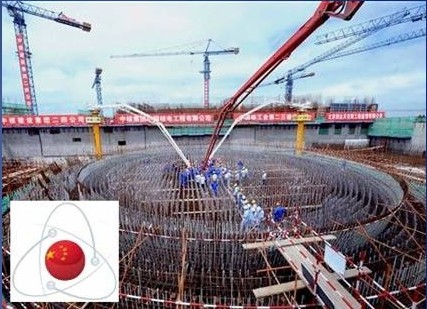
Participation in China’s fast-growing nuclear market offers promise and peril for global market-leaders.  A model coupling U.S. innovation with Chinese scale and speed of deployment offers the best path forward.

Discussion

The development of China’s nuclear market has been driven by a governmental elite, many of whom were trained as engineers. Their strategic thinking appears to be motivated in part by the challenges of climate change – to adopt lower carbon sources of electricity generation. As the vice president of the China Nuclear Energy Association has pointed out, nuclear power – rather than solar, wind or biomass – is “the only energy source that can be used on a mass scale” to achieve clean, low-carbon energy.

Just as significantly, though, China’s rapid expansion of nuclear power appears motivated by a desire to upgrade the Chinese nuclear industry by enticing foreign suppliers who want to participate in China’s market growth to share their technology with Chinese partners. The profit potential is vast in China, but other big emerging economies, such as India and Brazil, will be exploring nuclear installations in coming decades. To wrest some of that business away from established incumbents –such as France’s Areva and Japan’s Westinghouse – China is leveraging its low-cost labor and deep experience with major infrastructure projects. A Western-designed reactor can be built in China for 40% less cost and 36% faster than that same installation in Europe.

For China to become globally competitive its two major nuclear power companies — China National Nuclear Corporation and China Guangdong Nuclear Power Group — will need to improve in the knowledge-intensive end of the business. Of the 13 nuclear power plants currently operating in China, only three — all at the Qinshan site — rely on an indigenously developed design. Likewise, China has only limited experience selling its reactors in export markets; Pakistan is the only known foreign buyer to date. Finally, to compete globally, China will need to manufacture specialized components, for which it is currently dependent on foreign suppliers.

As for U.S.-China strategic cooperation in the nuclear field, there have been important undertakings but, to date the governments have not attempted anything on a broad strategic basis. There are interesting opportunities on the horizon. Former U.S. Ambassador to China, Jon M. Huntsman Jr., has reported discussing with Bill Gates a new kind of reactor “that runs for decades on a single fuel load, making and destroying plutonium as it runs,” thereby reducing the hazards of reprocessing and the dangers of proliferation. According to Huntsman, strategic cooperation between the U.S. and China to develop this American-pioneered technology could bring shared benefits. The technology could, for example, be certified and brought to commercial scale faster in China. A partnership effort could be envisioned where a joint American-Chinese company leads the construction, with co-development and commercialization rights apportioned between the partners. The end-result could be a cleaner and (marginally) safer form of energy brought to consumers quickly and at scale.

(This piece has been reprinted from G+ Insights, a publication series of the Gerson Lehrman Group at www.gplus.com.  The G+ piece, in turn, has been adapted from Sustaining U.S.-China Cooperation in Clean Energy,  a book publication authored by Terry Cooke forthcoming from the Kissinger Institute of the Woodrow Wilson Institute in November 2011).

Enter your email address to subscribe to this blog and receive notifications of new posts by email.

Join 43.2K other subscribers

Unknown's avatar
For more information about
Assessing China /The TEA Collaborative blog, please visit us at www.teacollab.org