
You are currently browsing the tag archive for the ‘china’ tag.
Happy Year of the Snake!
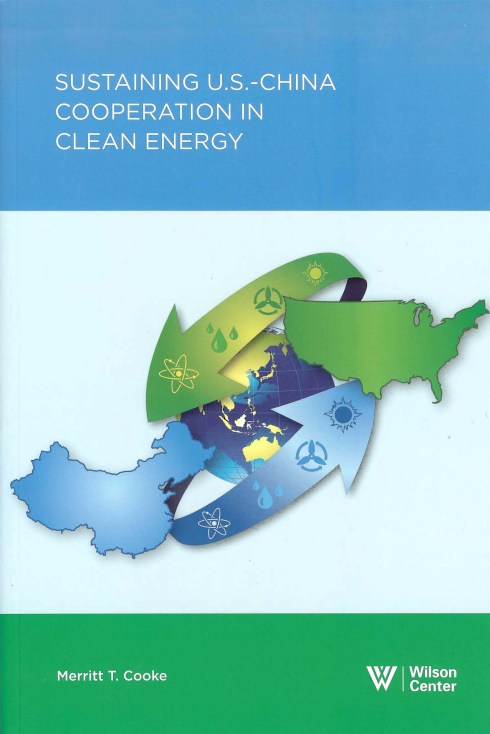
I have some major catching up to do so let me begin here with a link to my book which the Wilson Center launched on September 24, 2012. (Note: if you want to download the PDF of the book, just right-click and use the Save As option).
More 2012/3 updates to follow in rapid sequence.
Thanks for hanging in there,
This is the second in the 2012 series of Cooketop News commentaries and news recaps.
By reviewing the previous week’s top stories involving — broadly speaking — U.S./China clean energy, the commentary section isolates one trend/dynamic which points forward and can help illuminate news-in-the-making for the week(s) ahead. Following the commentary is a summary of the week’s top stories.
This week? We look at the headline (Cooketop News, Friday, January 13th) that, after four years, the U.S. re-took the lead from China as the front-runner in global clean energy investment.
* * * * * * * * * * * * * * * * *
From 2008-10, the U.S. visibly lost pace – and, in some instances, lead position – to China as the world’s top investor in clean energy. In 2010, China – then just over one-third the size of the U.S. economy – invested twice the absolute amount in clean energy as the U.S. Yet, in 2011, the U.S. bounced back, reclaiming top-spot for the first time in four years: U.S. investment increased 33% to US$56 billion while Chinese investment remained flat at $47 billion, according to Bloomberg New Energy Finance. What does it mean? Less than the headlines might suggest.
Here are three key points to keep in mind while tracking current results – and handicapping future results – in the global clean energy arena:
(1) It’s not a sprint, it’s a marathon. The bragging-rights prize will ultimately go to the economy which manages the best combination of technological innovation, political support, and financial sustainability over many years. Germany and Spain have seen political support for their heavily subsidized systems erode with the euro. The U.S. is in near political grid-lock over how to set that balance. China’s position looks strong on the surface but is hobbled by lack of technology innovation, political accountability and financial transparency.
(2) How high’s the bounce? The U.S. resurgence is due to short-term programs due to expire soon, such as biofuel support programs and energy efficiency measures. Absent a broad national consensus, there is no strong reason to expect the U.S. “bounce” to remain strong throughout 2012, an election year.
(3) The bottom-line is this is a race is against time, not a Sputnik-type competition. For either nation’s efforts to pay off, investment will need to be scaled to a global level by investors, public and private. That won’t happen unless there is a clear middle-way between the extremes which tend to bedevil U.S.-China relations – zero-sum, highly-nationalistic competition on the one hand vs. unrealistic and unsustainable ideas of cooperation on the other.
While the metric of renewed investment vigor in the U.S. is encouraging, the real challenge for the future will be to define and align complementary ‘skill-sets’ in both the U.S. and China so that capital can be attracted and deployed on a global scale through these two massive markets accounting for 40% of the global GHG emissions problem. We’ll need a discerning eye for the different strengths which our two countries can bring as complementary partners in this effort as well as a realistic understanding of our enduringly different systems and values. Regardless of who has the momentary lead in investment level, we need to recognize that there is no path to a sustainable future for either country without clear-eyed, realistically-based and sustained cooperation between the two.
Monday, January 9, 2012
 Africa & China: How it all Began
China to Tax Carbon Emissions by 2015
China Vows Backing for Firms Abroad
China Spring Festival Migration Begins
Tuesday, January 10, 2012
 Hottest Solar Markets in Early 2012
12 Challenges for China in 2012
DoE Heads Off Cleantech Materials Shortages
Wednesday, January 12, 2012
 China’s Export Engine Downshifts
China Pumps In $10bn to Water Project
Brand Make-Over for Philly Energy Hub
Thursday, January 12, 2012
 Does the U.S. Prefer a Ma Victory in Taiwan?
The Perils of Cleantech Investing
China Braces for Turbulent Year
Friday, January 13, 2011
 China’s Forex Reserves Decline
This is the first of regular weekly Cooketop News blog posts (scheduled to appear each Monday).
By reviewing the previous week’s top stories involving — broadly speaking — China clean energy, the idea is to identify and comment on a particular emerging trend/issue which points forward and can help illuminate news-in-the-making for the week(s) ahead.
By radio analogy, the commentary is meant to cut through static in the general coverage of whatever’s the issue at hand and present a clear frequency and better ‘signal-processing’ for helping to tune in on an enduring news issue.
* * * * * * * * * * * * * * * *
THIS WEEK’S COMMENTARY — HUNTSMAN, REPUBLICANS & CHINA
Last week was the Iowa caucus and Tuesday of this week the New Hampshire primary. The related questions which these contests have raised are what have Jon Huntsman’s China connections and qualifications done for his campaign effort and what are the implications for China given the current crop of Republican candidates.
Let’s start with the second question. Liz Economy from the Council of Foreign Relations has done a better job than anyone at assessing the remaining field of candidates through the lens of their public positions on China. To borrow liberally from her analysis, here’s what we’re looking at:
Mitt Romney says it’s all about the economy, stupid: Mitt Romney’s China policy is all about trade measures —keeping counterfeits out, protecting intellectual property, levying sanctions against unfair trade practices, pressing China on its currency, etc. The question for an anti-“Big Government” candidate is who does all this work if not the government.
Ron Paul wants to make love, not war: Ron Paul appears to want to “go along to get along” with China: stop intrusive surveillance, reconsider the Taiwan Relations Act, drop the idea of import tariffs in retaliation for Beijing’s currency manipulation, and mute protestations over human rights issues. As Economy has put it, there’s little doubt that “candidate Paul …would be Beijing’s pick for top dog.”
Jon Huntsman is long on experience but short on traction: No surprise that the expertise in China policy is with former U.S. Ambassador to China Jon Huntsman. Huntsman has all his facts in line. You can agree or disagree with his specific positions — opposing a China currency bill or engaging to promote political change in China—but you have to admit he knows his stuff.
Newt Gingrich jettisons balance to keep ship afloat: Gingrich’s initial positions in the campaign were balanced and reasonable, calling on the U.S. to do the right thing and take action on the home front in order to be more competitive. As his electoral options have narrowed though, his positions appear to be veering in a more extreme direction. Stay tuned for his advertising campaign in South Carolina to see if he starts demonizing China.
With Rick Santorum, the question is ‘Where’s the beef?’: Despite having a lengthy book and a Senatorial career in the public record, there’s almost nothing to go on to explain how Santorum would approach China if elected President. He did make a quote about going “to war with China” to “make America the most attractive place in the world to do business.” Huh?.
Rick Perry talks the talk but doesn’t walk the walk: “Communist China is destined for the ash heap of history because they are not a country of virtues. When you have 35,000 forced abortions a day…, when you have the cyber security that the PLA has been involved with, those are great major issues both morally and security-wise that we’ve got to deal with now.” His actions? Courting Huawei, a problematic company, to invest in Texas.
So, on to the related question, what has Jon Huntsman’s Mandarin-speaking ability and Ambassadorial command of the issues meant for his election prospects? The answer, like a Rorschach, depends entirely on who you talk to. His proponents invariably cite it as a positive (see NY Times article) and his detractors cite it as a liability (see story from last Thursday below). Where’s the traction? Answer: there’s maybe some but not much.
Fault-lines have been exposed in the body politic over these questions. There’s no question that one of Ron Paul’s supporters went way, way over the line by insinuating Huntsman was questionably ‘American’ because he and his wife keep their adoptive children from China and India exposed to cultural traditions from those two civilizations, but nonetheless ideological conservatives generally seem to view his competence with China as itself a cause for suspicion.
The first generation of Mandarin competent statesmen drew heavily from the offspring of Christian missionaries who grew up in China, people like the late Ambassador James Lilley. Huntsman represents a second wave of high-level U.S. government officials who have Mandarin-competence through their two years of Mormon service abroad. (Tim Stratford, a former Assistant U.S. Trade Representative for China, is another example of this group of experts). The third wave will come from younger Americans who, in step with China’s opening to the world, have been able to burrow deeper into language and cultural expertise. They are making their way up the ladder of the U.S. government. I can only hope that the American electorate — and the Republican Party — can find a way to value the knowledge they bring to public service. The top rank of challenges which the U.S. faces will simply not be solved without constructive and effective engagement with China — and that requires people who understand, respect, and can operate in the sphere of Chinese language, culture and values.
(Disclosure: I have worked at various points in my career for Jim Lilley, Jon Huntsman, and Tim Stratford.)
* * * * * * * * * * * * * * * *
LAST WEEK’S COOKETOP NEWS
Here’s a listing of some of the top stories covered in Cooketop News for Week 1 of 2012 (with hyperlinks):
Monday, January 2, 2012
 Foxconn enters solar
Chinavasion’s High-capacity Solar Charger
Protest in China – Ripple or Wave?
Bridge construction as economic development lever
10 Predictions for Cleantech in 2012
Tuesday, January 3, 2012
 Top 20 Green Building Innovations of 2011
USDOC Sec. Bryson Faces a China Challenge
Cleantech Start-ups to Watch
Is China’s Solar Industry Entering Eclipse?
Public Housing Key as Export Machine Slows
Wednesday, January 4, 2012
 ‘Culture Campaign’ Dents Programming
Green Cars & Clean Energy: The China Angle
Cleaner Technology in Global Arctic Oil Race
Chinese Philanthropists Join to Protect Nature
China’s IPOs Top World’s Exchanges Despite Slump
Thursday, January 5, 2011
 Air Pollution Hazardous for China’s Economic Health
Drought Drying out Poyang Lake in Jiangxi Province
Rustbelt Cities Go Green to Strengthen Economies
China’s Corporate Debt Issuance Soars in 2011
Huntsman’s China Cred No Boost to his Prospects
Econ Ties to China Key Issue in Taiwan Election
Friday, January 6, 2011
 10 Emerging Sustainable Cities to Watch
Solar Turbine Makers Turn to India & China
U.S. Manufacturers of Steel Wind Towers Cite China
LDK Solar Snags $64mm from PRC for U.S. Projects
China Announces Plan to Levy Carbon Tax by 2015
* * * * * * * * * * * * * * * *
That’s it for this week. I hope you find this of some value to your own pursuits. Give me a holler — either by leaving a comment below or by email — to let me know what you think, positive or negative. For anyone with a driving passion to get each day’s edition of Cooketop News (minus the summary listing and commentary that I provide in this weekly post), you can subscribe by going to the Cooketop News site at http://paper.li/mterrycooke/1324752421 and clicking on the upper-right Subscribe button. There is also an Archive feature on the site (upper-center) which allows you to look up any previous edition.
Oh, before signing off, I owe you an answer to the question in the title. Jon Huntsman’s name in Chinese? 洪博培. (And by the way, if you try searching for the name on China’s Twitter clone — Weibo — when you’re in China, you’ll likely find the name has been blocked).
Thanks to everyone for their support in 2011 and my best wishes for your health and happiness in 2012!
The U.S./China Clean Energy blog ends the year with close to six thousand views, a level I believe can increase several fold next year following the January 2012 release of Sustaining U.S.-China Cooperation in Clean Energy by the Kissinger Institute of the Woodrow Wilson Center (WashDC).
I’ll close out the year by giving you this preview of Cooketop News, my Paper.Li aggregator providing “front-burner” updates about the U.S. Mid-Atlantic connection and “hot” insights on clean energy technology, investment and policy. Okay, I’ll remove tongue from cheek now. More prosaically, Cooketop News will be hitting the Internet airwaves on a regular daily basis (Mon-Fri) starting Monday, January 2nd. A summary of top stories will then be provided each week in a Friday post here on U.S./China Clean Energy along with personal observations about what impact the weeks events are having on ‘U.S.-China sustainability’ trends.
Here is the summary of stories from this week’s trial run:
Monday, December 26, 2011
 California’s new Renewables Portfoliio Standard (RPS) program
Predictions for Cleantech in 2012
The smart grid according to Cisco
How do you say ‘Google Search’ in Chinese? 2011 top search results in Asia
China continues tradition of Christmas crackdowns
Tuesday, December 27, 2011
 JDS Architects wins major Green Building Design Award in Hangzhou
U.S. smart grid gets US$8bn boost toward a smarter and greener future
SEIA & GTM Research release “U.S. Solar Market Insight: 3rd Q 2011” report
China proposes collecting bio-data on foreign visitors
Big Oil redrawing the energy map with unconventional fuels
Wednesday, December 28, 2011
 Retrofits are the new darling for energy efficiency investors
China needs new policy course as capital tide turns
China plans Asia’s biggest coal-fired plant
Interactive map for tracking China’s global investment by sector
10 predictions for Cleantech and Sustainability in 2012
Thursday, December 29, 2011
 Top 10 clean energy stories of 2011
China’s energy consumption now double the world average
U.S. DoE supporting research into advanced solar thermal
China drafting plan protect copper & other investments in Afghanistan
New funding could help lower cost of electric vehicle (EV) chargers
Friday, December 30, 2011
 Food security to be a concern for China in 2012
Beijing on the horns of a new yuan exchange rate dilemma
Does China’s rare earth’s monopoly imperil clean energy?
Gordon Chang updates his ‘coming collapse of China’ prediction, 10 yrs later
5 predictions for Boston Cleantech in 2012
That’s it for 2011! Enjoy an exhilarating slide into 2012 and I’ll look forward to seeing you on the other side of New Year’s Day. Best wishes for the new year!
In the spirit of sharing news while it’s fresh, I’m copying verbatim a report on the gold nugget in the pile of dross that has passed for this year’s national budget process.
For those of you who took in (in person or digitally) the Philadelphia’s 21st Century Energy Opportunity event I convened with the Academy of Natural Sciences and the T.C. Chan Center for Building Simulation & Energy Studies on October 11th, the win is obvious — for the City and the region, for the national effort for cleaner energy jobs and investment, and for our global engagement. For U.S./China clean energy cooperation, this budget victory also solidifies the framework of U.S./China Clean Energy Research Centers CERC) in building energy efficiency (Lawrence Berkeley Lab), electric vehicles (University of Michigan) and clean coal (University of West Virginia).
Kudos to Mark Muro and Bruce Katz for their success in keeping this ball moving down the field. Here’s the report from late yesterday afternoon.

Mark Muro and Devashree Saha
December 19, 2011 | 4:10 pm
Notwithstanding the bleak outlook surrounding federal clean energy policy detailed in our recent report “Sizing the Clean Economy,” the FY 2012 omnibus spending compromise hammered out last week actually contains several reassuring affirmations of the value of recent institutional experiments.
One winner is the Advanced Research Projects Agency-Energy, perhaps the Department of Energy’s most popular program.
Although the program is funded at just $275 million–about half the level President Obama had requested–many will probably be relieved that the program has now survived, which hasn’t always seemed a certainty. Moreover, the deal improved on earlier bills that have circulated, suggesting that the cause of the government fomenting disruptive innovation using “outside-the-box” investments in venturesome technology ideas may be gaining traction. That’s good news.
So is another happy surprise in the deal: the authorization of two new DOE Energy Innovation Hubs, one specializing in rare earths and energy-critical materials and one for energy storage technologies. To be sure, the Obama administration had originally asked for eight of these hubs, and settled for three before this year requesting funds for three more in 2012. However, congressional appropriators weren’t convinced that there was a need for a hub focused on smart grid technologies, as reported Darius Dixon in Politico, and so the nation now has two more of them, for a total of five of these special purpose-driven, multidisciplinary centers for accelerated collaboration between corporations, universities, and government labs.
Yet we’ll take it. Having long argued that the nation has been making do with an obsolete energy research paradigm excessively oriented toward individual academic investigators, on the one hand, and the siloed and bureaucratic efforts of the DOE’s energy laboratories, on the other, it is gratifying to watch the slow but continuing rollout of a true network of well-funded, multi-sector regional innovation centers. Congress is doing the right thing by creating–hub by hub–a set of sizable new institutes charged with “winning the future” in energy technology.
On October 11th, Mark Muro, Policy Director of The Brookings Institution’s Metropolitan Policy Program, presented the national-level chapter of the story of ‘Greater Philadelphia’s 21st century Clean Energy Opportunity’ at an event I organized in Philadelphia for the Academy of Natural Sciences of Drexel University and the T.C. Chan Center for Building Simulation & Energy Studies of the University of Pennsylvania.
According to Muro, Philadelphia enjoys key advantages due to: (1) its position as #5 top-performing cluster nationally, (2) its participation in a national trajectory of fast-growing, high-quality jobs, (3) its profile of balance with middle-skill, middle-wage ‘green collar’ jobs; (4) its breadth of clean economy segments (air & water purification, lighting, nuclear, mass transit, professional energy services, solar PV, solar thermal, and wind); and (5) its location in the middle of the most vibrant clean economy corridor in the country (from Albany NY and Boston MA down to Washington DC and northern Virginia).
Future posts will help tell the other chapters of this story, including the City of Philadelphia perspective (Alan Greenberger, Deputy Mayor for Economic Development), the regional perspective (Mark Hughes, Task Leader for Policy, Markets & Behavior at the Greater Philadelphia Innovation Cluster for Building Energy Efficiency (GPIC), the global perspective (Amy Fraenkel, UN Environmental Programme Regional Director for North America) and the U.S./China strategic opportunity (Terry Cooke, Founding Director of the China Partnership of Greater Philadelphia.
Stay tuned for more!
Note 1: If you want to be sure you see each of these upcoming posts reliably and promptly, please click the “Follow” button on the WordPress toolbar immediately above this blog’s heading and an email will automatically be sent to you as soon as each post appears.
Note 2: See Brookings Backgrounder for additional information on: (1) the Brookings Institution’s Metropolitan Policy Program initaitive for clean energy clusters; (2) the intellectual antecedents of this policy work in the work of Michael Porter at Harvard University; and (3) how David Sandalow and Brookings helped translated this thinking into U.S. Government policy through the closely-connected Energy Innovation Hub (EIH) program and the U.S.-China Clean Energy Research Center (CERC) program (via the John L. Thornton China Center at Brookings).
Note 3: If you want to help push for Philadelphia’s emergence as a 21st century clean energy leader, please tweet or Like on Facebook or +1 this on G+, using the sharing tool below. Thanks.
The surest way of knowing where the Chinese national government wants to go is to follow the money they put into mega-projects.
The development of Shenzhen and Pudong over the 6th – 9th Five Year Plans (FYP) showed the government’s attitude toward market-opening in the 1980s and 1990s. More recently, the Binhai project in Tianjin likewise demonstrates the central government’s commitment to clean energy development and the China Medical Center in Jiangsu demonstrates their interest in advanced health technologies to combat cancer and other diseases affecting an aging population.

Cloud Computing is high on the government’s to-do list. Beijing is reported to have committed more than US$150 million (RMB 1 billion) to develop a 10 square kilometer “‘cloud computing’ Special Administrative Region (SAR)” for high-tech and start-up firms in the south-western city of Chongqing. Although the initial financial ante is modest, the stakes being played for are high. Importantly, the cloud computing SAR will reportedly be exempted from the the country’s strict system of internet censorship control, known affectionately as “The Great Firewall (GFW).”
For the issue of how Beijing’s central Five Year planning process translates to mega-projects, I try to tackle this in my book in the chapter called “Managing Hyper-Growth.”.
I was asked today what accounts for China’s outsized role in solar PV , amounting currently to roughly 50% of global share of production despite having a Lilliputian share of global consumption. It comes down to three inconvenient truths. That said, the degree of inconvenience of each truth varies with the point of view (e.g., ‘panda hugger’ vs ‘dragon slayer’ in the U.S. vs ‘patriotic netizen’ in China) of who you happen to be talking with :
(1) Post-WWII, Asia (and notably China since 1982) has had clear advantages of cheaper land, cheaper labor and cheaper facilities relative to manufacturers in higher per capita income markets in the West. Since solar panel production has some basic similarities to the manufacturing process for computer memory chips (which in the 1990s were the basic ‘rice’ commodity of the IT boom in Asia), solar manufacturing has benefited from the natural ‘cluster effect’ of decades of chip manufacturing know-how of Chinese, Taiwanese and other investors on the mainland.
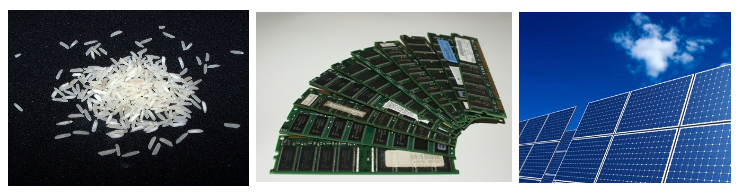
(2) The barriers to entry for solar manufacturers are lower than the earlier tech waves of integrated circuits and bio-technologies so national and local
government in China has seized on it to bootstrap their economies to a higher rung of the global value chain. This has meant various government subsidies (on the producer side) to the point of a casino mentality — more than 100 solar manufacturers in the single town of Dezhou in Shandong Province. (The Chinese government also rounded up and ramped up polysilicon supply when that key input for solar PV production tightened in 2010/11);
(3) There’s not yet an established market for solar products in China so almost everything is exported to Western markets — especially to those national
markets like Germany and Spain and state markets in the U.S. such as New Jersey that have been subsidizing the industry (on the consumer side). [Note: World Trade Organization rules tend to allow/encourage consumer-side subsidies and to sanction producer-side subsidies, hence the recent trade action by the 7 Western solar firms against China. However, these actions take time to work their way through the ‘python’ of WTO process).
As a wrote almost a year ago ( click here for link ), there’s a global boom/bust going on in PV solar and China is in the thick of it.
Premise
Participation in China’s fast-growing nuclear market offers promise and peril for global market-leaders. A model coupling U.S. innovation with Chinese scale and speed of deployment offers the best path forward.
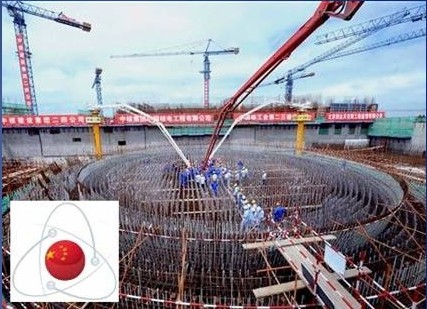
Discussion
The development of China’s nuclear market has been driven by a governmental elite, many of whom were trained as engineers. Their strategic thinking appears to be motivated in part by the challenges of climate change – to adopt lower carbon sources of electricity generation. As the vice president of the China Nuclear Energy Association has pointed out, nuclear power – rather than solar, wind or biomass – is “the only energy source that can be used on a mass scale” to achieve clean, low-carbon energy.
Just as significantly, though, China’s rapid expansion of nuclear power appears motivated by a desire to upgrade the Chinese nuclear industry by enticing foreign suppliers who want to participate in China’s market growth to share their technology with Chinese partners. The profit potential is vast in China, but other big emerging economies, such as India and Brazil, will be exploring nuclear installations in coming decades. To wrest some of that business away from established incumbents –such as France’s Areva and Japan’s Westinghouse – China is leveraging its low-cost labor and deep experience with major infrastructure projects. A Western-designed reactor can be built in China for 40% less cost and 36% faster than that same installation in Europe.
For China to become globally competitive its two major nuclear power companies — China National Nuclear Corporation and China Guangdong Nuclear Power Group — will need to improve in the knowledge-intensive end of the business. Of the 13 nuclear power plants currently operating in China, only three — all at the Qinshan site — rely on an indigenously developed design. Likewise, China has only limited experience selling its reactors in export markets; Pakistan is the only known foreign buyer to date. Finally, to compete globally, China will need to manufacture specialized components, for which it is currently dependent on foreign suppliers.
As for U.S.-China strategic cooperation in the nuclear field, there have been important undertakings but, to date the governments have not attempted anything on a broad strategic basis. There are interesting opportunities on the horizon. Former U.S. Ambassador to China, Jon M. Huntsman Jr., has reported discussing with Bill Gates a new kind of reactor “that runs for decades on a single fuel load, making and destroying plutonium as it runs,” thereby reducing the hazards of reprocessing and the dangers of proliferation. According to Huntsman, strategic cooperation between the U.S. and China to develop this American-pioneered technology could bring shared benefits. The technology could, for example, be certified and brought to commercial scale faster in China. A partnership effort could be envisioned where a joint American-Chinese company leads the construction, with co-development and commercialization rights apportioned between the partners. The end-result could be a cleaner and (marginally) safer form of energy brought to consumers quickly and at scale.
(This piece has been reprinted from G+ Insights, a publication series of the Gerson Lehrman Group at www.gplus.com. The G+ piece, in turn, has been adapted from Sustaining U.S.-China Cooperation in Clean Energy, a book publication authored by Terry Cooke forthcoming from the Kissinger Institute of the Woodrow Wilson Institute in November 2011).
Premise
The Fukushima disaster in March has prompted all major nuclear powers to pause and reexamine their nuclear development programs. Germany and Italy reached decisions to phase out their nuclear programs. In the U.S., stirrings of interest in a nuclear revival were silenced. In China, however, all indications are that a national program to establish China as a global leader in nuclear power remains on track.
Discussion
The first commercial nuclear power plant in the U. S. was installed in 1958. Today, 104 commercial reactors produce almost 20% of the nation’s total electric generation. By comparison, China’s first nuclear plant, Qinshan, near Shanghai, became operational in 1991. Today, 13 plants are in operation supplying just over 1% of China’s total electricity. However, this freeze frame comparison misses the contrast in momentum for the nuclear industry in the two countries. Of the 52 nuclear power plants that were either under construction or in advanced planning in America and China in late 2010, months before the Fukushima disaster, 50 of those plants were being planned and built for the Chinese market.
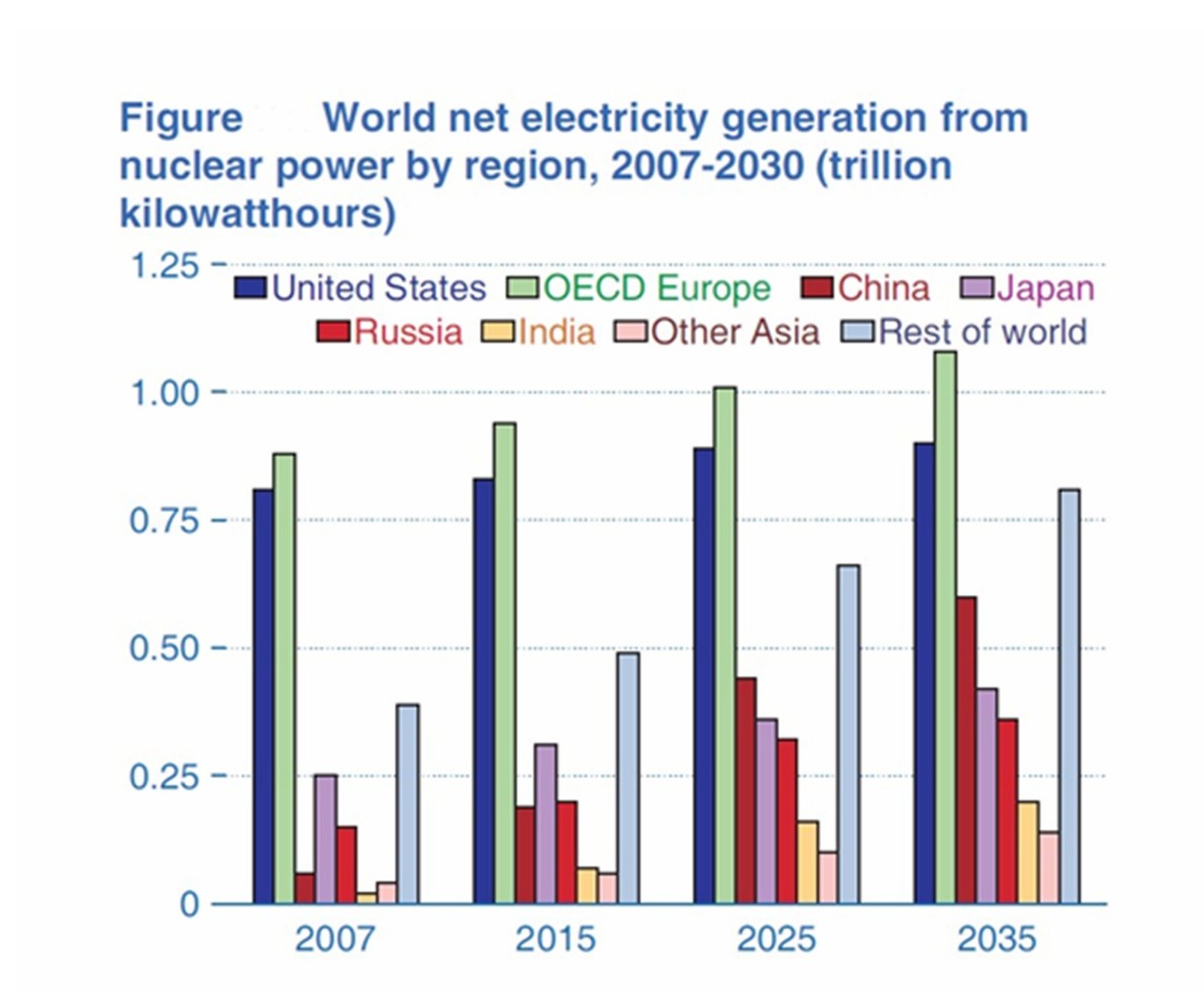
source: U.S. Energy Information Administration
As the above chart from the U.S. Energy Information Administration shows, nuclear generation has plateaued in the U.S. and Europe but is rapidly growing in China, India and the rest of the developing world. While active plants in the U.S. are approaching the end of their licensed lifetime without planned replacement, new nuclear installations in China are set to increase roughly ten-fold over the next ten years.
Following 1979’s Three Mile Island incident, the experience for the U.S. nuclear industry has been new order cancellation, new construction abandonment, premature shutdown of plants or extension without plans for replacement. Although improved design and technology advances have brought about significantly improved safety performance, public opposition to nuclear power — periodically galvanized by highly publicized international incidents such as Chernobyl and Fukushima and persistently bedeviled by the nuclear waste disposal problem– has kept the U.S. market virtually off-limits to new nuclear installations for three decades. China, by contrast, is the world’s most active site for new plant installations. National planning calls for nuclear power to provide 6% of China’s total electrical generation by 2020. This will require a net increase in installed capacity of 60-70 GW, comparable to the entire 63GW of currently installed nuclear capacity in France, one of the world’s most active users. By 2030, China plans to match the nuclear output currently provided by all 104 U.S. installations.
The bottom line: Chinese authorities clearly know how to throttle back a prestige industrial development project, as shown after July’s high-speed train collision in Zhejiang Province. After the Fukushima nuclear disaster, however, no such bureaucratic braking of China’s nuclear program has been apparent. Additional safety reviews have been instituted, but the scale and speed of China’s nuclear program remains essentially unchanged.
(This piece has been reprinted from G+ Insights, a publication series of the Gerson Lehrman Group at www.gplus.com. The G+ piece, in turn, has been adapted from Sustaining U.S.-China Cooperation in Clean Energy, a book publication authored by Terry Cooke forthcoming from the Kissinger Institute of the Woodrow Wilson Institute in November 2011).


 ______Assessing China / The TEA Collaborative______