
You are currently browsing the category archive for the ‘A-Series’ category.
Today’s post shares excellent analyses of the on-going protests in China courtesy of Foreign Affairs:

Across China, people are protesting the country’s strict “zero COVID” policy, in a rare show of dissent against President Xi Jinping’s regime and the Chinese Communist Party (CCP). The wave of outrage started after a deadly fire in the city of Urumqi, the capital of the Xinjiang region, killed at least 10 people on November 24. The city has been under lockdown for more than 100 days. Protesters are calling for an end to the zero-COVID policy—but also for greater democracy and even the removal of Xi.
As Yanzhong Huang writes, it has been clear for some time that Xi’s commitment to zero COVID is a risky move. “Having staked enormous political capital on zero COVID,” Chinese officials have had to pursue “excessively harsh measures in an effort to avoid any outbreaks that might embarrass the government.” But “Beijing’s intransigence has come at an escalating cost.”
What could mounting public distrust and discontent mean for Xi’s regime? The country’s punishing lockdowns “could contain the seeds of future political transformation,” Huang writes. If the Chinese government refuses to alter course, it could face a serious crisis of legitimacy. And Xi’s power is already being questioned as never before, Chinese dissident Cai Xia notes. Despite Xi’s outward projection of confidence, his popularity is slipping—while “in the shadows, resentment among CCP elites is rising.” As demonstrators clash with Chinese authorities across the country, we’ve compiled some of the best recent coverage in Foreign Affairs on how China’s zero-COVID policy is putting the country’s political stability at risk—and what it could mean for Xi and his grip on power. Start reading below.
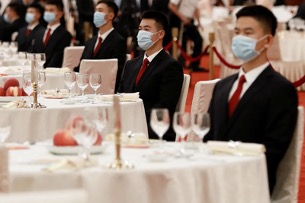
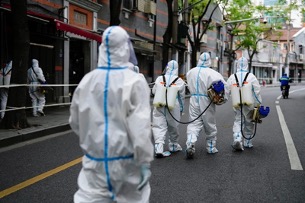

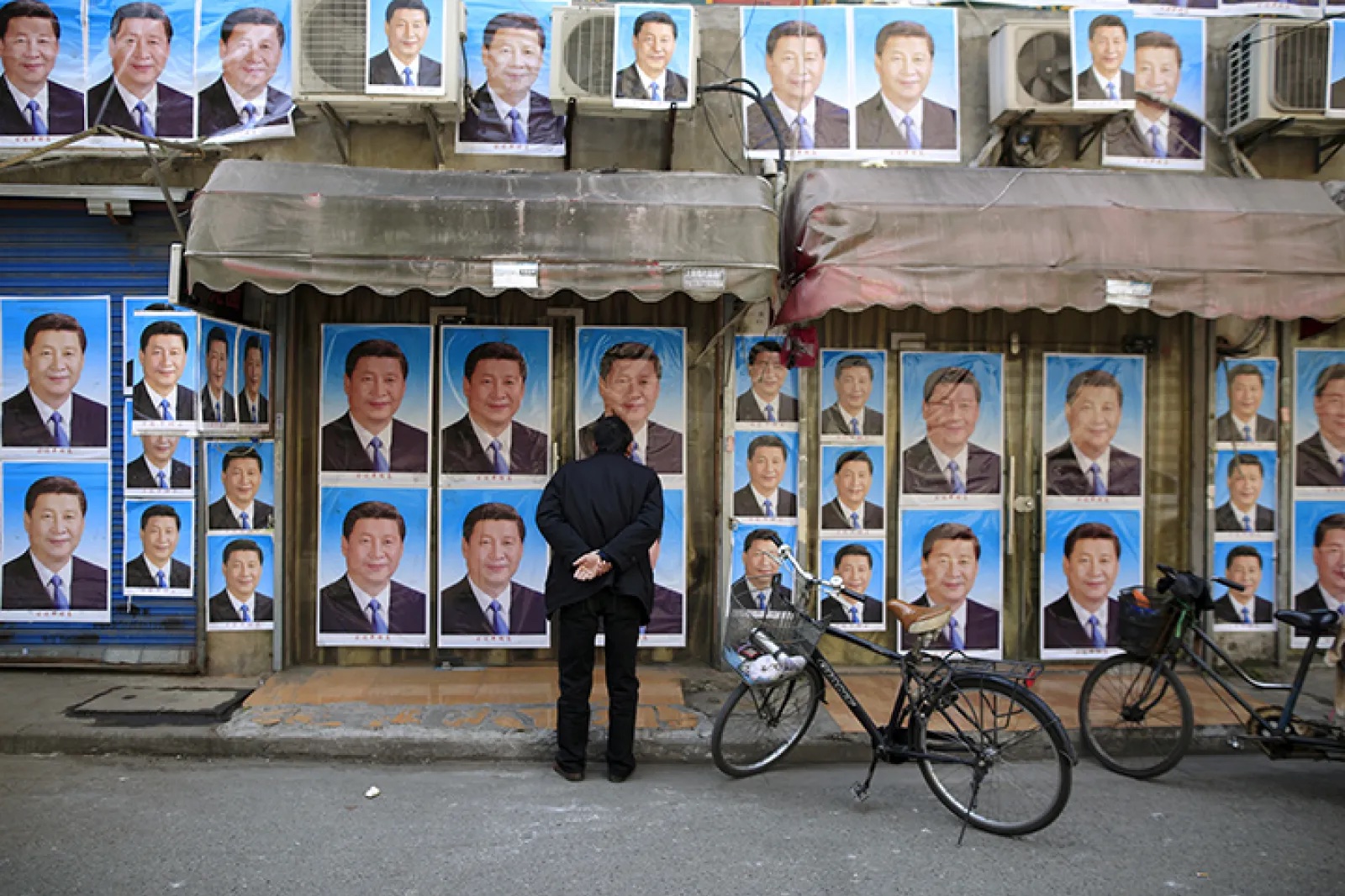
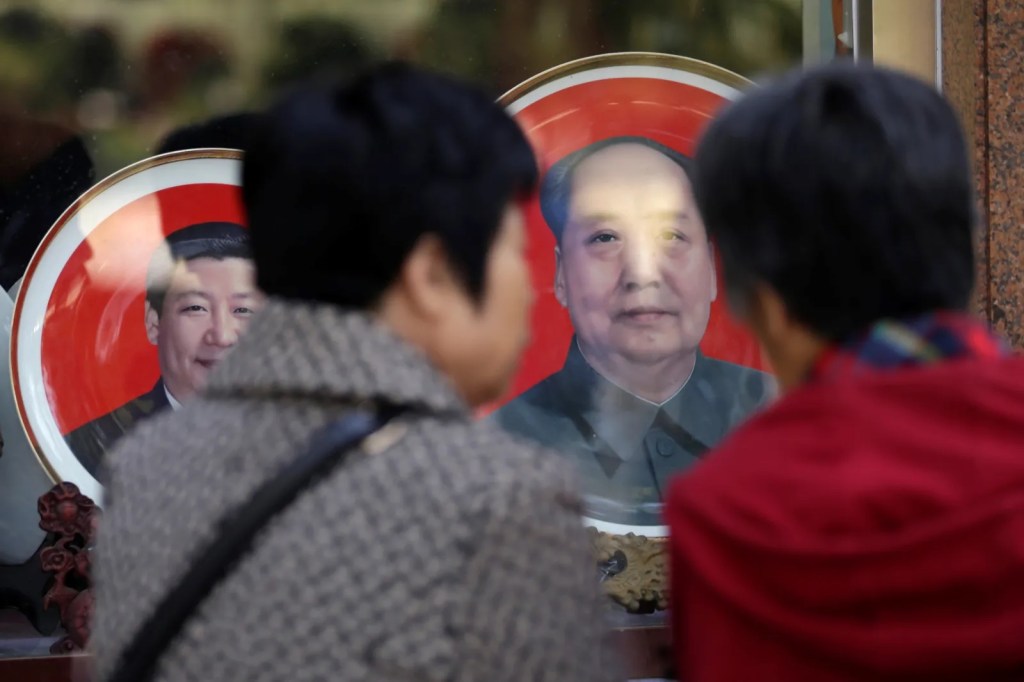

I am frequently asked questions about Covid in China. The three most commonly posed questions are: (1) how and where did it originate; (2) how is Xi’s Zero-Covid policy faring and (3) what is the reaction in China among both businesspeople and ordinary citizens.
In this post, I’ll take on the first two questions but with the caveat that definitive answers to any of the three questions are almost impossible to arrive at given the complexity of the underlying facts and the fierce political skirmishing over establishing the “truth” of the matter.
I am going to stay above the fray and offer simple generalizations to put each of the first two questions into clear perspective and revealing context. On the second question, I will add substantial commentary from today’s edition of Sinocism by Bill Bishop, which has been well described as “the Presidential Daily Brief for China hands” by Evan Osnos of the New York Times. (Note: Bill Bishop gives his subscribers leave to share, on occasion, content from his newsletter which I am doing for the first time here). For anyone interested in the answer to the third question, I’d say for now that both the business response and popular response is dismal at best but would encourage you to keep an eye out for my fuller response coming soon.
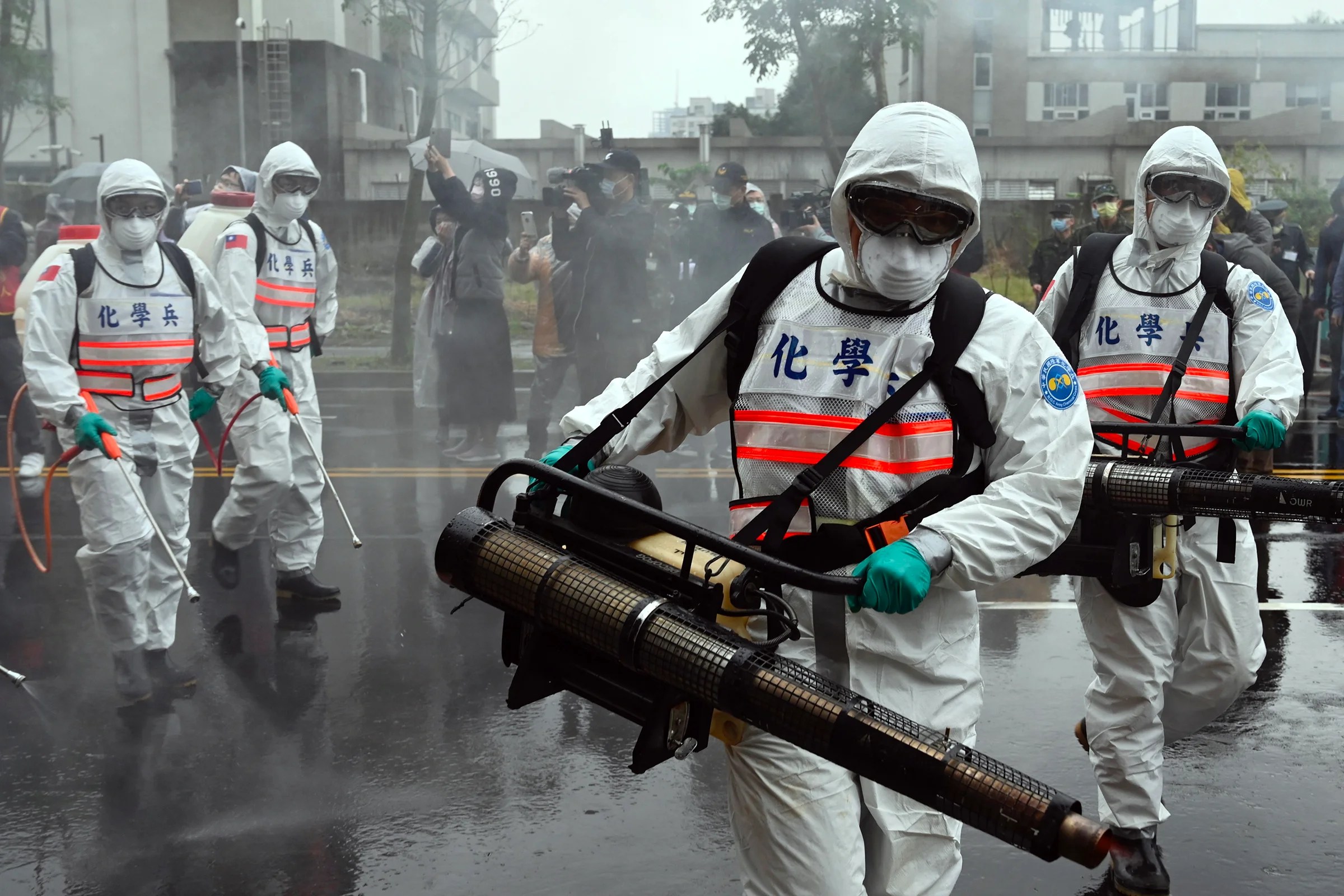
Origins of Covid-19
I am not going to venture where even leading epidemiologists fear to tread but will confine myself to one unassailable truth. The Chinese Government has consistently and systematically denied the world community — both its cadre of scientists and its relevant governmental and non-governmental organizations — access to the sites, data and interviews which would facilitate pinpointing the origins of Covid-19. It may eventually be possible through painstaking DNA regression analysis to pinpoint the origin of Covid-19 with certainty despite this lack of Chinese cooperation. Meanwhile, the glaringly obvious question raised by China’s stance is what is the PRC government trying to hide?
Zero-Covid Thought Control
Ever since Xi Jinping held forth his Zero-Covid policy as the basis for claiming the superiority of “Chinese democracy” over traditional liberal democracy, his adherence to that policy has been “unflinching” and “unswerving.” This was especially apparent in the run-up to the 20th National Party Congress in Beijing last month, even in the face of plummeting economic performance. Emerging from that once-in-five-years leadership shakeup with a plalanx of Standing Committee loyalists in place, Xi acknowledged the economic fall-out and popular discontent by announcing on November 11th some tweaks to enforcement policies under the banner of “optimizing Zero-Covid.” The results of this ‘optimization?’ Today’s infection rate and number of partial lockdowns is, in toto, more widespread and deleterious (see below) than the earlier, traumatic nadir experienced during the Shanghai lockdown last spring. It is ironic, but not altogether surprising, that “the Emperor” insists, as a sop to his pride, that his citizens all change the way they talk and think about his Zero-Covid policy — now “optimized” — rather than that he change the policy meaningfully to ease their personal and economic lives.
Addendum: Extracts from today’s edition of Sinocism on ‘optimized Zero-Covid’
Lockdowns by another name continue in parts of several cities as daily cases are approaching the level of the Shanghai disaster earlier this year. Right now it feels like we are seeing a repeat of Shanghai in late March, when local officials tried targeted and precise measures, before realizing that Omicron overwhelms all those efforts, leaving officials with the choice between letting it start to rip or instituting suffocating lockdowns. Near term I think they will have to choose the latter as they are not where they need to be with vaccinations and hospital capacity. But even then they have a massive problem with virgin immunity, so until they are willing to tolerate larger numbers of serious illness and death, or have better therapeutics, I do not think there is a specific end date. I know it is popular now to say March, pegged to the “two meetings”, but I am not sure why that is really an end date. They really seem stuck.
China lockdowns reach record level as coronavirus cases spiral | Financial Times $$
“China is seeing a record level of lockdowns,” said Ting Lu, chief China economist at Nomura. “It’s even a bit worse than during the [spring] Shanghai lockdown because so many cities are partially locked down.”
The bank estimates Covid restrictions have hit areas responsible for one-fifth of China’s gross domestic product…
In Chongqing, another pandemic hotspot, the arrival on Monday of Sun Chunlan, a vice-premier known for her draconian approach to battling the pandemic, led to widespread panic shopping among residents, concerned about the potential for a tough Shanghai-style lockdown.
China’s Lockdowns Surge in Week Since Covid Policy Adjusted – Bloomberg
China’s top health officials vowed to stick with Covid Zero at a Tuesday briefing, saying outbreaks across the board remain “severe and complex.” Beijing is telling local governments to implement the updated guidelines, which were outlined in 20 measures earlier this month. Localities shouldn’t be excessive when it comes to Covid controls, but they also shouldn’t loosen too much either, said Mi Feng, spokesperson of the National Health Commission.
Beiijng Daily – 尹力:坚定坚决打赢疫情防控整体战阻击战歼灭战 实现防住疫情稳住经济安全发展-千龙网·中国首都网
Party Secretary Yin Li: Yin Li: Firmly and resolutely win the overall war of epidemic prevention and control, the war of resistance and annihilation, realize the prevention of epidemic situation and stabilize the development of economic security.
Comment: “歼灭战”, literally “war/battle of annihilation” seems hard to win with piecemeal shutdowns. Hearing that some beijing cadres issuing localized lockdown orders verbally only not going to inspire confidence in the “optimization” of dynamic zero-Covid on the road to reopening. why are they hiding it? from whom are they trying to hide it?
The ongoing epidemic is witnessing growing infections. The average daily new cases this week reached 22,200, nearly double last week’s level, Hu Xiang, an official of the national epidemic prevention and control bureau, said at a press conference on Tuesday.
Hu noted that the epidemic, which has hit many provinces and regions, showed complex transmission chains. Some provinces are facing the severest and most complicated epidemic in the past three years.
Densely populated cities like Guangzhou in South China’s Guangdong Province and Southwest China’s Chongqing Municipality are epicenters of the ongoing outbreaks, as the large population, high personnel mobility and frequent gatherings in key spots like schools increased the risk of epidemic transmission and the difficulty of putting the epidemic under control, according to Hu…
Citing experts who closely follow the situation of China’s epidemic, some media outlets predicted on Tuesday that this round of the epidemic would continue to expand until the middle of December.
新京报 – 北京疾控:2例重症病例未接种加强针 老人接种率偏低
Beijing official: two seriously ill Beijing patients, one 52 and the other 89, did not get the booster shot and the booster rate for those over 60 is low and for those over 80 is not even 30% 例新冠肺炎重症感染者分别为52岁和89岁,均未接种加强针, 30% 60岁及以上感染者全程和加强免疫接种率均偏低,80岁及以上感染者加强免疫接种率不足30%
新京报 – 24日起进入市属公园等须持48小时内核酸阴性证明
According to the requirements of epidemic prevention and control in Beijing, starting from November 24th, residents and visitors must hold a negative nucleic acid test certificate within 48 hours to visit the municipal parks and the National Botanical Garden.
根据北京市疫情防控工作要求,11月24日起,市民游客进入市属公园、国家植物园参观游览须持48小时内核酸检测阴性证明
China should optimize and adjust its COVID control measures, depending on how the pandemic situation evolves domestically and beyond its borders, a page-one Economic Daily commentary said. Still, it said COVID control is a daunting and long-term endeavor, and that officials must not slack in implementing related measures to contain outbreaks. The pieces quote Xi from his comments to the Wuhan delegation at the delayed NPC meeting in May 2020 – “针尖大的窟窿能漏过斗大的风” – a hole the size of a needlepoint can let in a huge wind”. So how are officials supposed to respond, when they are being reminded that even the slightest slackening can lead to an outbreak? They have seemingly impossible and contradictory tasks
Outbreaks Test China’s Efforts to Limit the Cost of ‘Zero Covid’ – The New York Times
“It’s maybe 10 steps forward and nine steps back,” said Chen Long, a policy analyst at Plenum, a Beijing consulting firm…
Citizens will only be reassured, said Wang Xiangwei, a Beijing commentator and newsletter ( Wang Xiangwei’s Thought of the Day on China) writer, when trusted health experts appear on television to discuss the lack of severity of the Omicron variant for those who have been vaccinated, particularly young people who also have strong immune systems. A possible candidate, he said, was Zhong Nanshan, who helped uncover the SARS outbreak in 2003 and played a key role in drawing national attention to the initial Covid outbreak in Wuhan nearly three years ago.
近期多起疫情涉及高校!教育部本月两度开会部署:防止以“优化”为名放松防控|怀进鹏|教学|无症状感染者例_网易订阅
After several recent outbreaks at colleges and Universities, The the Ministry of Education held two meetings this month to make plans to prevent the relaxation of prevention and control in the name of “optimization”
国家卫健委明确:急诊、透析室、手术室、分娩室、重症监护室非必要不封控
The National Health and Health Commission has made it clear that emergency rooms, dialysis rooms, operating rooms, delivery rooms and intensive care units are not to be shut unless necessary.
The National Health and Health Commission reiterated that it is very important for fever clinics to stay open.
Comment: Officials have really upped the rhetoric on ensuring that people have access to medical care even if there are lockdowns
新华全媒+丨不折不扣落实疫情防控优化措施——国务院联防联控机制新闻发布会回应焦点问题-新华网
Xinhua on the key takeaways from the Joint Prevention and Control Mechanism of the State Council presser, concludes with:
In the affected areas, medical institutions at risk of the epidemic should not be “shut down” or “locked down” under the pretext of epidemic prevention and control, especially emergency rooms, dialysis rooms, operating rooms, delivery rooms, and intensive care units in medical institutions. These important departments should be “not sealed up and controlled unnecessarily” to ensure the treatment of patients. It is possible to minimize the impact of epidemic prevention and control on the daily medical services of medical institutions and meet the needs of the people for medical treatment.
在发生疫情的地区,不能够以疫情防控为由对发生疫情风险的医疗机构“一关了之”“一封了之”,特别是像医疗机构的急诊、透析室、手术室、分娩室、重症监护室等,这些重要的救治科室要做到“非必要不封控”,保障患者救治。最大可能减少因为疫情防控对医疗机构日常医疗服务的影响,满足人民群众就医需求。
11.22 People’s Daily “Zhong Yin” on epidemic control and prevention work – 深入细致做好服务保障工作
The relationship between epidemic prevention and control, normal production and life, and economic and social development is complementary and dialectically unified. To better respond to and resolve the reasonable demands of the masses and solve the practical difficulties of the people is not only an inherent requirement to adhere to the supremacy of the people and life, but also the right thing to do to firmly implement the general policy of “dynamic zero-Covid”. The struggle against the epidemic in the past three years has profoundly revealed to us that only when the epidemic can be prevented can people’s lives be safe and secure; The only way to effectively coordinate epidemic prevention and control with economic and social development is to take concrete measures to reduce the negative impact of the epidemic and ensure sustained, healthy and stable economic and social development with good results.
疫情防控和正常生产生活、经济社会发展,是相辅相成、辩证统一的关系。更好回应和解决群众合理诉求,解决好人民群众实际困难,这既是坚持人民至上、生命至上的内在要求,也是坚定不移贯彻“动态清零”总方针的题中应有之义。近3年的抗疫斗争深刻启示我们:只有疫情防得住,人民生活才能平平安安;只有抓实抓细疫情防控各项举措,同时减少疫情带来的不利影响,以良好的防控成效保障经济社会持续健康稳定发展,才是高效统筹疫情防控和经济社会发展。
The government also encouraged residents in Chaoyang district to “slow down their lives” at a press conference on Tuesday, asking them to not leave the district unless absolutely necessary, use online learning, online meetings and telephone communications to reduce visits to schools and offices.
CCTV – 上海:24日起,抵沪不满5天者不得进入公共场所_新闻频道_央视网(cctv.com)
Starting 11.24, people who have been in Shanghai for less than 5 days are not allowed to enter public spaces
Chinese regulators warn IPOs of zero-Covid winners subject to tight checks | Financial Times $$
Chinese regulators have warned that a wave of initial public offerings from companies claiming to be involved in China’s booming Covid-19 testing sector will be subject to added scrutiny over concerns that their high growth is unsustainable.
According to Chinese media outlets, a community staff member later suggested that this was a non-official, self-initiated move by the property management and that it has since been corrected.
China Economy Braces for Major Disruption into Next Year as Covid Cases Surge – Bloomberg
The path to reopening “may be slow, painful and bumpy,” the Nomura economists wrote in a note, suggesting a “back and forth” approach as rising cases stir reluctance among policymakers to ease curbs quickly. Nomura forecasts gross domestic product growth of 4.3% for 2023, lower than a median estimate of 4.9% in a Bloomberg survey.
Caixin – China Fleshes Out ‘Optimized’ Covid-19 Response
On Monday, China reported two Covid-related deaths, one in Henan province and one in Sichuan province, after Beijing recorded three virus-related deaths over the weekend.
Beijing shuts parks, museums as China’s Covid-19 cases rise | The Straits Times
The municipality of Tianjin near Beijing on Tuesday became the latest to order citywide testing, after a similar announcement on Sunday by the northern city of Shijiazhuang.
The three-hour face-to-face meeting in Bali between President Biden and President Xi — their first non-virtual meeting in over three years — concluded just over an hour ago.
Much can be said (and is already in digital print) looking at this meeting from various angles:
- History of Biden’s personal relationship with Xi
- Composition of the small delegations accompanying the heads of state and what those choices say
- The wide range of issues discussed including Taiwan, Russia, nuclear arms (and their possible use in Ukraine), North Korea, human rights, resumption of national level cooperation on issues of climate change, health security, global food security, and defense-related communications (to forestall accidents and misunderstandings), etc.
- Differences in the official post-meeting read-outs from the two sides and what those differences signify
- Atmospherics of the meeting — effect of recent boosts to each leader’s domestic standing; implications of the third-party location on periphery of G20, etc
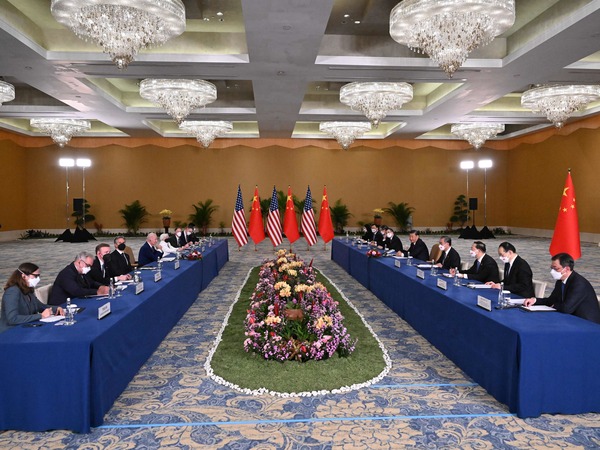
But I will go to what I believe to be the heart of the matter. The bottom line, both immediately and over the medium term:
CONTEXT: Gauged charitably, U.S.-China relations are at their lowest point since at least 1991 (post-Tiananmen and pre-Deng’s Tour of the South). Gauged more hard-headedly, they are in their worst shape since before Nixon’s visit to China in 1972 to begin dialogue and explore a relationship amid the Cold War freeze. The vertiginous decline we’ve been experiencing in recent years started very gradually as far back as 2008 when the (Western) Financial Crisis put shortcomings of the Washington Consensus on display in Beijing at the very moment when China was basking in its success in hosting the 2008 Summer Olympics. The hardening of attitudes became personified on the Chinese side with the emergence of Xi Jinping as paramount leader in 2012. Over the following years, the on-going decline in political relations — as contrasted with ever-strengthening commercial ties — became exacerbated for the Obama Administration as China militarized islands in the South and Southeast China Seas, brazenly breaking a commitment Xi had personally given Obama. It was then personified on the U.S. side starting in 2015 with Donald Trump’s racially-tinged campaign and, following his election, by his go-it-alone crusade to punish China with sanctions and Oval Office invective. The rhetoric was answered in 2017 by Xi Jinping upon his re-election as Chinese Communist Party (CCP) head in the form of an uber-triumphalist speech he delivered from the 19th Party Congress stage. The flash-points multiplied during the pandemic with China working hard to obscure the origins of the Covid-19 outbreak and subsequently using its heavy-handed Zero-Covid policy as the linchpin for Xi’s claim that China offered the world a superior system to liberal Western democracy (a claim which non-Western Taiwan makes a mockery of every day and which Hong Kong once also challenged prior to its being brought to heel brutally by Beijing in 2020). The deterioration continued in 2021 as the Biden Administration disappointed Beijing by not reverting to the softer, Obama-era approach to China that the Chinese leadership in Zhongnanhai had expected. Instead, the Biden Administration worked assiduously and with considerable success, to build a broad, values-based partnership with traditional allies and other aligned countries to answer China with a solid front. The Peoples Liberation Army’s practice-run blockade of Taiwan following House Speaker Pelosi’s visit to Taiwan in August further accelerated the downward spiral. And, while not yet fully appreciated by the American public, passage of the Biden Administration’s CHIPS Act into law in August is perceived in China, rightly, as a policy dagger pointed at the heart of its aspirations for seizing dominance in 21st c. technologies for defense, aerospace and space, surveillance and security, and industrial automation and productivity. (It is with the set of issues in these last two sentences — the interlinked issue of Taiwan and the CHIPS Act — that the Assessing China blog is now focused).
THE BOTTOM LINE: The bottom line of today’s meeting is Taiwan. While both sides settled in their separate post-meeting read-outs on emphasizing the lowest common denominator assertion that they’re now working together to stabilize an unstable relationship, their agendas going into the meeting were clearly different. For the Biden Administration, stabilization was the goal. It was enough just to establish a floor to stop further relationship decline and to limit the negative impact further decline would have on the range of issues under discussion (see above). For Xi, the goal was something more — to leverage agreement to stabilize the relationship toward the end of prying out some glimmer of affirmation from the U.S. side to validate his stance on Taiwan. With his eye on 2027 (21st Party Congress) and 2035 (a key CCP goal for China’s development) and with a domestic lock-hold for the next five years in the form of his new Standing Committee of loyalists, Xi is turning his attention — and ambition — to the international sphere. That means Taiwan as the culmination of his China Dream (and, I would wager, the fulfillment of the backroom deal he likely crafted with the CCP in 2012 to let him off the two-term-limit leash). In Xi’s thinking, if the U.S. could commit to the Shanghai Communique in earlier years, he should push as a next step for formal U.S. acceptance of his claim on Taiwan. As Xi put it, Taiwan is “the very core of our core interests.”
The bottom line of their meeting in Bali today may then be that Xi, just like Putin with Ukraine, misreads U.S. politics and society and the resolve of most of the international community concerning Taiwan. The evidence for this view would be the public read-outs: Biden achieved his chief objective while Xi did not.
But another view is possible. As Xi has demonstrated over the last twelve years, he is willing to take large risks to achieve the China Dream but he is methodical about how he goes about taking those risks. Militarization of the South China Sea and the ruthless imposition of the Basic Security Law in Hong Kong are just two examples. Militarily, China has been modernizing and arming up with laser-focus on deterring the U.S. in the Strait of Taiwan for far longer than the Pentagon has been taking steps to respond. As a result, the window of opportunity for Xi to move militarily is expected to be at its widest around 2027 or 2028. Following that, the belated U.S. military revamp in the region will be coming on stream and narrowing that window with each passing year. (It’s worth noting that 2027 coincides with the next Party Congress and therefore coincides well with the ‘chapter structure’ of the narrative Xi has been building about his stature as not only a peer of Mao Zedong in the Communist era but as a Chinese leader of destiny for the ages.)
So does the “failure” of Xi’s bottom-line agenda regarding Taiwan at today’s meeting indicate that he misreads Biden and the U.S. political system? Or might he instead be playing a longer game to a wider audience? If Xi’s sights are indeed firmly fixed on the 2027/8 moment (not only militarily but also politically and in the eyes of history) and if he is focused on exploiting that window of maximum military opportunity, his failure today to make any headway toward some type of formal understanding with the U.S. regarding Taiwan may be exactly the point.
The choreography may be designed to show Xi making a concerted effort to get the U.S. to more fully acknowledge his claim on Taiwan. Xi probably recognizes this won’t happen. The U.S. will not cut a deal with an autocrat to throw 23 million people in a thriving democracy under the bus. But Xi can use that show of effort over the next few years to advantage. He will have made a show for the world to see of having tried hard to exhaust “peaceful measures” prior to being “forced” to make a military move on Taiwan. He will have checked that box. And it won’t be a coincidence if the moment of being “forced” happens at the same moment of the PLA’s maximum military advantage.
It has been a long journey to reach this moment …
- In 1972, Nixon traveled to China
- In 1973, the Philadelphia Orchestra became the first international orchestra to perform in China
- In 1974, I began to study Mandarin at college
- In 1976, Mao died (and the Cultural Revolution with him)
- In 1978, Deng and the CCP began experimenting with economic reforms
- In 1979, Carter normalized relations
- In 1980, I traveled to the mainland for the first time
- 1n 1982, at its 12th National Party Congress, China adopted economic reforms as its priority policy
Just this past week — forty years later at its 20th Party Congress — China under Xi has formally abandoned economic growth as its top priority for national development (along with the international partnerships on which that growth depended for trade, investment, access to capital markets and innovation) and prioritized instead “security” (with all the ideological baggage which that entails in Xi’s worldview).
Put simply, Xi has just crossed the Rubicon …

I wrote on Monday in Ideologues Meet Markets that I would share my considered view on the implications of the just concluded 20th National Party Congress after a few days of rumination and reflection. I am doing so now. Xi has just crossed the Rubicon. His move not only upends a forty-year trajectory of the most dynamic economic growth ever witnessed in the world, it threatens — more ominously — the foundations of the post-WWII international order and the unprecedented seventy-year run of (relative) peace the world has enjoyed at the global level.
An extremely well observed account of what this moment means is contained in the political economist Yuen Yuen Ang’s opinion piece in today’s New York Times. I reproduce below that piece in its entirety:

China’s Era of Reform Has Officially Ended
By Yuen Yuen Ang
Forty-four years ago, Deng Xiaoping kicked off the period of “reform and opening up” that transformed China from a poor, autarkic nation into an emerging global power.
President Xi Jinping officially ended that era last week. He emerged from the Chinese Communist Party’s congress in Beijing with unchallenged authority and plans for China that revolve around his obsession with control and security — even if that means harming the economy.
It’s a momentous change in outlook.
Deng Xiaoping’s strategy for China’s spectacular economic achievements had two main components. The first was a collective leadership arrangement within the Communist Party. Deng rejected Western-style democracy, but China’s tumultuous decades under Mao Zedong had taught him that one-man rule is dangerous. He and the party introduced partial checks and balances into politics at the highest level, including term limits. The second component was a single-minded pursuit of economic growth that, Deng famously declared, would be China’s “hard principle.” Officials throughout China dove headlong into promoting growth at all costs — bringing prosperity but also corruption, inequality and heavy industrial pollution.
Last week in Beijing, Mr. Xi dismantled those foundations. He ensured that he would remain paramount leader of China for a third term — if not for life — and packed the party’s leadership with loyalists while heavily prioritizing national security over the pursuit of economic growth.
In his speech to the party congress at the Great Hall of the People on Oct. 16, he mentioned “security” significantly more often than “economy,” a major break with precedent. He went further, declaring unambiguously, “National security is the bedrock of national rejuvenation, and social stability is a prerequisite for building a strong and prosperous China.”
In Chinese politics, small changes in wording can herald big shifts in ideology and policy. If there were any remaining doubts about Mr. Xi’s intentions, he dispelled them by vowing that China would stick to its zero-Covid policy, “without wavering.” His government’s approach to the pandemic, a public health policy in name, is in reality the most powerful security tool devised by the Communist Party, restricting access to the country and controlling who can go where, underpinned by tracking apps that citizens and visitors must have on their smartphones.
For observers long accustomed to Deng’s growth-first ethos, Mr. Xi’s policy choice is mind-boggling. The Covid controls are angering citizens, crippling China’s economy, decimating domestic consumption, disrupting manufacturing and logistics, and repelling foreign and local investors alike.
Why is the most powerful Chinese leader in decades so obsessed with security and domestic control that he would sacrifice the economy? The answer lies in an array of domestic and foreign challenges, some worsened by Mr. Xi’s own policy choices.
Politically, he probably fears the proverbial knife in the back after making enemies through a decade-long anti-corruption campaign in which thousands of officials — possibly including potential political rivals — were punished and is doubling down on repression out of his instinct for self-preservation.
On the economic front, he faces smoldering crises, including an economy that is slowing sharply, a property sector meltdown and record-breaking youth unemployment. These problems have been exacerbated by the Covid controls and by Mr. Xi’s “common prosperity” campaign — a strategy for narrowing inequality and addressing monopolistic behavior by big tech firms and other private companies, which was punctuated by an abrupt and sweeping regulatory crackdown last year that has alarmed investors. The market backlash was intense: Within months, more than a trillion dollars in value at many of China’s most innovative companies evaporated.
On foreign policy, Mr. Xi has projected an ambition to challenge American primacy. The Trump administration’s chaotic handling of the pandemic prompted Mr. Xi to boast that “the East is rising and the West is declining.” But his triumphalism was premature. China is far from an even match with the United States in economic, military or technological power. And while American democracy is in crisis, the United States remains strong, a true superpower and a free country able to criticize and renew itself. Mr. Xi criticizes the West for seeking to contain China, but his hubris and aggressive approach helped bring about this threat.
To be sure, Mr. Xi does not intend to completely abandon the capitalist success that rejuvenated China and brought global respect and influence. And to his credit, he has confronted serious problems that his predecessors swept under the rug, particularly corruption and economic inequality. His vision of a powerful China, respected on the global stage, is warranted given his country’s size and economic clout.
But addressing China’s myriad problems will require measured steps that Mr. Xi seems disinclined to take. Putting out fires in China’s economy must begin with relaxing Covid restrictions and importing more effective vaccines, something that his government has prevented. These won’t be miracle cures, but they are necessary first steps that will go a long way toward alleviating stress on China’s people and reassuring investors that his leadership team has not lost all sense.
Mr. Xi has plunged China into a vicious cycle: A hubristic and authoritarian leader, unaccountable to society and unchallenged even by his own advisers, makes poor policy choices, which add to his problems, exacerbating his fears of a revolt and leading to more repression.
The consequences of his decision to emphasize security over economic vibrancy will be global. China is the world’s second-largest economy and the biggest trading partner of dozens of countries. A prolonged economic slowdown in China will increase the risk of a global recession, with many countries sharing the pain. In the long run, there may be winners as China’s waning competitiveness hastens a shift in global supply chains to other emerging economies. But if China turns inward, it will lose. Chinese tech companies are already expanding overseas to compensate for a restrictive home environment.
China’s great capitalist revolution under Deng and his successors is now history. So is Mr. Xi’s first 10 years in office, when there was at least a minimal layer of checks on his power from moderate, non-loyalist officials. China under Mao and the former Soviet Union proved that absolute dictatorships fail miserably at making nations prosperous and strong. They bring only impoverishment and false security. Mr. Xi is likely to relearn those lessons in the coming years.
Yuen Yuen Ang (@yuenyuenang) is a political economist and the author of “Chinaʼs Gilded Age” and “How China Escaped the Poverty Trap.”
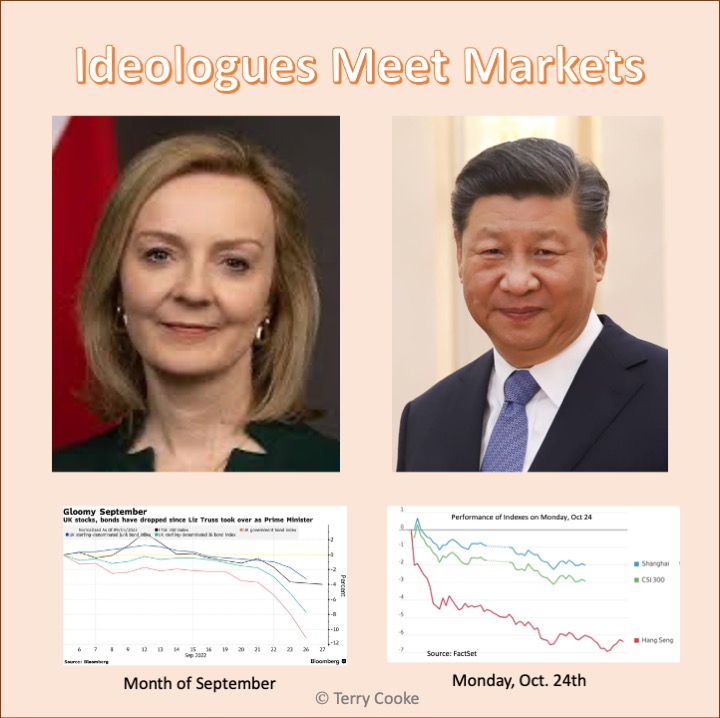
I’ll give my wrap on the conclusion of the 20th Party Congress in Beijing later in the week after some further digestion and rumination.
Meanwhile, here’s a graphic putting today’s market reaction to Xi’s consolidation of power into some context. Entirely different timelines and denouements but same implacable forces at work …
As we await Sunday’s introduction of the official lineup for the 25-person Politburo, the 7-person Standing Committee, and the putative Premier and the President for the next five years, what has already become clear is that the Chinese Communist Party (CCP) has gone all in on Xi Jinping. While the field might possibly look somewhat different at the next Party Congress, the broad contours for the global picture for the coming five years are becoming clear. The bold brushstrokes were drawn by Xi during his nearly two-hour speech delivered last Sunday. Since then, there have been ample signs of what’s to come. The team being assembled around Xi will be made up of apprentices filling in with finer brush strokes for Xi, not near-peers willing to argue for painting a different landscape.

So what are the big takeaways from the Congress so far for the global community to consider?
- “The great rejuvenation of the Chinese nation” is the goal for the CCP and Xi alike. There’s no daylight between Xi Jinping and the Party on this point. China wants back at the center of the world.
- Zero-COVID policy can only change marginally. It bears the weight of Xi’s claim that “Chinese-style democracy” is superior to traditional Western-style democracy. Look, fewer people died, right?
- Whatever the economic headwinds, the ship of state will stay “secure” and on-course as long as Xi is at the helm. (Translation: state security and ideology to be prioritized over Deng’s economic reforms)
- Taiwan’s incorporation into China — which, post-Hong Kong, is now only feasible by outright coercion or military force — is the sine qua non of the full achievement of China’s great rejuvenation
And what are some key things that we’ll be watching in this this space in the weeks and months ahead to gauge Xi’s and the CCP’s success in making progress toward this vision:
- Fall-out from Russia’s invasion of Ukraine (neither of which were mentioned once in Xi’s speech)
- Performance of China’s economy in light of Covid lockdowns, real estate sector implosion, regulatory crackdown on tech firms, and the drag of Belt & Road Initiative debt burdens
- Push-back from the U.S. and Europe, from non-aligned nations and the developing world, and from China’s own citizens as Xi pushes dictatorship with Chinese characteristics as his “new choice for humanity.”
- And, most crucially from my individual perspective, the “tech-tonic” shocks upending global economies as competition over microchip innovation, production and supply continues to ramp up
The Fat Lady won’t be singing in Beijing until Sunday but we know who’s in the lead after three innings. In the deciding game of this once-every-five year series, the Emperor For Life team currently holds a three-to-nothing lead over the Court of Rivals team.
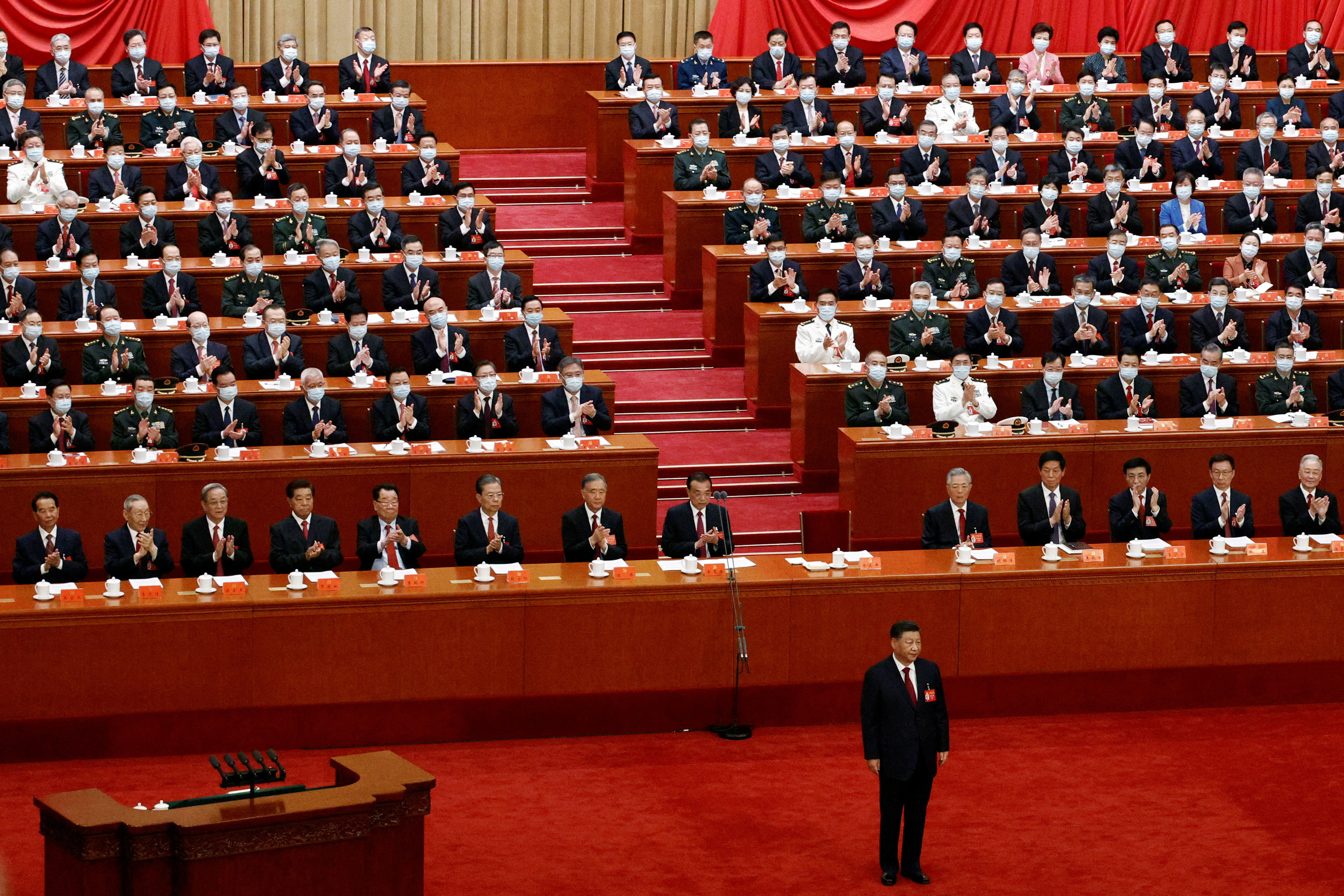
Who scored? As reported by Josh Chin in today’s Wall Street Journal (see below), Ding Xuexiang, Xi’s Chief of Staff, and Li Qiang, party boss in Shanghai, are both being widely mooted in Beijing as favorites to land Standing Committee appointments. Both are “Xi’s men.” Given the nature of the National Congress process, a candidate whose name is being touted loudly at this stage of the process is almost guaranteed to be formally anointed come Sunday. Additionally, the fact that Li Qiang’s name is being advanced as the likely Premier to replace Li Keqiang means another run based on the scoring system set up in my Chutes and Ladders post last Friday. So, after three innings, score three for the Emperor For LIfe team.
The third name being picked in today’s reporting by Josh Chin is Li Xi, the top party official in Guangdong Province. This player is harder to score in the sense that Guangdong is the province most committed to international trade and investment and Xi has been actively narrowing that space. For instance, during his nearly two hour speech during the opening of the Congress on Sunday, Xi mentioned “security” (read, “surveillance”, “lack of consumer data protection” and “insecurity for private investors”) more than sixty time while giving lip-service to market forces only three ties. Of course, Xi may be bringing Li Xi on board precisely to keep Guangdong on a tight leash but there’s at least some possibility that Li Xi could represent a balancing perspective representing power blocs more committed to maintenance of international trade linkages, if not economic liberalization. We’ll score Li Xi as a Court of Rivals batter who was stranded on second without scoring. After three innings, no runs in for Court of Rivals team.
Final comment: The score may only be 3-0, but the game is shaping up as a total rout by Team Emperor For Life.
Stay tuned for further updates as we get to the later innings. For now, take a look at Josh Chin’s fine reporting below from today’s Wall Street Journal.
China’s Xi Jinping Likely to Pack Party Leadership With Allies in Show of Strength
Shanghai party chief is a front-runner for premier, people close to party leaders say, despite outrage over Covid-19 lockdown
Chinese leader Xi Jinping is preparing to name loyalists to top positions in the Communist Party hierarchy, according to people close to party leaders, in a move that would strengthen his hand as he confronts mounting challenges at home and abroad—from a sluggish domestic economy to Western resistance to Beijing’s ambitions on the world stage.
One of the allies Mr. Xi aims to promote is Li Qiang, currently the top party official in Shanghai, the people said. Earlier this year, Mr. Li shouldered blame for a weekslong Covid-19 lockdown during which tens of millions of residents in the country’s financial center struggled to access food and medical care.
Mr. Li is likely to be elevated to the Politburo Standing Committee, the party’s top decision-making body, according to the people, who say the 63-year-old is also considered a leading contender to be named premier at China’s annual legislative gathering next spring.
China’s premier has traditionally assumed responsibility for the country’s economy, which has been battered in recent months by Mr. Xi’s zero-tolerance approach to Covid-19, a dramatic downturn in the property market and a regulatory crackdown that has created uncertainty for business.
China’s National Bureau of Statistics postponed the release of third-quarter gross-domestic-product data on Monday, a day before it was set to be published. An official at the statistics bureau cited unspecified work arrangements as the reason for the delay.
Others likely to join the Standing Committee include Mr. Xi’s chief of staff, Ding Xuexiang, and the top party official in Guangdong province, Li Xi, who once worked as a secretary to a veteran of the Communist revolution with close ties to Mr. Xi’s family.
The people close to party leaders cautioned that final deliberations on the makeup of the Standing Committee won’t be revealed until Sunday when the party elite is due to complete the membership of its top decision-making bodies for the next term.
China’s State Council Information Office didn’t respond to requests for comment.
The makeup of the next Standing Committee and the identity of the next premier have been the subject of intense speculation among Chinese politics watchers ahead of this week’s twice-a-decade party congress in Beijing, where Mr. Xi is poised to break with recent precedent and claim a third term as party leader.
While Mr. Xi seems assured of securing another five years in power, growing public frustration over his management of Covid-19 and the economy has provided ammunition to potential rivals trying to check his power by ensuring his allies don’t monopolize senior appointments.
If Mr. Xi gets his way, despite the pushback, he would surround himself with like-minded officials and upend succession norms that the party had honed over recent decades to prevent a return to Mao-style dictatorship. This might make it easier for Mr. Xi to pursue his priorities, but it also raises the stakes should that agenda fail, political analysts said.
“The risk of things going wrong and him getting the blame is much greater,” said Ryan Manuel, managing director of Bilby, a Hong Kong-based artificial intelligence firm that analyzes Chinese government documents.
With more allies holding key positions, Mr. Xi, who turns 70 next year, may start to delegate some of his authority to his trusted lieutenants as he gets more advanced in age, some of the people said. He has fewer political opponents to worry about, having neutralized many of them with anticorruption purges and cut off retired party elders from meddling in politics, they said.
A promotion for Li Qiang would mark a surprising political comeback. He appeared to be given extra leeway in handling a local Covid-19 outbreak in Shanghai in February, but infections spread out of control. A wave of online anger over the ensuing lockdown spilled over into physical clashes with officials, prompting several analysts to predict Mr. Li had lost his chance at making the Standing Committee.
China’s current premier, Li Keqiang, is due to step down next spring after completing two five-year terms—the maximum allowed under China’s constitution. He has occasionally contradicted Mr. Xi and pressured the Chinese leader to dial back policies seen as hurting growth. Political analysts nevertheless consider him one of China’s least influential premiers, whose sway over the economy dissipated as Mr. Xi centralized decision-making in his own hands.
Li Qiang, Li Xi and Li Keqiang aren’t related.
Analysts say other candidates to succeed Li Keqiang include Wang Yang, the head of China’s top government advisory body, the Chinese People’s Political Consultative Conference, and Hu Chunhua, currently the youngest among the country’s four vice premiers. In recent decades, Chinese premiers had prior experience as vice premier, a criterion that both Messrs. Wang and Hu satisfy.
Some foreign officials and academics have regarded Messrs. Wang and Hu as standard bearers for liberal-minded overhauls that favor market principles. Both are seen as being outside Mr. Xi’s orbit, having been brought along by other political patrons, though both have publicly backed the Chinese leader’s policies. The people close to party leaders said Mr. Hu may fall short of making the Standing Committee.
Among likely new members of the Standing Committee, Li Xi, Guangdong’s party chief since 2017, could step up as the next chief of the party’s top anticorruption watchdog, the Central Commission for Discipline Inspection, the people said.
Mr. Ding, the 60-year-old aide to Mr. Xi, is positioned to be named executive vice premier early next year, according to the people.
Top party theorist Wang Huning and anticorruption czar Zhao Leji are likely to join Mr. Xi as the only members of the current Standing Committee to get another term, though both are likely to be given new responsibilities, the people said.
He Lifeng, the top official at China’s state economic-planning agency and a friend of Mr. Xi since the 1980s, is likely to assume control over economic and financial policy, The Wall Street Journal previously reported. In this role, Mr. He would succeed Vice Premier Liu He, who has been Mr. Xi’s top economic adviser and his point man in trade talks with Washington.
The people close to party leaders and political analysts say Mr. Xi isn’t expected to elevate any potential successors to the Standing Committee, as doing so would undermine his own authority as paramount leader.
Both Li Qiang and Li Xi are too close to Mr. Xi in age to be considered viable successors. While Mr. Ding is younger, he has never served as a regional party boss—an experience long considered an unwritten prerequisite for candidates seeking China’s top political office.
Many in the business community see Li Qiang as a relatively liberal party leader who prefers discussing commercial deals to politics. In the early 2000s, he served as the top commerce official in the coastal province of Zhejiang, home to what would become major private companies including Alibaba Group Holding Ltd. He was later promoted to party secretary of Wenzhou, a city in Zhejiang that became a thriving entrepreneurial hub after China opened up its economy in the late 1970s.
After Mr. Xi became party leader in 2012, Mr. Li took top jobs in the relatively affluent regions of Zhejiang and Jiangsu, before he was elevated to Shanghai party boss in 2017.
If Mr. Xi can make Li Qiang premier, he would be able to consolidate control over the formulation of economic and social policy, said Chen Gang, a senior research fellow at the National University of Singapore’s East Asian Institute. “China’s reform and opening will continue, but the pace will slow down. Zero-Covid policy will continue, and Li may rely on stimulus policies to boost the economy,” he predicted.
Write to Josh Chin at Josh.Chin@wsj.com
Kevin Rudd, global president of the Asia Society and former Prime Minister of Australia, knows China well. He wrote in yesterday’s Wall Street Journal that:”The 20th Congress, which gets under way Oct. 16th will be different (from other Congresses since the opening of the 1982 reform era). There’s only one appointment that matters now: Xi Jinping, China’s Chairman of Everything. The delegates will reappoint Mr. Xi to a third five-year term as general secretary by a vote of 2,296 to 0.”
I don’t disagree with the main point that Kevin Rudd is making here but there is also a more nuanced view that is important to bring to bear. Wednesday’s post set the table for this more nuanced view. That perspective involves understanding the seven appointments which will be announced on Sunday to the Standing Committee under Xi. The crux of the issue is whether those seven appointments represents a line-up of Xi loyalists — in which case Rudd’s take is spot on — or whether there are appointments enfranchising power-bases at odds with Xi’s direction and indicating that the Party wants some checks on Xi’s untrammeled authority.
Here’s my cheat-sheet to reading next week’s Standing Committee appointments in light of this question:
Chutes & Ladders: 20th CPP National Congress Edition

So what to watch for?
(Scenario 1) Signs that the CCP is totally bought into Xi being Chairman of Everything
— Premier Li Keqiang (aged 67 and therefore normatively eligible for another term) is gone
— No one in their early 50s joins the Standing Committee (showing Xi doesn’t want heir apparent)
— Chen Min’er, a Xi loyalist and champion of Xi’s war on poverty, is appointed
— Ding Xuexiang, a Xi loyalist and Xi policy enforcer, is appointed
(Scenario 2) Signs that the CCP wants some checks on Xi’s untrammeled exercise of power
— He Lifeng, an internationally-friendly protégé of retiring economic czar Liu He, is appointed
— Hu Chunhua, who like Xi had a stellar early career but hasn’t been close with him since, is appointed
— Li Hongzhong, party boss of Tianjin and not “a dyed-in-the-wool” Xi man, is appointed
— Li Xi, party boss of independently minded Guangdong province, is appointed
Finally, keep an eye on Chen Quanguo, party boss of Xinjiang in charge of Uyghur “reeducation,” and Liu Jieyi, head of the Taiwan Affairs Office and the political dimension of the Taiwan reunification project. Whether their stars shine brightly or dim will also give an indication of the degree of CCP support for Xi’s hardline policies on these two fronts.
So that’s the scorecard I recommend you follow. We’ll circle back next week and tally up the score after the Standing Committee line-up has been brought out, in rank order, onto the main stage of the 20th National Party Congress.
With the 20th National Congress of the Chinese Communist Party (CCP) kicking off this coming Sunday, it’s useful to step back from the game of handicapping short-term odds and to take for a moment a longer-term perspective. We can return to anticipating the likely ‘chutes and ladders’ of 20th National Congress outcomes later this week: the (near-certain) likelihood of Xi Jinping securing a third term as President, unprecedented in the post-Mao era, and an examination of the ascendent and dimming stars of various Standing Committee incumbents and candidates and what that portends for the next five years. For now, it’s useful to step back and evaluate how it came to be — and what it means for China’s future — that Xi stands on the threshold of entering the CCP pantheon with near-totalitarian power. The key question to consider is whether Xi managed to bend the CCP and the country to his will or whether Xi’s rise reflects what the CCP has willed for China’s future.

The two best authorities on this question are Elizabeth Economy (The Third Revolution: Xi Jinping and the New Chinese State [2018] and The World According to China [2022]) and Kerry Brown (Xi: A Study in Power [2022]). Informed by their insights, I will attempt a super-summary of the forty-years which have led up to Sunday’s moment in history and then tackle that key question.
~ ~ ~
The market reforms which the CCP started experimenting with behind the curtain in 1978 and which it then publicly introduced in 1982 had an extraordinary run of success in elevating China’s economy. This occurred first under Deng Xiaoping’s informal leadership from 1982 through 1997 and then continued, in somewhat overlapping fashion with Deng’s tutelage, under the more regularized leadership of, first, Jiang Zemin (1993-2003) and then, starting in 2003, Hu Jintao. By 2007, post-WTO economic reforms were coming on stream, more far-reaching liberalizations were on the horizon, and a new system of divided authority and orderly succession in the Standing Committee was taking shape. (Under this system, the posts of President and Premier as well as the seven (usually) Standing Committee slots could not be held by any one person for more than two five-year slots. If at the time of a National Congress, occurring every five years, a one-term incumbent was 67 years old or less, he (virtually always a ‘he’) would be eligible according to the “seven up, eight down” rule to serve another five year term. If he was 68 or older, however, he would be obliged to step down.)
In 2007, Western observers, myself included, could be forgiven for thinking that China was on a development path in line with Western values and the post-WWII world order. But starting with the Financial Crisis and then, over the next fifteen years, this alignment started to diverge. Progressively, in step with Xi’s anointment as President in 2012 following his leadership struggle with Bo Xilai and his subsequent consolidation of power through his signature “Tigers & Flies” anti-corruption campaign, Xi started positioning his “Rejuvenated” China as deserving equal political stature on the world stage with the United States and equal, if not superior, stature to the West in matters of values and culture. His triumphalist speech at the 2017 National Congress made this claim explicitly and emphatically for all the world to hear. The Belt & Road Initiative and the Zero-COVID policy became Xi’s monumental stages — internationally and domestically — for playing this claim out for all the word to see.
Despite serious setbacks in 2022 with an imploding real estate market and a diminished tech sector, with COVID lockdowns and social discontent, and with the embarassment which his “friend without limits” has caused Xi personally in Ukraine, Xi looks set to enter the CCP pantheon this Sunday to be installed on a pedestal he has made for himself — higher than Deng Xiaoping’s and not lower than Mao Zedong’s.
This enthronement could not have been scripted by one man. The near absolute consolidation of power in the hands of one person could not be the work of one person unless there were far more evidence of resistance and rebellion in the ranks of other CCP power-brokers whose oxen had been gored. As this incisive opinion piece by Kerry Brown in yesterday’s New York Times persuasively argues, Xi’s leadership ethos is the CCP’s ethos and Xi’s laser-focus on making China “strong, respected and feared” will remain as strong even when Xi leaves the stage. It will remain for as long as the CCP can keep the lights on and the stage lit.
Over 10 years, Xi Jinping has methodically amassed power. Beginning with an unprecedented consolidation of military support, Xi then launched his ‘Tigers and Flies’ campaign, sidelining his political rivals along with officials accused of corruption. Over many years he patiently laid the groundwork to elevate Xi Jinping Thought to match the official stature of Mao Zedong Thought, and edge out Deng Xiaoping Thought, in the CCP’s ideological pantheon. He then overturned international commitments regarding Hong Kong, and brought that free-wheeling and Westernized city to heel with the introduction of a new security law. At the last 19th Party Congress in 2017, Xi tossed aside Deng’s “hide-and-abide” (韜光養晦、有所作為) approach to international relations and gave a triumphalist speech, announcing that China had not only arrived on the world stage but that it deserved central position on that stage. With the outbreak of the Covid-19 epidemic, Xi used sharp-elbow tactics to block scientific investigation into its origins in China and ordered sweeping zero-Covid lockdowns to highlight his government’s ability to take more effective action than was possible for democratic governments in the US and the West. The Winter Olympics were meant to be Xi’s star-turn to demonstrate — more to the Chinese people than to international audiences (many of whom undertook diplomatic boycotts of the Games because of oppression of Uyghurs in Xinjiang and other issues) — that he was a flawless and unrivalled champion. He even went so far as to claim that the authoritarian system he presided over represented a superior form of democracy to Western liberal democracy.
Along this path to unrivalled power in China, Xi first jettisoned the system of collective rule by the Standing Committee of the Politburo which Deng had put in place to guard against recurrence of unbridled rule by any one individual, epitomized by the last years of Mao’s rule. Longer term, Xi’s aim in amassing power has been to discard the limit of a president to two five-year terms, another safeguard Deng put in place and which he himself observed.
The announcement of leadership for the next five-year term will happen at the CCP’s 20th Party Congress in Beijing this autumn. At that meeting, Xi is widely expected to be named for a precedent-shattering third term. This will mark a historic high-point for Xi. His systematic consolidation of power has been designed, in part, to create an air of inevitability about this outcome. While his selection is still overwhelmingly likely, a number of significant fissures have appeared in recent weeks which crack this façade of total control.
ZERO-COVID
While undoubtedly successful in limiting the number of infections, hospitalizations, and deaths in the first two years of the pandemic, Xi’s Zero-Covid policy has created a raft of problems for China more recently, most notably during the highly-transmissible omicron phase. While incidences of infection, hospitalization and death have been dropping worldwide, they have been surging in China, with the number of confirmed cases more than quadrupling from mid-February to mid-March of this year. Elderly citizens are especially at risk due to their low rates of vaccination and hospitals have already become overwhelmed, due in part to the low number of hospital beds on a per capita basis in China. While it can be argued that the Zero-Covid policy ‘bought time’ for the development of vaccines, Xi’s championing of the locally developed Sinovac vaccine and his refusal to permit the use of more clinically-effective vaccines developed in the West, has blunted that advantage somewhat since the Sinovac vaccine is notably less effective against the omicron variant. The Zero-Covid policy has also meant that there is practically zero immunity in the Chinese population as a result of exposure to the virus as it becomes endemic worldwide. If SARS-COV-2 can be compared to a flame, China’s population is like a vast field of tinder. Finally, the economic and social costs have become glaringly apparent with the lockdown of an entire province, Jilin, in the northeast and the of Shenzhen and Dongguan – China’s two largest manufacturing hubs for information and communications technology (ICT) — in the south.
While Xi will, with considerable justification, continue to claim credit for his “triumph” over the coronavirus, China is by no means out of the pandemic woods and the setbacks of the last month make his strident claims ring more hollow, both internationally and domestically.
REAL ESTATE
In September last year, Chinese real-estate development firms began to feel the severe discomfort of a massive hang-over following years of real-estate speculation partying. The problems were most evident in real-estate giant Evergrande but soon spread to a host of other significant players in the field such as Fantasia, Modern Land, China Property Group and Xinyuan Real Estate Group. At the institutional level, the problems hitting the $5 trillion sector were the result of a unique PRC nexus of aggressive real estate development, lax banking, and local government incentive structures. More simply, the problems resulted from “unrestrained borrowing, expansion as an end-in-itself, and corruption.”
While the PRC Government claimed this week that the real-estate free-fall has been “stabilized,” pricing data from real estate developers across the country continue to show sharp deterioration. Also this week, Evergrande announced a further delay in sharing its plan for restructuring and for paying back bonds and other financial obligations. The government has strong reason to put on a brave face while throwing up a curtain of opacity around the problem. Property-related industries account for more than 30% of China’s economic output. Continued problems in the sector could drag China’s growth below the optimistic, post-pandemic official target of 5% growth, a minimum level which must be maintained in the years ahead for China to escape the ‘middle income trap.’ More immediately, it risks alienating an important swath of the urban public, 80% of whose household wealth is tied up in real estate and who see their property values plummeting. (A particularly aggrieved segment of this population are buyers who have paid up front to the developers, as is common in China, for a property not yet built and for which construction has halted indefinitely while values continue to slide).
While Xi has voiced loud promises to not let the bottom fall out of this sector and to support homeowners currently caught in the fallout, there is little evidence on the ground of these promises translating into reality. Meanwhile, the situation risks alienating the public and sowing dissent among officials.
‘COMMON PROSPERITY’
As measured by the Gini coefficient, China ranked fourth in the world in 2022 for greatest wealth disparity and inequality (after South Africa, Namibia and Sri Lanka). While Deng Xiaoping had announced famously in the late 1980s that “to get rich is glorious” and to “let some get rich first,” the extreme degree of inequality persisting in China four decades later is a source of growing social and political concern. The heady days of 10% growth have long ago disappeared and Chinese who thought they would be boarding on a later rail-car in the national train of prosperity now worry that the train may have departed, stranding them on the platform.
To counter this source of social unease, Xi unveiled with great fanfare in 2021 a policy of ‘Common Prosperity.” Writ large, this policy was meant to cement Xi’s place — side-by-side with Mao and with Deng slightly in the background – in China’s pantheon of modern heroes. In this telling, Mao was the one who roused China to throw off its ‘Sick Man of Asia’ bondage to foreign imperialists and to stand up. Deng contrived a transitional stage of capitalist-style wealth-creation for enough Chinese that China could attain wealth and power (富权). It was left to Xi to complete this project of national rejuvenation, by reinstituting a Marxist “Common Prosperity’ for all Chinese and returning China to the center of the world stage.
Without getting into either the ideological weeds (such as Xi’s ‘Dual Circulation’ strategy) or deep into the tangle of economic measures (e.g., restrictions on overseas listings by Chinese companies, user-data and other controls put on Chinese Big Tech firms, clampdown on student test-prep and video game commercial sectors, etc) which Xi embraced in 2021 to advance his Common Prosperity agenda, the general effect was felt quickly and keenly in the form of abrupt economic slowdown. In the first quarter of this year, the Common Prosperity program has been ‘walked back’ by numerous party officials who have emphasized that it represents a historic project more than an immediate project. Premier Li Keqiang, in his lengthy speech to 3,000 deputies at the opening of the National People’s Congress earlier in the month, mentioned Common Prosperity only one time. For educated Chinese — who have been skillfully parsing official pronouncements closely ever since the Cultural Revolution for clues about where the country is headed — this lack of visibility and endorsement for Xi Jinping’s signature program represents a remarkable degree of push-back for Xi by top-level leaders.
UKRAINE
Chris Buckley’s report in last Friday’s New York Times traces the contours of what is potentially the most damaging crack to appear in Xi’s carefully-crafted, monolithic façade of power and control. The article details the war of words that has erupted on the Chinese internet following the warning delivered by a respected scholar and politically-connected insider, Hu Wei, to the effect that China “risked becoming a pariah if it didn’t denounce Russia’s invasion of Ukraine.” As was covered in last week’s post and as continues to play out this week, Chinese officials have contorted themselves by claiming to be neutral and wanting peace while following Putin’s lead in not calling the ‘special military operation’ either a war or an invasion, in not objecting to Russia’s violation of Ukraine’s sovereignty and territorial integrity, and in amplifying Kremlin disinformation about U.S. bio-military labs in Ukraine.
As argued last week, this has the potential to grow into a strategic blunder for China with significant geopolitical fall-out. It may affect not only Xi’s ambitions to retake Taiwan – the last territorial piece in his China Rejuvenation plan – but to bear long term costs for China as a rising power in the Indo-Pacific region and for its standing in the world at large.
None of this is to suggest that Xi will not get his third term as President this fall. It is only to say that the carefully-cultivated blooms of infallibility and inevitability are now off the XJP rose.
Xi has been in power for less than half of Putin’s tenure (18 years as President and 4 years as the power behind the throne for Medvedev) but there are doubtless people in Zhongnanhai wondering to themselves, post-Putin’s invasion, whether Deng didn’t get it right with his moves to limit the untrammeled exercise of power by an individual leader.


 ______Assessing China / The TEA Collaborative______